

Why Pop-Up Exhibitions Matter More Than Ever
As cities evolve and buildings wait for their next purpose, temporary exhibitions create new opportunities for artists, audiences, and architecture to meet. More than alternatives to traditional galleries, they transform places in transition into spaces for creativity, conversation, and discovery.
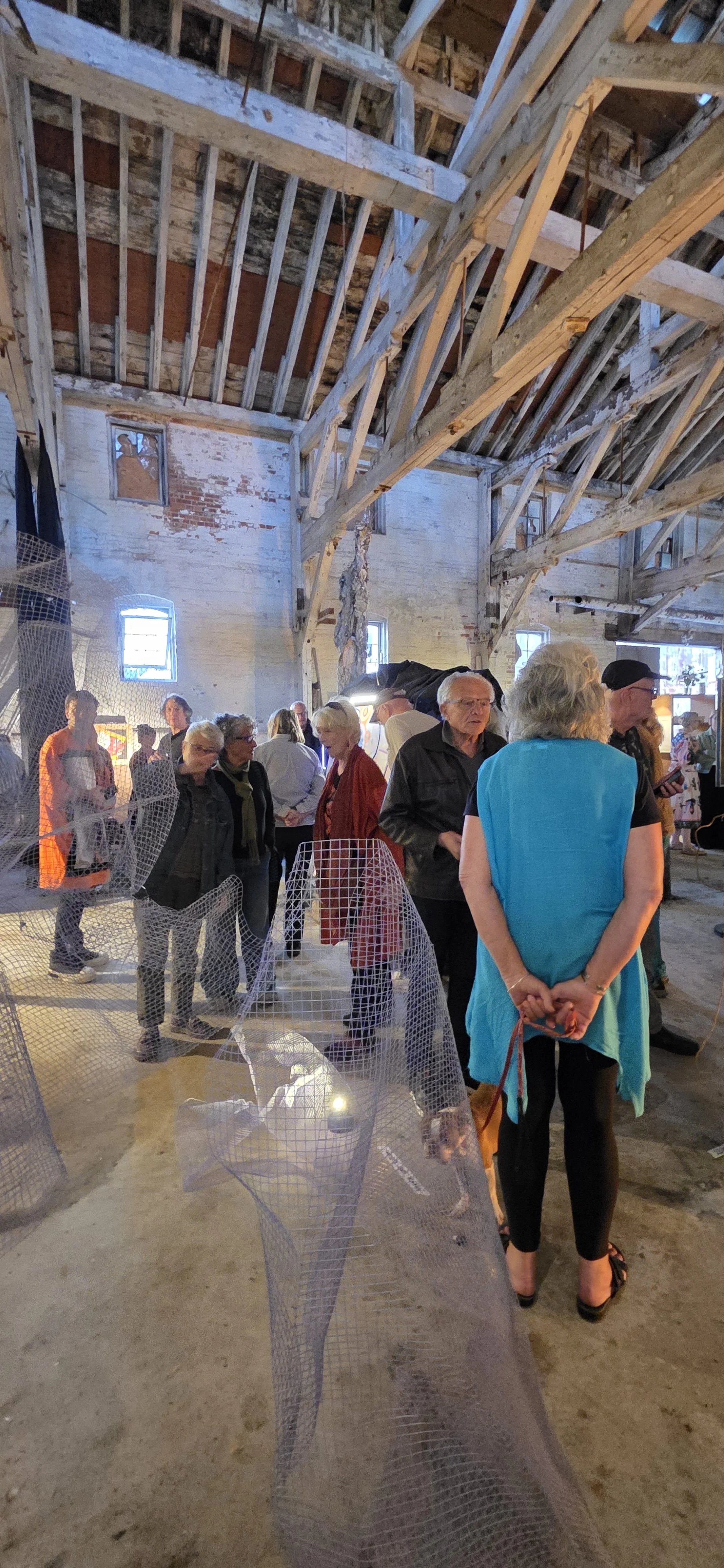
Visitors explore Of Hull and Hush, a temporary contemporary art exhibition inside a repurposed former marina in Connelly, New York, October 2025. Photograph by Site Seen.
Visitors gather inside Of Hull and Hush, where a former marina became a temporary exhibition space for contemporary art. Pop-up exhibitions transform buildings in transition into places of discovery, dialogue, and shared experience. Photograph by Site Seen
For much of the twentieth century, contemporary art was expected to live inside galleries and museums. They provided stability, professional infrastructure, and dedicated spaces for artists and audiences alike.
Today, the landscape looks different.
Commercial rents continue to rise. Independent galleries face increasing financial pressure. Storefronts, offices, schools, warehouses, and industrial buildings often sit vacant between tenants, sometimes for months or even years. At the same time, artists continue searching for places to experiment, and audiences continue looking for meaningful cultural experiences beyond traditional institutions.
These realities have created an unexpected opportunity.
Pop-up exhibitions are not simply temporary alternatives to galleries. They have become an important way of connecting contemporary art with places that already exist within our communities.
At Site Seen, we think of these buildings not as abandoned, but as being between lives.
A former retail store still remembers its customers. An empty office still reflects years of conversations and work. A marina carries the rhythms of seasons spent on the water. Even after their original purpose has paused, these spaces remain full of character.
Temporary exhibitions allow that character to become part of the experience.
Rather than constructing neutral environments, artists respond to existing architecture, materials, and histories. Visitors encounter art within spaces they may have passed every day without noticing. Familiar buildings become unfamiliar again.
That shift matters.
When contemporary art appears outside traditional cultural venues, it reaches people who might never have planned a gallery visit. Someone arriving out of curiosity may discover an artist for the first time. A neighbor who remembers shopping in the building decades earlier returns to see it transformed. Conversations emerge between architecture, memory, and the artwork itself.
Temporary exhibitions also give artists something increasingly difficult to find: freedom to experiment.
Vacant buildings often provide scales, layouts, and architectural features that conventional galleries cannot. Artists can create immersive installations, large sculptures, projections, sound works, and site-responsive pieces that would be impossible elsewhere. The building becomes another material to work with rather than merely a container for finished objects.
There is an environmental dimension as well.
Adaptive reuse asks us to reconsider what already exists before building something new. Even when only temporary, activating an existing building demonstrates that spaces retain value while awaiting their next chapter. Instead of sitting dark and forgotten, they become places of gathering, creativity, and public engagement.
Importantly, temporary does not mean insignificant.
Some of the most memorable exhibitions exist only briefly. Their limited duration creates a sense of urgency and shared experience. Visitors know that if they wait too long, both the exhibition and the building itself may have changed completely.
That impermanence becomes part of the work.
After the exhibition closes, the building continues its journey. A new tenant may move in. Renovations may begin. The architecture may evolve once again. What remains are the memories of everyone who experienced the space during that brief moment when art temporarily occupied its next chapter.
In a time when our cities are changing rapidly, pop-up exhibitions remind us that vacant buildings are not empty spaces waiting to be filled. They are places already rich with history, possibility, and connection.
Sometimes all they need is to be seen differently.
Why We Don't Cover the Scars
At Site Seen, we rarely erase the marks left behind by previous occupants. Chipped paint, repaired walls, worn concrete, and forgotten signage are not imperfections to hide. They are part of the story the building continues to tell.
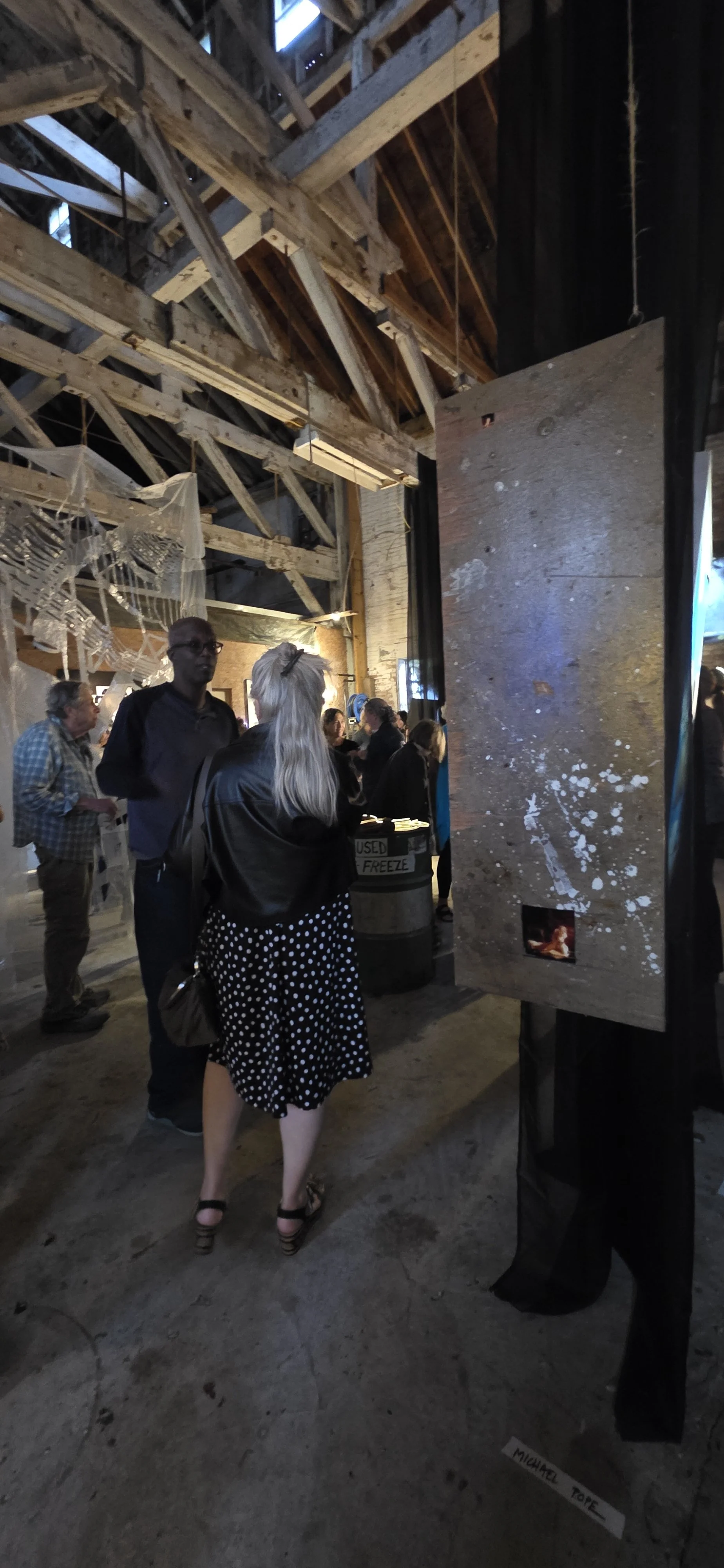
At Of Hull and Hush, the former marina remained visible in every beam, wall, and floor. Rather than masking the building's history, the exhibition invited visitors to experience contemporary art alongside the traces of the place itself. Photograph by Site Seen
Walk through almost any contemporary gallery and you'll notice what isn't there.
Visitors explore Of Hull and Hush inside a former marina in Connelly, NY, where the building's exposed timber structure, weathered surfaces, and industrial character remained an integral part of the exhibition rather than a backdrop to be concealed. Photograph by Site Seen
Walls are smooth and freshly painted. Floors are immaculate. Every surface has been carefully controlled so that nothing competes with the artwork.
Our exhibitions begin from a different premise.
When we enter a building, we're not looking for flaws to conceal. We're looking for evidence.
A patch of mismatched paint tells us where a wall was repaired years ago. Hundreds of tiny screw holes suggest shelves that once held products now long forgotten. Scuffed concrete marks the paths people walked every day. Faded lettering on a window hints at businesses that have come and gone.
These are not distractions.
They are the building's memory.
Temporary spaces possess something purpose-built galleries rarely can: layers of accumulated history. Every tenant leaves behind small traces, whether intentionally or not. Over time, those traces form a quiet record of occupation, adaptation, and change.
It can be tempting to erase those marks in pursuit of a clean slate. Fresh paint promises neutrality. New drywall offers perfection. Yet in doing so, we often remove the very qualities that make a place unique.
At Site Seen, we choose a different approach.
Rather than covering the building's history, we allow artists to work alongside it. A sculpture might sit beneath faded retail signage. A projection may illuminate a cracked plaster wall. An installation may occupy the footprint of a former checkout counter or office. The architecture remains present, not as background decoration but as an active participant in the exhibition.
This doesn't mean preserving every imperfection without thought. It means asking what each surface contributes before deciding whether it should change.
Sometimes a damaged wall reveals decades of renovation beneath its layers of paint. Sometimes an old electrical panel quietly anchors an entire room. Sometimes a worn floor carries the rhythm of thousands of footsteps that came long before the exhibition arrived.
These elements remind visitors that the building has lived many lives.
The artworks enter into conversation with those lives rather than replacing them.
This philosophy extends beyond aesthetics. Reusing existing spaces and working with what is already present reduces waste, minimizes unnecessary construction, and encourages a more thoughtful relationship with the built environment. Instead of treating every exhibition as something that must begin from zero, we recognize the value already embedded in the architecture.
There is also a different kind of beauty in incompleteness.
A repaired wall carries the story of someone who chose to mend rather than replace. Weathered paint records years of sunlight. An abandoned sign reminds us that every building exists within a much longer timeline than any single exhibition.
These are not scars to hide.
They are evidence that a place has been inhabited, altered, cared for, and continuously transformed.
When visitors step into one of our exhibitions, they are encountering more than contemporary art. They are entering a conversation between artists, architecture, and the many people who occupied the space before either arrived.
For us, those conversations begin by leaving the scars exactly where we found them.
Continue Exploring
What Is Site-Specific Art?
What Is Adaptive Reuse?
Why Context Changes the Meaning of Art
Why Do Artists Transform Vacant Buildings?
What Makes Installation Art Different from Sculpture?
What 166 Artists Taught Us About Architecture
After working with 166 artists across Site Seen's exhibitions, clear patterns began to emerge. This reflection explores what artists have taught us about architecture, creativity, and the unexpected conversations that happen between art and place.
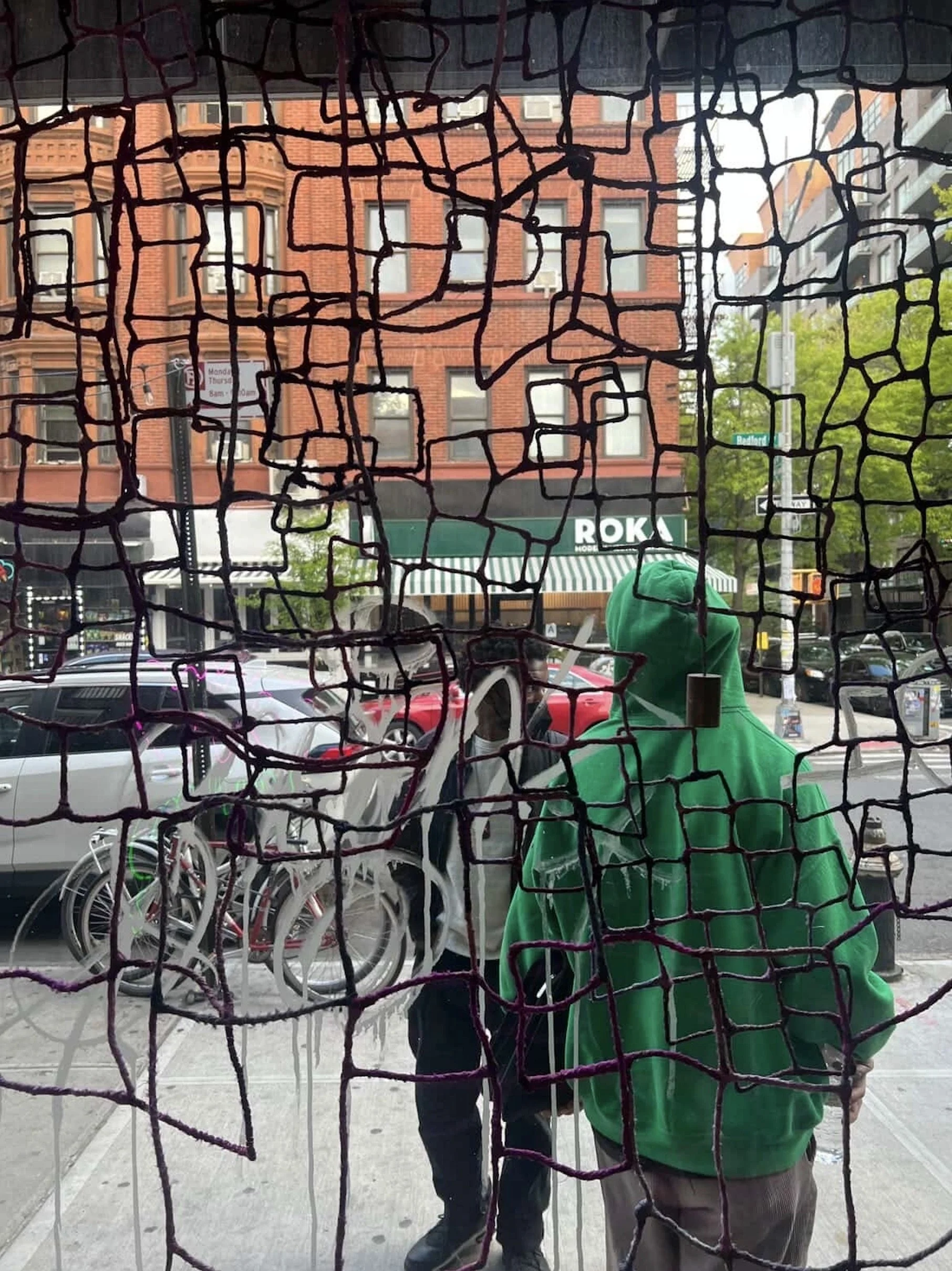
Installation view from Of Grit and Grid, Site Seen's 2026 exhibition in Williamsburg, Brooklyn. Rather than separating art from everyday life, the exhibition invited architecture, the street, and the surrounding community into the experience. Photograph by Site Seen
Architecture is often described as the backdrop for contemporary art.
Artwork overlooking the street at Of Grit and Grid, Site Seen's 2026 exhibition in Williamsburg, Brooklyn. Every artist encountered the same space differently, revealing new ways of seeing both the artwork and the city beyond. Photograph by Site Seen
After working with 166 artists across Site Seen's exhibitions, we've come to believe the opposite.
Again and again, we've watched artists respond to buildings as though they were collaborators rather than containers. Long before an artwork is installed, architecture begins asking questions. The artists simply answer them.
This wasn't something we expected.
Each exhibition brought together artists with different backgrounds, materials, and practices. Sculptors, painters, photographers, installation artists, textile artists, ceramicists, sound artists, and multidisciplinary makers all entered the same spaces with entirely different intentions.
Yet certain patterns emerged with surprising consistency.
Artists Don't See Empty Spaces
A vacant building rarely appears empty to an artist.
Instead, they notice evidence.
The texture of a wall.
A repaired crack.
The way afternoon light falls across a concrete floor.
The rhythm of exposed beams.
The echo inside a large room.
Details many people overlook become the beginning of an artwork.
Artists often teach us that observation comes before invention.
Scale Changes Ambition
Many artists arrived expecting to install existing work.
Instead, they began imagining something larger.
Higher ceilings invited taller sculptures.
Long corridors suggested sequential installations.
Industrial spaces encouraged experimentation with sound, light, and movement.
Architecture expanded the scope of what seemed possible.
The building didn't simply hold the artwork.
It enlarged the artist's imagination.
Constraints Often Produce Better Ideas
Working outside a traditional gallery introduces countless limitations.
Uneven floors.
Existing walls.
Unexpected columns.
Changing daylight.
Limited power.
Instead of restricting creativity, these conditions often sharpen it.
Some of the strongest works we've exhibited were shaped directly by the challenges of the space itself.
The architecture didn't stand in the way.
It became part of the solution.
Materials Begin Speaking to One Another
Artists working with reclaimed wood suddenly found themselves surrounded by weathered timber.
Metal sculpture echoed exposed structural steel.
Paper installations responded to changing light.
Found materials seemed to carry on conversations with the building that housed them.
Architecture created unexpected relationships between artworks that had never been intended to exist together.
Artists Slow Down
Site visits rarely happen quickly.
Artists wander.
They stop.
They return to the same corner several times.
They stand quietly beneath a roof.
They wait for changing light.
They notice sounds.
Watching this process has taught us something important.
Creative work often begins by resisting the urge to immediately solve a problem.
It begins with paying attention.
Buildings Become Collaborators
Perhaps the biggest lesson has been recognizing that artists rarely treat architecture as passive.
Instead, they ask questions.
What does this building remember?
How should visitors move through it?
What belongs here?
What should remain untouched?
The exhibition gradually develops through an ongoing conversation between artist and place.
Every Artist Reads Architecture Differently
No two artists respond in exactly the same way.
One sees history.
Another sees geometry.
Someone else notices acoustics.
Another becomes fascinated by the neighborhood outside the windows.
This diversity of responses reminds us that architecture is never fixed.
Its meaning changes with every person who enters it.
What the Artists Continue to Teach Us
If there is one lesson that has emerged across Site Seen's exhibitions, it is this:
Architecture isn't simply where contemporary art happens.
It participates.
Artists have shown us that every building already contains ideas waiting to be discovered.
Curating, then, becomes less about placing artworks inside a space than about creating the conditions for those conversations to unfold.
The buildings continue to teach.
The artists continue to listen.
We're simply fortunate enough to witness the conversation.

Lessons from Transforming Vacant Spaces into Contemporary Art Exhibitions
Every Site Seen exhibition has taken place inside a space waiting for its next chapter. These are the lessons we've learned about architecture, artists, communities, and the remarkable potential of places in transition.
Visitors gather inside Of Grit and Grid, Site Seen's 2026 exhibition in Williamsburg, Brooklyn. Transforming a vacant space into an exhibition also transforms the way people experience architecture, community, and contemporary art. Photograph by Site Seen
When Site Seen began transforming vacant spaces into temporary contemporary art exhibitions, we weren't trying to prove a theory.
Each Site Seen exhibition begins with an empty space. It isn't complete until people bring their own memories, conversations, and curiosity into it. Of Grit and Grid, Brooklyn, 2026. Photograph by Site Seen
We were simply following a question.
What might happen if places waiting for their next purpose became places for contemporary art instead?
We didn't expect the answers to come from the spaces themselves.
Each exhibition has unfolded differently. Different artists. Different communities. Different architecture. Different histories.
Yet over time, certain observations have returned again and again.
Not as rules.
Not as conclusions.
Simply as lessons that continue to shape the way we work.
Every Space Arrives with a History
Vacancy is often mistaken for emptiness.
In reality, a vacant space is full of evidence.
Scuffed floors. Repaired walls. Sunlight entering through windows designed for another purpose. Layers of paint. Worn thresholds. The quiet traces of thousands of ordinary moments.
None of these are decorations.
They are part of the space's identity.
We've learned that the strongest exhibitions begin by acknowledging what is already there rather than attempting to erase it.
Every place enters the conversation long before the first artwork arrives.
Architecture Changes the Work
Early on, we thought of architecture as the setting for an exhibition.
Now we think of it as one of its collaborators.
Artists respond to ceiling heights, changing daylight, unexpected acoustics, structural columns, narrow corridors, and expansive open rooms in ways that are impossible to predict in advance.
A work conceived in the studio often evolves after spending time inside the space.
Sometimes an installation becomes larger.
Sometimes quieter.
Sometimes an entirely new idea emerges because of something the building revealed.
Architecture doesn't simply contain contemporary art.
It helps shape it.
Artists Notice What Others Overlook
One of the greatest privileges of curating is watching artists walk through a space for the first time.
Where many people see deterioration, artists often notice possibility.
A patch on the wall becomes a record of care.
A worn floor suggests movement.
A forgotten corner becomes the natural home for an installation.
Again and again, artists have reminded us that creativity begins not by inventing something new, but by paying close attention to what already exists.
People Arrive with Their Own Memories
Visitors rarely enter these exhibitions as strangers.
They already know the places.
They remember shopping there.
Working there.
Driving past every day.
Meeting someone in the parking lot.
Those memories become part of the experience.
Long before anyone talks about contemporary art, conversations begin about the building itself.
The exhibition doesn't replace those histories.
It gives people another way of seeing them.
Temporary Can Leave a Lasting Impression
Every Site Seen exhibition eventually comes to an end.
The artwork is removed.
The lights change.
The next tenant arrives.
Life continues.
Yet something often lingers.
Artists discover new collaborators.
Neighbors return to spaces they hadn't entered in years.
Visitors leave with a different understanding of both the artwork and the building that held it.
We've come to appreciate that permanence isn't the only measure of impact.
Sometimes transformation happens precisely because it is temporary.
Every Community Reads a Space Differently
No two exhibitions have attracted exactly the same audience.
Every community brings its own memories, expectations, and questions.
Some visitors are drawn by the artists.
Others come because they're curious about a familiar building they've watched sit empty for months.
Many arrive without knowing quite what to expect.
That uncertainty often becomes an invitation.
People stay longer.
They ask questions.
They strike up conversations with strangers.
The building becomes a shared point of reference that makes contemporary art feel more approachable.
We Still Don't Have a Formula
Perhaps the most valuable lesson is that there isn't one.
No checklist can tell us how a particular space should become an exhibition.
Each project begins the same way.
By spending time there.
Walking slowly.
Listening carefully.
Paying attention to the architecture, the history, the neighborhood, and the people who already know the place far better than we do.
Only then do we begin imagining what the exhibition might become.
The Spaces Continue to Teach Us
Looking back, we've realized that Site Seen has never been only about transforming vacant spaces.
The spaces have been transforming us as well.
They've changed how we think about architecture.
How we understand curating.
How we experience community.
How we define public engagement.
Most importantly, they've reminded us that places waiting for their next chapter are not empty pauses between more important events.
They are meaningful chapters in their own right.
Every exhibition has been temporary.
The conversation continues.
What Is Exhibition Design? How Space Shapes the Experience of Art
Exhibition design is much more than deciding where artwork hangs. This guide explores how space, architecture, lighting, circulation, and interpretation work together to shape every visitor's experience.
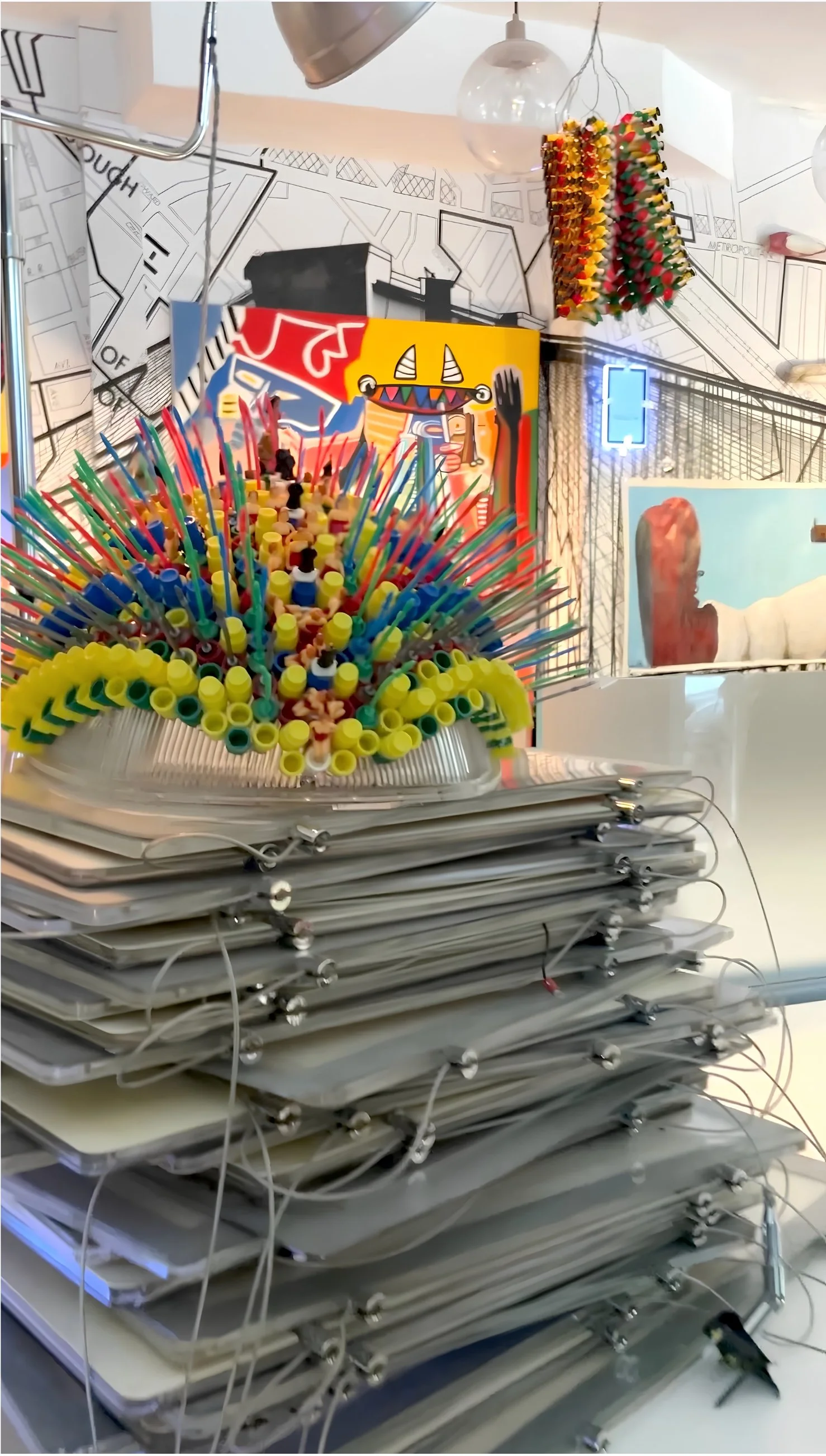
Installation view from Of Grit and Grid, Site Seen's 2026 exhibition in Brooklyn, New York. Exhibition design shapes how artworks relate to one another, the surrounding architecture, and the visitor's journey through the space. Photograph by Site Seen
A Site Seen Field Guide
Most people think an exhibition is made by the artwork.
In reality, every exhibition is also shaped by the space around it.
The distance between artworks.
The height of a ceiling.
The direction visitors move.
Natural light entering through a window.
A narrow corridor.
A quiet room.
An unexpected view.
These decisions form what is known as exhibition design.
Good exhibition design doesn't compete with the artwork.
It helps people experience it more fully.
Installation view from Of Grit and Grid, Site Seen's 2026 exhibition in Brooklyn, New York. Thoughtful exhibition design transforms individual artworks into a shared visual conversation. Photograph by Site Seen
What Is Exhibition Design?
Exhibition design is the planning and organization of physical space to support an exhibition's ideas, artworks, and visitors.
It combines architecture, interior design, graphic design, lighting, interpretation, accessibility, and visitor circulation into a single experience.
Whether in a museum, gallery, public space, or temporary exhibition, exhibition design influences how people move, what they notice, and how they remember what they've seen.
More Than Hanging Artwork
Designing an exhibition involves countless decisions:
Where visitors begin.
What they encounter first.
How artworks relate to one another.
How much space each work needs.
Lighting and sightlines.
Seating and moments of rest.
Labels and interpretation.
Accessibility.
Sound.
Flow through the building.
Each decision changes the experience.
Architecture Is Part of the Design
Some exhibitions are installed inside purpose-built galleries.
Others take place in historic buildings, storefronts, warehouses, schools, churches, or industrial spaces.
In these settings, architecture becomes one of the exhibition's primary design elements.
Columns interrupt views.
Brick reflects light differently than drywall.
Old timber changes acoustics.
Windows connect visitors to the surrounding neighborhood.
Rather than hiding these qualities, exhibition designers often work with them.
Exhibition Design at Site Seen
Every Site Seen exhibition begins by studying the building itself.
Instead of forcing a predetermined layout into the space, we allow architecture to influence how visitors move, where artworks are placed, and how individual installations relate to one another.
No two exhibitions follow the same plan because no two buildings tell the same story.
The result is an experience that could only happen in that particular place.
Why Exhibition Design Matters
People rarely remember an exhibition because of a floor plan.
They remember how it felt.
They remember discovering a sculpture around a corner.
Standing beneath a soaring roof.
Walking through changing light.
Hearing footsteps echo across an empty building.
Feeling that a particular artwork belonged exactly where they encountered it.
That experience doesn't happen by accident.
It's the result of thoughtful exhibition design.
Related Reading
What Is Curating?
When Architecture Becomes a Curator
What Is Site-Specific Art?
What Is Adaptive Reuse?
How an Empty Building Becomes an Exhibition
What Is Curating?
Curating is far more than selecting artwork. This guide explores what curators do, how exhibitions are developed, and why contemporary curatorial practice increasingly extends beyond museums and galleries into public, historic, and transitional spaces.
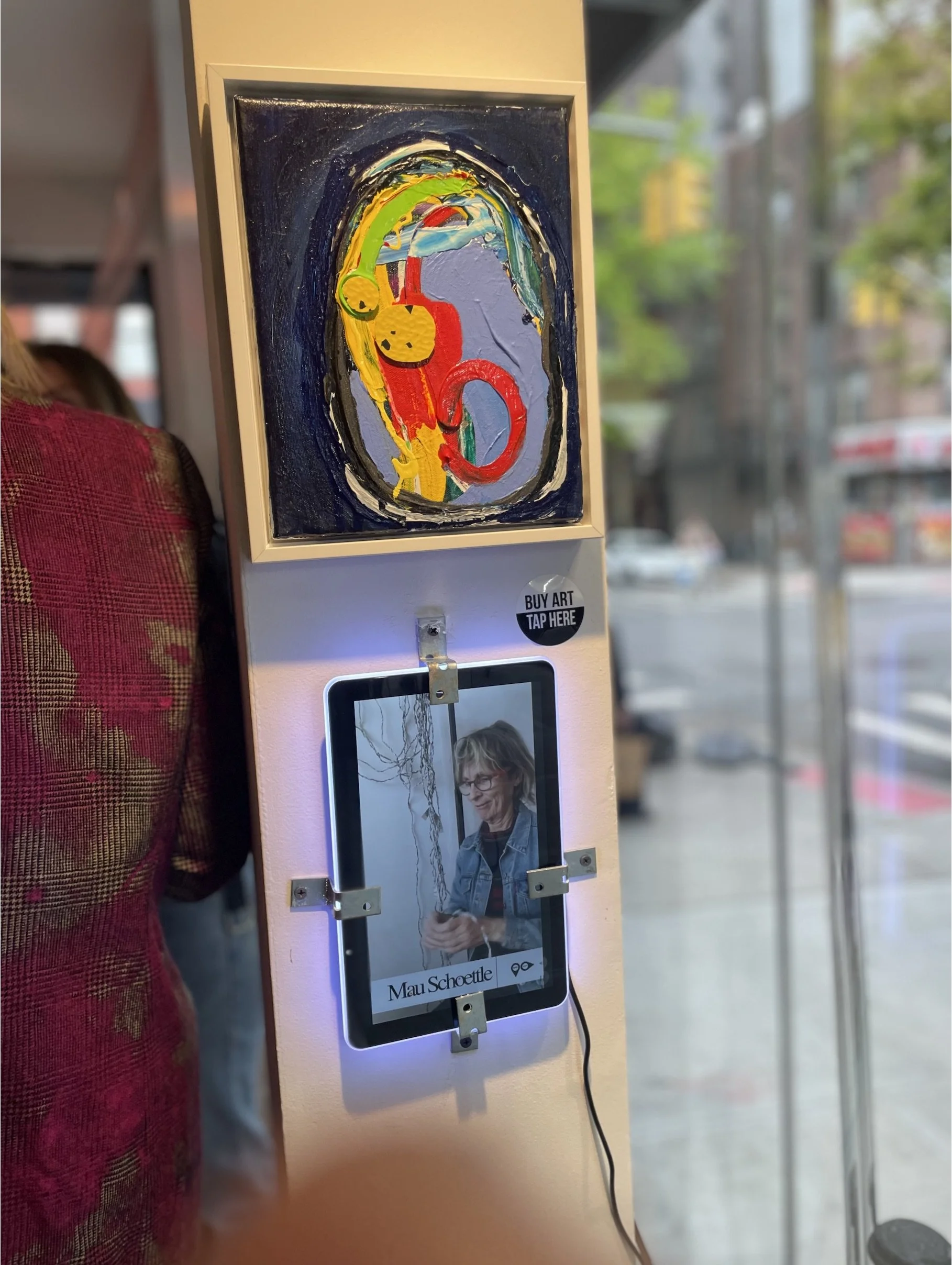
Artwork presented with a digital artist profile of artist Mau Schoettle at Of Grit and Grid, Site Seen's 2026 exhibition in Brooklyn, New York. Curatorial decisions shape not only what visitors see, but how they experience it. Photograph by Site Seen
A Site Seen Field Guide
Digital artist interpretation accompanying installation art by Mau Schoettle (not shown in photo) at Of Grit and Grid, Site Seen's 2026 exhibition in Brooklyn, New York. Contemporary curating creates new ways for visitors to engage with artists and their work. Photograph by Site Seen
A Guide to Contemporary Curatorial Practice
When most people hear the word curator, they imagine someone selecting paintings for a museum or deciding where sculptures should be placed in a gallery.
Selection is certainly part of the role.
But contemporary curating is much broader than choosing artwork.
Curating is the practice of developing ideas, organizing relationships between artworks, artists, architecture, and audiences, and shaping the overall experience of an exhibition. A curator doesn't simply decide what people see. They help determine how and why they experience it.
Where Does the Word "Curator" Come From?
The word curator comes from the Latin curare, meaning "to care."
Historically, curators were responsible for caring for museum collections by preserving, researching, documenting, and displaying objects.
Today, the profession has expanded dramatically.
Curators work in museums, galleries, artist-run spaces, universities, biennials, sculpture parks, public art organizations, historic sites, and increasingly, in places never intended to become exhibition spaces.
What Does a Curator Actually Do?
Every exhibition involves hundreds of decisions.
A curator may:
Develop the exhibition's central concept.
Research artists and historical context.
Visit artists' studios.
Select participating artists and artworks.
Determine how works relate to one another.
Design the visitor's experience through the space.
Write exhibition texts and catalog essays.
Collaborate with architects, designers, installers, and fabricators.
Organize public programs, talks, and educational events.
Consider accessibility, interpretation, and community engagement.
Good curating is rarely about individual artworks alone.
It is about creating meaningful relationships between people, ideas, and place.
Contemporary Curating Goes Beyond the Museum
Today's curators often work far outside traditional gallery settings.
Contemporary exhibitions can take place in parks, historic buildings, former factories, storefronts, schools, churches, industrial sites, train stations, and other unexpected locations.
These spaces aren't simply alternative venues.
They often become part of the exhibition itself.
Architecture, history, natural light, acoustics, neighborhood context, and previous uses all influence how visitors experience the artwork.
What Is Site-Specific Curating?
Site-specific curating begins with a place rather than a floor plan.
Instead of asking, "Where can this exhibition fit?", the curator asks:
What is unique about this building?
What stories does this place already contain?
How can artists respond to its architecture and history?
What kinds of experiences are only possible here?
The exhibition develops in conversation with the site.
Rather than disappearing into the background, architecture becomes an active collaborator in the curatorial process.
Curating in Transitional Spaces
An increasing number of curators are working inside buildings that are temporarily vacant or awaiting their next chapter.
Former grocery stores.
Warehouses.
Factories.
Office buildings.
Marinas.
Retail spaces.
These environments offer opportunities that conventional galleries often cannot.
Large-scale installations become possible.
Visitors experience familiar places in unfamiliar ways.
Communities reconnect with buildings that have quietly disappeared from everyday attention.
The exhibition becomes part of the building's continuing story.
How Site Seen Approaches Curating
At Site Seen, every exhibition begins with a building.
Before artists are invited, we spend time observing the architecture, history, proportions, and atmosphere of a place. Those qualities shape every curatorial decision that follows, from artist selection to installation design.
Rather than treating architecture as a neutral backdrop, we approach each building as an active collaborator.
Every exhibition is developed specifically for its site.
No two are ever the same.
Why Curating Matters
Curating shapes the way we encounter contemporary art.
Thoughtful curatorial practice creates connections between artworks, artists, architecture, communities, and ideas that might never emerge on their own.
At its best, curating doesn't simply organize an exhibition.
It changes the way we see.
Related Reading
When Architecture Becomes a Curator
How an Empty Building Becomes an Exhibition
Why Place Still Matters
What Is Site-Specific Art?
What Is Adaptive Reuse?
When Architecture Becomes a Curator
What happens when the building becomes part of the exhibition? This essay explores Site Seen's approach to curating, where architecture, memory, and contemporary art shape one another.
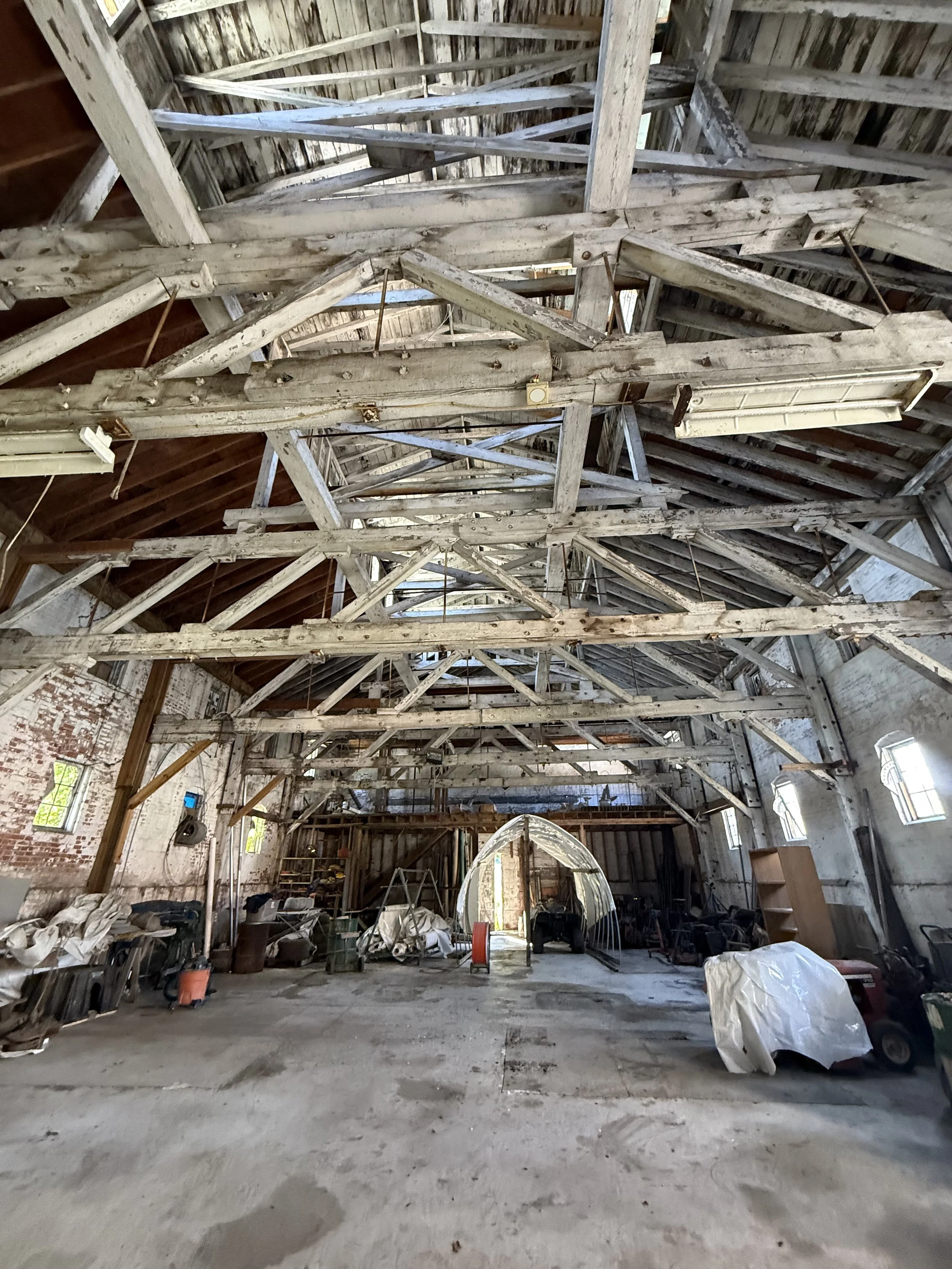
Interior of the former industrial marina building that housed Of Hull and Hush, Site Seen's October 2025 contemporary art exhibition in Connelly, New York. Photograph by Site Seen.
Interior of the former industrial marina building that housed Of Hull and Hush, Site Seen's October 2025 contemporary art exhibition in Connelly, New York. The building's architecture informed the exhibition's curatorial approach and visitor experience. Photograph by Site Seen
How Buildings Become Active Collaborators in Contemporary Exhibitions
Every exhibition begins with a room.
Ours begins with a building.
Before we invite a single artist, we spend time walking through vacant storefronts, warehouses, offices, schools, churches, marinas, and other transitional spaces. We pay attention to the things many people overlook: the quality of light, the rhythm of columns, worn concrete, timber trusses, patched walls, unusual acoustics, unexpected sightlines, and the traces left behind by previous occupants.
Those conditions are not obstacles.
They are the beginning of the exhibition.
For generations, galleries have been designed to disappear. White walls, controlled lighting, and carefully proportioned rooms create neutral environments where attention rests almost entirely on the artwork.
It is an elegant solution.
But it is only one way to curate.
At Site Seen, architecture is never neutral.
Every building arrives with its own character. A former grocery store carries different memories than a marina building. An abandoned office invites different conversations than an empty church or warehouse. Long before the artwork arrives, the building has already begun telling its own story.
Rather than asking architecture to step aside, we invite it into the curatorial process.
The building begins making decisions alongside us.
A soaring ceiling encourages ambitious installations. Narrow corridors slow movement and create moments of intimacy. Large storefront windows connect the exhibition to the surrounding community. Weathered brick, aging timber, industrial steel, and changing daylight become part of the visual language of the work itself.
Architecture doesn't simply contain the exhibition.
It shapes it.
That changes every curatorial decision we make.
Instead of developing an exhibition and searching for a place to install it, we begin by understanding the place itself. We ask what kinds of artwork belong there, what conversations the building already suggests, and how artists might respond to its history, scale, materials, and atmosphere.
The exhibition gradually emerges from those observations.
Artists often discover possibilities they hadn't anticipated. Works conceived for white walls take on new meanings against weathered surfaces. Installations grow larger, quieter, or more immersive because the building asks something different of them.
Visitors experience that collaboration as well.
Most people know how to behave inside a museum. A former marina, department store, office building, or neighborhood storefront invites a different kind of attention. People arrive carrying memories of those places. The architecture feels familiar, even when the experience unfolding inside is entirely unexpected.
The building becomes part of how the artwork is understood.
This is why Site Seen isn't interested in vacant buildings simply because they are vacant.
We're interested in buildings between lives.
Places waiting for their next purpose.
Buildings suspended between one identity and another.
For a brief period, architecture is free to participate in something entirely new.
Contemporary art becomes one chapter in the life of the building, and the building becomes one collaborator in the life of the exhibition.
When the exhibition closes, the building moves forward.
A new tenant arrives.
Renovations begin.
The lights change.
The architecture continues its story.
The exhibition disappears.
But the relationship between place, memory, and community lingers long after the artwork has gone.
Because the most memorable exhibitions don't simply occupy a building.
They allow the building itself to become part of the art.
Buildings Between Lives: Why Transitional Spaces Matter
Every building spends part of its life between identities. This Field Guide explores why these transitional moments matter, and how artists, architecture, and memory come together in places preparing to become something new.
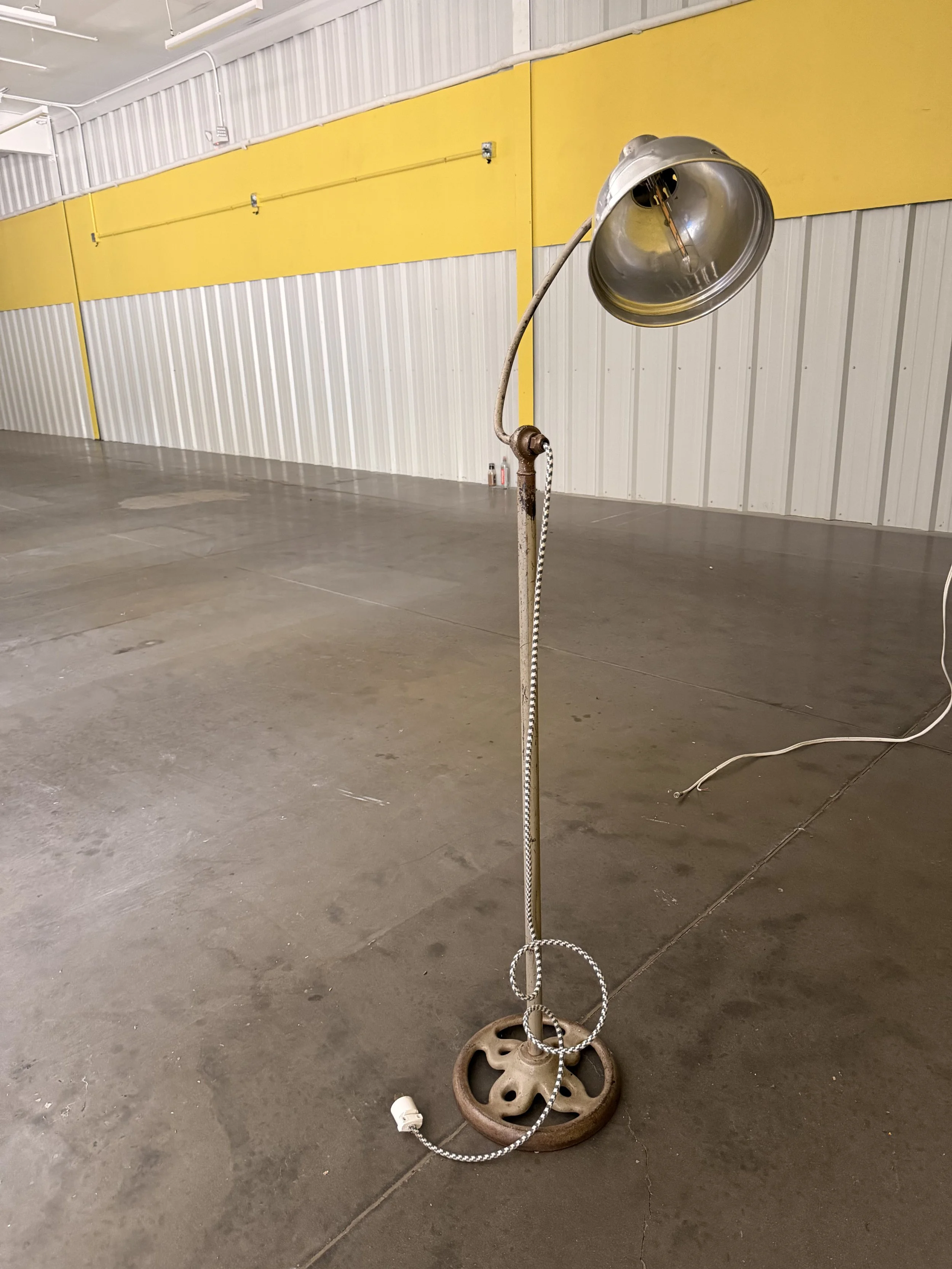
Lamp in a transitional space in which Site Seen activated Of Frame and Fallow, a temporary contemporary art exhibition presented inside a former Dollar General in Esopus, New York, 2026. Photograph by Site Seen
A Site Seen Field Guide
Vintage lamp in a transitional space in which Site Seen activated Of Frame and Fallow, a temporary contemporary art exhibition presented inside a former Dollar General in Esopus, New York, 2026. Photograph by Site Seen
We tend to think of buildings in fixed terms.
A grocery store.
An office.
A school.
A church.
A home.
We identify them by what they do, not by what they are.
But buildings are never fixed. Like the communities around them, they change over time. Businesses close. Families move. Industries evolve. Neighborhoods shift. Every building eventually reaches a moment when one chapter has ended and another has not yet begun.
Most of us barely notice these intervals.
At Site Seen, they are where our work begins.
The Space Between
When a building is no longer serving its original purpose, it is often described as empty.
The word suggests absence.
Silence.
Failure.
Yet step inside and another reality begins to emerge.
The building is still carrying everything it has experienced.
The floor records years of footsteps.
Walls reveal layers of repair and reinvention.
Light continues moving through windows exactly as it always has.
The architecture has not stopped living simply because people have stopped using it in the same way.
It is between lives.
Buildings Are Written Over Time
Unlike people, buildings do not remember through stories.
They remember through evidence.
A patched section of drywall.
An old electrical conduit leading nowhere.
A worn threshold polished by thousands of crossings.
Paint lines left behind after shelves were removed.
These are not imperfections waiting to be erased.
They are a record of occupation.
Every repair, every alteration, every improvised solution becomes part of the building's biography.
Much like an archaeological site, meaning accumulates layer by layer.
Nothing exists in isolation.
Everything belongs to a larger history.
Why Transitional Spaces Matter
The period between one use and the next is often remarkably short.
A lease is signed.
Construction begins.
Walls come down.
Fresh paint covers old surfaces.
The building prepares to introduce itself again under a different name.
There is nothing wrong with this.
Change is essential.
Communities grow because places continue adapting to new needs.
What fascinates us is the brief interval before that transformation is complete.
For a short time, the past remains visible while the future has not yet arrived.
Two identities occupy the same space.
Those moments rarely last.
Seeing What We Normally Overlook
Most of our lives are spent moving through architecture without really seeing it.
Buildings become background.
We notice them only when something demands our attention.
An exhibition has the power to interrupt that habit.
Visitors who enter a former retail store expecting to see art often leave talking about the building itself.
They notice the height of the ceilings.
The rhythm of the columns.
The quality of afternoon light.
The marks left behind by previous occupants.
Suddenly, architecture becomes visible again.
Not because it has changed.
Because our attention has.
Art Doesn't Replace a Building. It Reveals It.
People sometimes imagine that Site Seen transforms buildings into galleries.
We think the opposite is true.
The buildings transform the art.
A sculpture installed inside a former Dollar General carries different meaning than the same sculpture inside a museum.
A sound installation behaves differently in a marina than it would inside a white cube.
Architecture is never neutral.
It shapes movement.
Light.
Scale.
Memory.
The exhibition does not erase those qualities.
It brings them into sharper focus.
Not Ruin, But Renewal
Vacant buildings are often photographed as symbols of decline.
Broken windows.
Peeling paint.
Empty rooms.
There is an entire visual language devoted to abandonment.
That has never been our interest.
Site Seen is not drawn to buildings because they are deteriorating.
We are drawn to them because they are changing.
These are not forgotten places.
They are places preparing to become something else.
The interval between those identities deserves attention, not because it is permanent, but precisely because it is not.
A Different Kind of Public Space
For a brief time, a building that was once closed becomes open again.
Neighbors walk through spaces they thought they knew.
Former customers return.
Children bring their parents.
Artists encounter architecture they would never have chosen to build from scratch.
Property owners see familiar spaces through unfamiliar eyes.
An ordinary building briefly becomes a place of shared curiosity.
That transformation is temporary.
Its impact often is not.
Before the Next Chapter
Eventually every building moves on.
New tenants arrive.
Construction begins.
Fresh paint conceals old walls.
Another story starts.
That is not something to resist.
It is simply another chapter in the life of the building.
Site Seen exists to acknowledge the chapter that comes before.
The quiet interval that is so often overlooked.
The moment when the past remains visible, the future remains uncertain, and architecture has one last opportunity to tell the story of where it has been.
Sometimes all it asks is that we stop long enough to listen.
Continue Exploring
What Is Site-Specific Art?
What Is Adaptive Reuse?
Why Context Changes the Meaning of Art
Why Do Artists Transform Vacant Buildings?
What Makes Installation Art Different from Sculpture?
Why Context Changes the Meaning of Art
No artwork exists in isolation. This Field Guide explores how architecture, memory, history, and environment shape the way we understand contemporary art, and why context can transform both the artwork and the viewer.
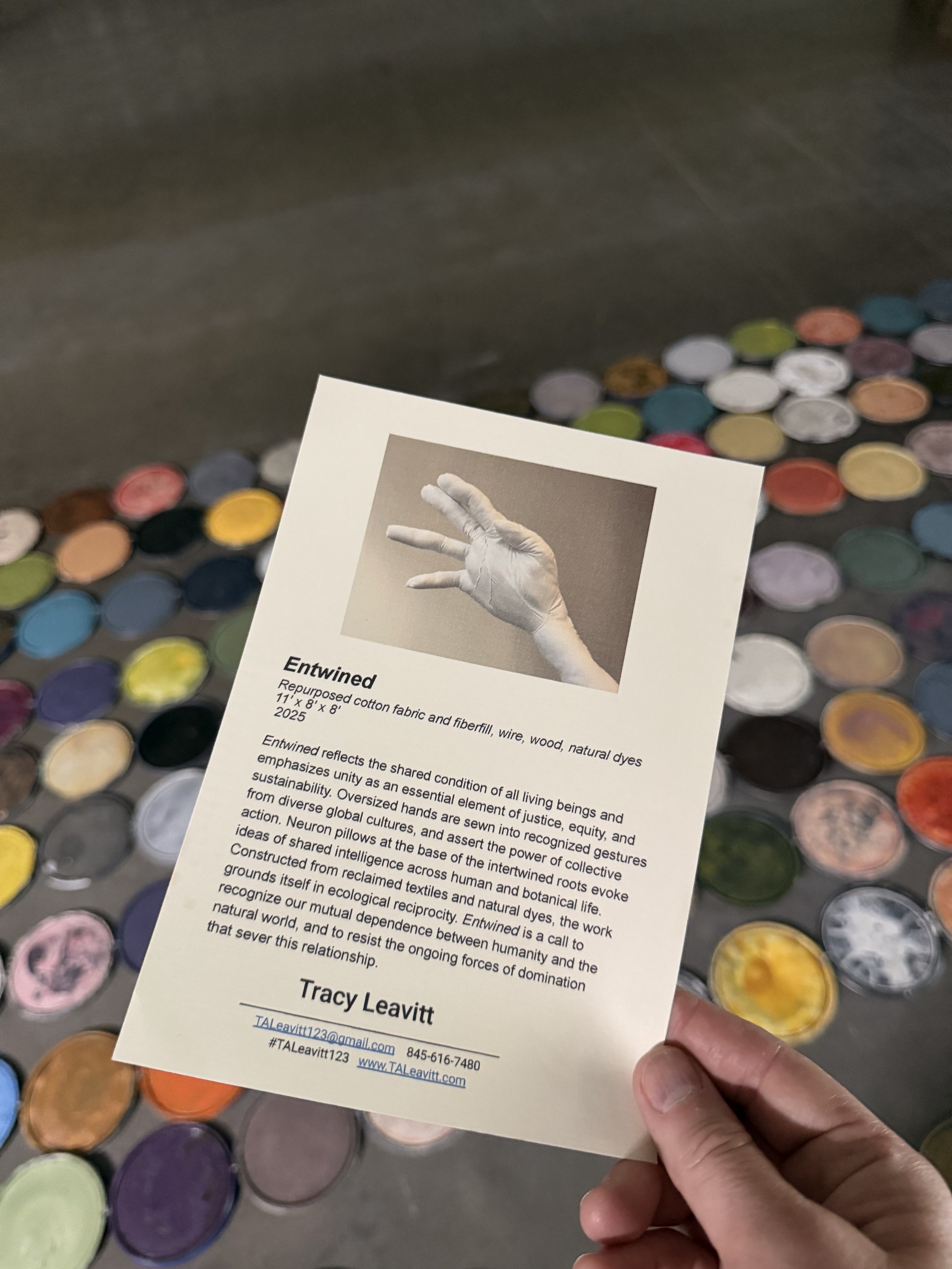
Artwork installation juxtaposes printed card of a site-specific installation with another artwork visible in the background during Site Seen's Of Frame and Fallow, a temporary contemporary art exhibition presented inside a former Dollar General in Esopus, New York, 2026. Photograph by Site Seen
A Site Seen Field Guide
Printed card of a site-specific installation juxtaposed atop another artwork visible in the background during Site Seen's Of Frame and Fallow, a temporary contemporary art exhibition presented inside a former Dollar General in Esopus, New York, 2026. Photograph by Site Seen
When people hear that an exhibition is taking place inside a vacant building, they often ask the same question.
Why there?
Why not a gallery?
It is an understandable question.
Galleries are designed for exhibiting art. They provide lighting, climate control, clean walls, and an environment carefully shaped around the experience of looking.
Vacant buildings offer almost none of those things.
Instead, they offer something else.
History.
A Building Between Lives
An empty building is often described as abandoned.
We rarely think that word tells the whole story.
Many vacant buildings are not forgotten.
They are waiting.
Waiting for a new tenant.
A renovation.
A different purpose.
A new owner.
These moments between one life and the next are remarkably brief.
The physical evidence of the building's previous identity remains visible, while its future has not yet begun.
For artists, that interval is full of possibility.
Vacancy Is Not Emptiness
Walk through an empty retail store.
You will probably notice patched walls, worn floors, faded paint, old fixtures, utility markings, handwritten notes from contractors, forgotten hardware, and countless other traces left behind by ordinary use.
None of these details were intended to become meaningful.
Yet together they create a record of human presence.
The building remembers.
Artists respond to that memory.
Not by preserving it exactly as it is, but by entering into conversation with it.
Why Not Simply Use a Gallery?
Traditional galleries are extraordinary places for contemporary art.
They allow artworks from many different contexts to exist together within a carefully controlled environment.
Vacant buildings ask different questions.
Rather than removing art from everyday life, they place it back into spaces many people already know.
A former grocery store.
A neighborhood office.
An industrial warehouse.
Visitors arrive carrying memories of those places.
The exhibition builds upon those memories rather than replacing them.
Architecture Becomes Part of the Artwork
In a vacant building, architecture is impossible to ignore.
Columns interrupt sightlines.
Windows determine how daylight moves.
Ceilings influence sound.
Doorways shape circulation.
Instead of treating these conditions as limitations, artists often embrace them.
The building becomes another collaborator.
Every installation could exist only there.
Temporary by Design
One of the most remarkable qualities of exhibitions in transitional buildings is their impermanence.
The artwork is temporary.
The exhibition is temporary.
Even the building's current state is temporary.
Rather than resisting change, these projects acknowledge it.
Visitors encounter a place during a fleeting moment that will never exist again in exactly the same way.
That sense of urgency changes how people look.
A Different Relationship Between Art and Community
When contemporary art appears inside familiar buildings, it reaches people who might never visit a museum or gallery.
Someone arrives out of curiosity.
Someone remembers shopping there years ago.
Someone wants one last chance to see the building before it changes forever.
Art becomes the reason people enter.
Architecture becomes the reason they linger.
The conversation extends beyond individual artworks to include memory, neighborhood, and the evolving identity of a place.
The Site Seen Approach
At Site Seen, we do not choose buildings because they appear abandoned or dramatic.
We choose them because they are in transition.
That distinction matters.
We are not interested in romanticizing decay or presenting vacancy as spectacle.
These are not forgotten places.
They are places preparing to become something else.
Our exhibitions simply invite the public to experience that moment before it disappears.
Artists respond to the architecture.
Visitors rediscover familiar places.
Property owners see their buildings through different eyes.
For a brief time, the building becomes a place of shared cultural experience before continuing its own journey.
Looking Again
A vacant building is easy to overlook.
An exhibition asks us to pause.
To notice the marks left by previous occupants.
To recognize the beauty of adaptation.
To imagine possibilities that extend beyond commerce or construction.
Sometimes the greatest transformation is not what happens to the building.
It is what happens to our understanding of it.
Because once we begin seeing these places differently, it becomes difficult to pass them without wondering what stories they still have left to tell.
Continue Exploring
What Is Site-Specific Art?
What Is Adaptive Reuse?
Why Do Artists Transform Vacant Buildings?
What Makes Installation Art Different from Sculpture?
Temporary Art Exhibitions vs. Traditional Galleries

Why Do Artists Transform Vacant Buildings?
Why would artists choose an empty storefront, office, or warehouse instead of a traditional gallery? This Field Guide explores how vacant buildings become spaces for creativity, public engagement, and renewed possibility.
Curators discuss plans on a scissor lift during installation of Site Seen's Of Frame and Fallow, a temporary contemporary art exhibition presented inside a former Dollar General in Esopus, New York, 2026. Photograph by Site Seen
Curators discuss plans on a scissor lift during installation of Site Seen's Of Frame and Fallow, a temporary contemporary art exhibition presented inside a former Dollar General in Esopus, New York, 2026. Photograph by Site Seen
A Site Seen Field Guide
When people hear that an exhibition is taking place inside a vacant building, they often ask the same question.
Why there?
Why not a gallery?
It is an understandable question.
Galleries are designed for exhibiting art. They provide lighting, climate control, clean walls, and an environment carefully shaped around the experience of looking.
Vacant buildings offer almost none of those things.
Instead, they offer something else.
History.
A Building Between Lives
An empty building is often described as abandoned.
We rarely think that word tells the whole story.
Many vacant buildings are not forgotten.
They are waiting.
Waiting for a new tenant.
A renovation.
A different purpose.
A new owner.
These moments between one life and the next are remarkably brief.
The physical evidence of the building's previous identity remains visible, while its future has not yet begun.
For artists, that interval is full of possibility.
Vacancy Is Not Emptiness
Walk through an empty retail store.
You will probably notice patched walls, worn floors, faded paint, old fixtures, utility markings, handwritten notes from contractors, forgotten hardware, and countless other traces left behind by ordinary use.
None of these details were intended to become meaningful.
Yet together they create a record of human presence.
The building remembers.
Artists respond to that memory.
Not by preserving it exactly as it is, but by entering into conversation with it.
Why Not Simply Use a Gallery?
Traditional galleries are extraordinary places for contemporary art.
They allow artworks from many different contexts to exist together within a carefully controlled environment.
Vacant buildings ask different questions.
Rather than removing art from everyday life, they place it back into spaces many people already know.
A former grocery store.
A neighborhood office.
An industrial warehouse.
Visitors arrive carrying memories of those places.
The exhibition builds upon those memories rather than replacing them.
Architecture Becomes Part of the Artwork
In a vacant building, architecture is impossible to ignore.
Columns interrupt sightlines.
Windows determine how daylight moves.
Ceilings influence sound.
Doorways shape circulation.
Instead of treating these conditions as limitations, artists often embrace them.
The building becomes another collaborator.
Every installation could exist only there.
Temporary by Design
One of the most remarkable qualities of exhibitions in transitional buildings is their impermanence.
The artwork is temporary.
The exhibition is temporary.
Even the building's current state is temporary.
Rather than resisting change, these projects acknowledge it.
Visitors encounter a place during a fleeting moment that will never exist again in exactly the same way.
That sense of urgency changes how people look.
A Different Relationship Between Art and Community
When contemporary art appears inside familiar buildings, it reaches people who might never visit a museum or gallery.
Someone arrives out of curiosity.
Someone remembers shopping there years ago.
Someone wants one last chance to see the building before it changes forever.
Art becomes the reason people enter.
Architecture becomes the reason they linger.
The conversation extends beyond individual artworks to include memory, neighborhood, and the evolving identity of a place.
The Site Seen Approach
At Site Seen, we do not choose buildings because they appear abandoned or dramatic.
We choose them because they are in transition.
That distinction matters.
We are not interested in romanticizing decay or presenting vacancy as spectacle.
These are not forgotten places.
They are places preparing to become something else.
Our exhibitions simply invite the public to experience that moment before it disappears.
Artists respond to the architecture.
Visitors rediscover familiar places.
Property owners see their buildings through different eyes.
For a brief time, the building becomes a place of shared cultural experience before continuing its own journey.
Looking Again
A vacant building is easy to overlook.
An exhibition asks us to pause.
To notice the marks left by previous occupants.
To recognize the beauty of adaptation.
To imagine possibilities that extend beyond commerce or construction.
Sometimes the greatest transformation is not what happens to the building.
It is what happens to our understanding of it.
Because once we begin seeing these places differently, it becomes difficult to pass them without wondering what stories they still have left to tell.
Continue Exploring
What Is Site-Specific Art?
What Is Adaptive Reuse?
What Makes Installation Art Different from Sculpture?
Why Context Changes the Meaning of Art
The Life Cycle of a Site Seen Exhibition

What Makes Installation Art Different from Sculpture?
Sculpture asks us to look at an object. Installation art asks us to enter an experience. This Field Guide explores where those practices overlap, where they differ, and why both matter to Site Seen's approach to contemporary art.
Curators inside site-specific installation during Site Seen's Of Frame and Fallow, a temporary contemporary art exhibition presented inside a former Dollar General in Esopus, New York, 2026. Photograph by Site Seen
A Site Seen Field Guide
Most of us know a sculpture when we see one.
A carved figure standing in a plaza. A bronze monument in a park. A ceramic vessel displayed on a pedestal. Even contemporary sculpture often appears as a distinct object occupying space.
Installation art is different.
Rather than creating an object to be observed, installation artists create environments to be experienced.
The artwork is no longer confined to a single form. It expands into the room itself.
Light becomes material.
Sound becomes material.
Architecture becomes material.
The viewer becomes part of the work.
Curators inside site-specific installation during Site Seen's Of Frame and Fallow, a temporary contemporary art exhibition presented inside a former Dollar General in Esopus, New York, 2026. Photograph by Site Seen
Beyond the Object
Sculpture traditionally asks a simple question:
What happens within the boundaries of this object?
Installation art asks another:
What happens between the object, the space, and the person moving through it?
This distinction is less about medium than about intention.
A sculpture can occupy a room without changing it.
An installation changes the room itself.
Visitors no longer stand outside the artwork.
They enter it.
Walk through it.
Listen to it.
Navigate around it.
Their movement becomes part of the experience.
Space Is a Material
Artists often speak about wood, steel, plaster, clay, glass, or fabric.
Installation artists add another material to the list:
Space.
Distance between objects.
The height of a ceiling.
The rhythm of windows.
Echoes.
Darkness.
The direction people naturally walk.
These are not conditions surrounding the artwork.
They are part of the artwork itself.
At Site Seen, architecture often becomes one of the most important materials available.
A former retail aisle invites movement.
An office corridor creates anticipation.
A loading dock becomes a threshold.
The building actively shapes the experience.
Sculpture Can Be Installation
The boundary between sculpture and installation is not fixed.
Many contemporary artists move fluidly between them.
A single sculpture can function as an installation when conceived in direct relationship with a particular space.
Likewise, an installation may consist almost entirely of sculptural objects.
The distinction lies not in the materials but in the relationship.
If removing the work from its environment fundamentally changes its meaning, it begins to operate as installation.
The Body Completes the Work
One of the defining characteristics of installation art is that it depends upon the viewer's physical presence.
Every visitor experiences it differently.
One person notices the light.
Another the sound.
Someone else the changing perspective created by moving through the space.
The artwork unfolds over time.
Rather than presenting a single image, installation creates a sequence of encounters.
No two visitors occupy exactly the same exhibition.
Why Architecture Matters
Traditional galleries often strive for neutrality.
White walls.
Even lighting.
Minimal distractions.
Site-specific installations often embrace precisely the opposite.
Rather than concealing a building's history, they allow it to remain visible.
Scuffed concrete.
Exposed brick.
Fluorescent fixtures.
Former checkout counters.
Evidence becomes part of the experience.
At Site Seen, these architectural traces are never obstacles to overcome.
They are collaborators.
The building contributes its own voice to the exhibition.
Sculpture, Installation, and Site Seen
Site Seen presents both sculpture and installation because the distinction between them is increasingly porous.
Some artists contribute individual sculptural works that respond quietly to a building's architecture.
Others transform entire rooms through light, sound, suspended forms, or immersive environments.
Both approaches ask visitors to look carefully.
Both encourage slower observation.
Both become richer through their relationship with place.
Rather than treating sculpture and installation as opposing categories, we see them as different ways of entering into conversation with architecture.
Looking More Carefully
Whether encountered as a single object or an immersive environment, contemporary art has the capacity to change how we experience space.
A sculpture can anchor a room.
An installation can dissolve its boundaries.
Both invite attention.
Both reward curiosity.
Both remind us that seeing is not passive.
It is an active relationship between ourselves, the artwork, and the places we inhabit.
At Site Seen, that relationship begins long before the artwork arrives and continues long after the exhibition ends.
Because the most lasting transformation is rarely the building itself.
It is the way we learn to see it.
Continue Exploring
What Is Site-Specific Art?
Temporary Art Exhibitions vs. Traditional Galleries
Why Context Changes the Meaning of Art
How Artists Transform Vacant Buildings
Temporary Art Exhibitions vs. Traditional Galleries

What Is Adaptive Reuse?
Adaptive reuse gives existing buildings new life without erasing their past. This Field Guide explores how architecture, memory, and contemporary art intersect to transform overlooked places into spaces of renewed possibility.
Anki King’s site-specific installation during Site Seen's Of Frame and Fallow, a temporary contemporary art exhibition presented inside a former Dollar General in Esopus, New York, 2026. Photograph by Site Seen
Anki King’s site-specific installation during Site Seen's Of Frame and Fallow, a temporary contemporary art exhibition presented inside a former Dollar General in Esopus, New York, 2026. Photograph by Site Seen
A Site Seen Field Guide
Every city is filled with buildings waiting for their next chapter.
A former grocery store. An empty office. A neighborhood bank. A marina no longer serving boats. A Dollar General that has quietly closed after years of daily routines.
We often describe these places as vacant, abandoned, or obsolete. Yet those words can be misleading. They suggest a building has reached the end of its usefulness.
Adaptive reuse begins with a different assumption.
Instead of asking what should replace a building, it asks what is already worth keeping.
It recognizes that buildings carry more than walls and roofs. They hold memory, labor, craftsmanship, and the physical evidence of countless ordinary lives. Rather than discarding those histories, adaptive reuse builds upon them.
More Than Renovation
Adaptive reuse is the practice of giving an existing building a new purpose while preserving significant elements of its character.
Unlike demolition followed by new construction, adaptive reuse works with what already exists.
A factory may become housing.
A church may become a community center.
A warehouse may become artists' studios.
An office building may become classrooms.
The function changes.
The building continues.
This distinction matters because adaptive reuse is not simply about saving old architecture. It is about recognizing the value embedded in places that have already shaped communities.
Buildings Carry Memory
Walk into an empty commercial building and you may notice peeling paint, patched drywall, worn thresholds, faded signage, or rows of fluorescent fixtures that no longer illuminate merchandise.
These details are easy to overlook.
To us, they are evidence.
Every repair tells a story.
Every alteration reflects a changing need.
Every worn surface records years of human activity.
Like archaeological artifacts, these traces become meaningful not because they are extraordinary, but because they reveal how people lived, worked, and moved through a place.
Adaptive reuse allows those stories to remain visible rather than disappearing beneath demolition or complete renovation.
Why Not Simply Build Something New?
Constructing a new building often seems like the simplest solution.
Yet demolition comes with significant costs.
It consumes energy.
It produces waste.
It erases craftsmanship that may never be replicated.
It removes a physical record of a neighborhood's history.
Adaptive reuse offers another path.
It asks whether existing structures still have something to contribute before assuming they should be replaced.
Sometimes that contribution is practical.
Sometimes it is environmental.
Sometimes it is cultural.
Often, it is all three.
Adaptive Reuse and Contemporary Art
Most conversations about adaptive reuse focus on housing, retail, or commercial redevelopment.
Contemporary art offers another possibility.
Before a building becomes apartments, offices, or another business, there is often a brief period of transition.
Its previous identity remains visible.
Its future has not yet begun.
These moments are remarkably fragile.
Temporary exhibitions can inhabit that space without attempting to erase it.
Artists respond to architecture as it exists.
Visitors encounter familiar places in unfamiliar ways.
Communities are invited to experience buildings they may have stopped noticing years ago.
Art does not interrupt adaptive reuse.
It becomes part of its unfolding story.
The Site Seen Approach
Every Site Seen exhibition begins with a conversation about place.
We are not searching for unusual venues simply because they are unusual.
We are searching for buildings whose histories remain visible.
A former tattoo parlor carries different memories than a marina.
A Dollar General speaks differently than an office building.
Those differences matter.
Rather than concealing them, we invite artists to respond directly to them.
The building becomes an active participant in the exhibition.
Its architecture shapes movement.
Its materials influence perception.
Its history enriches interpretation.
When the exhibition concludes, the building continues toward its next chapter, carrying another layer of memory with it.
Adaptive Reuse Is About Continuity
Adaptive reuse is often described as giving buildings a second life.
We think of it differently.
Buildings rarely begin again.
They accumulate.
Every generation leaves something behind, whether through additions, repairs, alterations, or entirely new purposes.
A building is less like a blank page than a manuscript written by many hands over time.
Adaptive reuse simply adds another chapter.
It acknowledges that change is inevitable while resisting the idea that transformation requires forgetting.
Why It Matters
The places we inherit shape the places we imagine.
When we preserve the stories embedded within architecture, we preserve something larger than individual buildings.
We preserve evidence of communities.
Of labor.
Of aspiration.
Of adaptation.
Adaptive reuse reminds us that progress does not always require starting over.
Sometimes it begins by looking more carefully at what is already here.
Continue Exploring
What Is Site-Specific Art?
Temporary Art Exhibitions vs. Traditional Galleries
Why Context Changes the Meaning of Art
How Artists Transform Vacant Buildings
The Life Cycle of a Site Seen Exhibition
What Is Site-Specific Art? Understanding Art Created for a Specific Place
What makes site-specific art different from work shown in a traditional gallery? This guide explores how architecture, history, memory, and human presence shape artworks created for a particular place, and why every Site Seen exhibition begins by listening to the building itself.
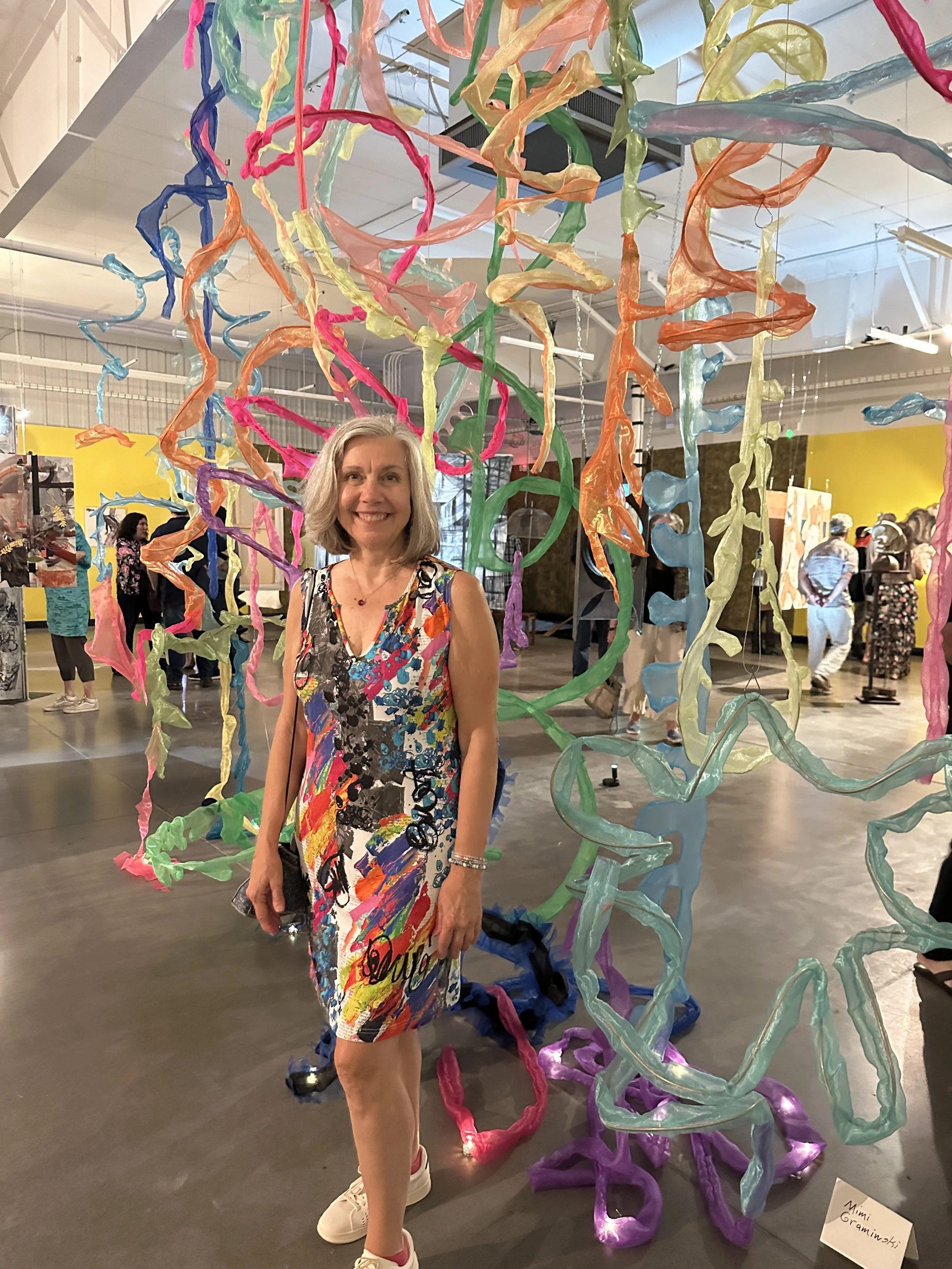
Mimi Graminski with her site-specific installation during Site Seen's Of Frame and Fallow, a temporary contemporary art exhibition presented inside a former Dollar General in Esopus, New York, 2026. Photograph by Natalya Khorover
A Site Seen Field Guide
We rarely think about the buildings we move through each day.
A grocery store. An office. A former bank. A marina waiting for its next tenant. A vacant storefront passed so often it becomes almost invisible.
We tend to experience these places as backdrops to ordinary life. We enter, complete a task, and leave, rarely noticing the layers of time accumulating around us. A repaired section of drywall. A threshold worn smooth by thousands of footsteps. Faded paint where shelving once stood. An abandoned electrical conduit that no longer leads anywhere.
Yet none of these details are accidental. Together, they form a quiet record of human presence.
Site-specific art begins by paying attention to what is already there.
Unlike artworks created independently of their surroundings, site-specific works are conceived in conversation with a particular place. The architecture is not simply where the artwork happens to be displayed. It becomes part of the artwork's language. Light, scale, history, sound, materials, memory, even the evidence left behind by previous occupants all contribute to what the work ultimately becomes.
Remove the work from that place and something essential disappears with it.
At Site Seen, this understanding shapes every exhibition we create. Before a single artwork is installed, before an exhibition has a title, before artists are invited into the space, we spend time listening. We walk the building. We notice how daylight moves across the floor. We look for traces of previous lives. We pay attention to what the building is already saying.
Because every place has a story long before art arrives.
Mimi Graminski with her site-specific installation during Site Seen's Of Frame and Fallow, a temporary contemporary art exhibition presented inside a former Dollar General in Esopus, New York, 2026. Photograph by Natalya Khorover
A Place Is Never Neutral
One of the most persistent misconceptions about exhibitions is that the building exists merely to contain the artwork.
The familiar white gallery reinforces this idea. Walls are painted evenly. Windows are minimized. Floors become neutral. Everything encourages the viewer to focus entirely on the objects being displayed.
There is tremendous value in that approach.
But neutrality is also an illusion.
Every space shapes experience. Ceiling height changes the way we perceive scale. Sound alters our sense of distance. Light affects mood. Even the sequence of doorways influences how we encounter a work of art.
Site-specific artists begin with this reality rather than attempting to erase it.
Instead of asking how a building can disappear, they ask how the building itself might participate.
A cracked concrete floor becomes part of an installation. An old loading dock becomes a stage. Fluorescent lighting once designed to illuminate merchandise creates an unexpectedly cinematic atmosphere. A former dressing room becomes an intimate chamber for sound.
Architecture stops functioning as background.
It becomes collaborator.
Listening Before Making
Every building carries evidence of the lives that unfolded inside it.
Not dramatic histories.
Ordinary ones.
The place where customers paused while waiting in line. The wall repaired after years of use. The faded outline of a sign removed decades ago. Layers of paint revealing changing priorities. Small alterations made by people whose names will likely never be known.
These traces are remarkably similar to archaeological artifacts.
Individually they may seem insignificant.
Together they reveal patterns of human behavior.
At Site Seen, we often describe our process as listening before making.
Rather than arriving with a predetermined vision imposed upon a space, we allow the building itself to shape the conversation. The architecture suggests possibilities. The history introduces questions. The remaining material evidence provides both limitations and opportunities.
Artists respond not to an empty room but to a place already rich with accumulated meaning.
What Makes Site-Specific Art Different?
Many artworks can travel successfully from museum to museum without losing their essential character.
Site-specific works are different.
They emerge from relationships that cannot simply be packed into a crate.
A sculpture responding to the proportions of a former warehouse cannot be fully separated from those proportions. An installation built around the memory of a neighborhood changes when placed somewhere else. A sound work composed for the reverberation of concrete walls becomes something entirely different inside a carpeted gallery.
This does not make site-specific art better.
It makes it inseparable from its environment.
The work and the place complete one another.
Buildings Remember
Vacant buildings are often described as empty.
We see them differently.
A building between tenants is not without history. It exists in a brief period of transition where its previous identity remains visible while its future has not yet been written.
These moments are surprisingly fragile.
Renovation erases them.
Demolition eliminates them entirely.
Yet before either happens, there exists an extraordinary opportunity to encounter the building as it is.
Not preserved.
Not restored.
Simply acknowledged.
Temporary exhibitions allow us to inhabit that moment.
Rather than pretending the past never happened, they invite visitors to experience architecture carrying multiple lives at once.
The Site Seen Approach
Every Site Seen exhibition begins with a building.
Not because we are searching for unusual venues, but because we believe architecture is capable of shaping meaning as profoundly as any artwork.
A former tattoo parlor carries different emotional weight than a marina.
An abandoned Dollar General speaks differently than an empty office building.
We never ask artists to ignore those histories.
We ask them to engage with them.
Sometimes that dialogue is subtle.
Sometimes direct.
Sometimes the building quietly changes the way a work is perceived without visitors fully realizing why.
The exhibition becomes something that could not exist anywhere else.
When it ends, it disappears.
And that disappearance matters.
The building continues its own journey carrying one more layer of memory.
The artists move on.
Visitors remember not only individual works, but the experience of encountering them in a place that briefly became something entirely unexpected.
Why Site-Specific Art Matters
We live in a culture increasingly designed for efficiency.
Buildings are constructed to serve functions. Once those functions disappear, the structures themselves often fade from public attention.
Site-specific art asks us to slow down.
To notice.
To recognize that architecture is never merely physical shelter but a record of human activity, aspiration, failure, adaptation, and care.
When contemporary art enters these spaces, it does not erase what came before.
It reveals it.
Sometimes the most remarkable transformation is not what happens to the building.
It is what happens to the way we see it.
Related Reading
What Is Adaptive Reuse?
Why Context Changes the Meaning of Art
How Artists Transform Vacant Buildings
Temporary Art Exhibitions vs. Traditional Galleries
The Life Cycle of a Site Seen Exhibition
How We Transformed an Abandoned Dollar General into a Contemporary Art Exhibition
What happens when a vacant retail store becomes a temporary home for contemporary art? This behind-the-scenes account follows the transformation of a former Dollar General into Of Frame and Fallow, a Site Seen exhibition featuring the work of more than fifty artists.
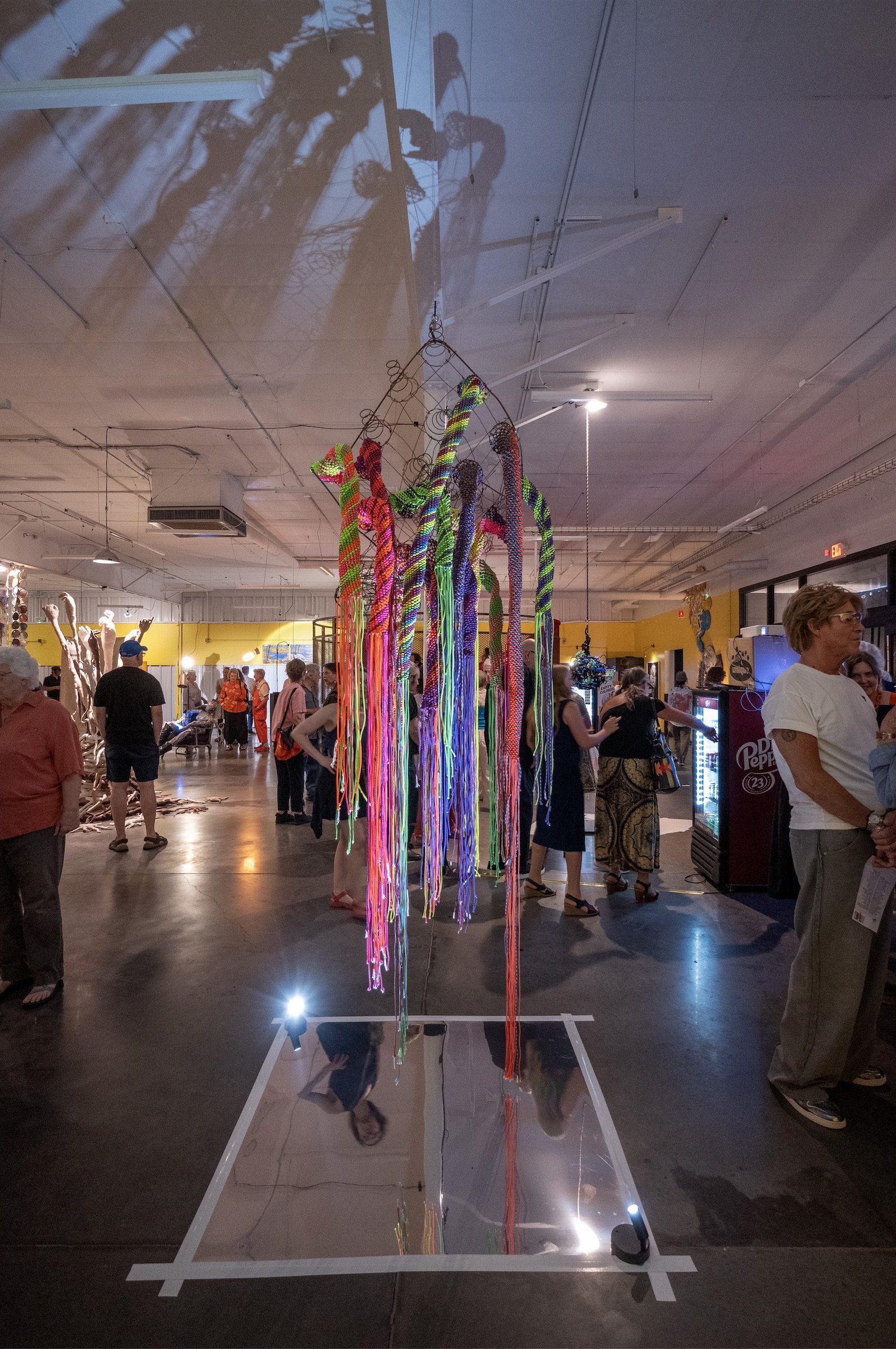
Featured image: Exhibition view, Of Frame and Fallow, Site Seen, 2026 . Photography by Fred Hatt
When we first unlocked the doors, it didn't look like an art exhibition waiting to happen.
It looked exactly like what it had been.
A Dollar General.
The fluorescent lights still hung overhead. Bright yellow walls stretched around the perimeter of the building. Retail fixtures remained. The familiar geometry of discount commerce lingered in every aisle, even after the shelves themselves had disappeared.
Most people would have walked through the building and seen an empty store.
We saw a conversation waiting to happen.
That difference in perspective is where every Site Seen exhibition begins.
Looking Beyond Vacancy
Vacancy is often mistaken for absence.
A building sits empty for a few months, sometimes years, and gradually disappears from public attention. Yet buildings rarely become empty in the emotional sense. They continue to accumulate memory. Layers of occupation remain visible in worn floors, repaired walls, faded paint, forgotten fixtures, and the countless decisions made by people who passed through long before artists arrived.
The former Dollar General already possessed its own history.
Rather than concealing that history, we wanted the exhibition to exist because of it.
The building was never intended to become a neutral gallery.
It remained unmistakably itself.
Curating for a Building, Not Just a Theme
Every Site Seen exhibition begins with a site before it begins with artists.
Long before invitations were sent, we walked the building repeatedly. We watched how afternoon light entered through the storefront windows. We measured distances between columns. We noted sightlines, ceiling heights, hidden corners, and the subtle ways visitors might move through the space.
Only then did the curatorial framework begin to emerge.
Of Frame and Fallow invited artists to consider what remains after a place has been emptied, abandoned, or transformed. Memory, architecture, labor, resilience, ecology, ritual, and human presence became recurring threads, not because they had been assigned, but because the building itself suggested them.
The exhibition was shaped as much by the architecture as by the artworks it contained.
Fifty-One Artists, One Temporary Home
Bringing together more than fifty artists inside a single building is less like hanging an exhibition and more like composing an orchestra.
Every artwork influences those around it.
Scale matters.
Distance matters.
Light matters.
Some works required quiet.
Others demanded space.
Certain conversations between artworks emerged only after they occupied the same room.
Installing the exhibition became an act of continual adjustment. Sculptures shifted. Installations expanded. New relationships appeared unexpectedly as artists responded not only to the building, but to one another.
The exhibition gradually assembled itself through hundreds of small decisions.
A Building Changes Again
On opening night, visitors entered a place many already knew.
Some had shopped there.
Others had driven past it for years without noticing it.
Now they crossed the same threshold into something entirely different.
People wandered slowly.
They looked upward.
They paused.
Conversations happened between strangers.
Children moved through installations with curiosity rather than hesitation.
For a few hours, the building acquired a new identity.
Not permanently.
Just long enough to imagine another future.
Then It Was Gone
Temporary exhibitions carry their own kind of urgency.
Artists know the work will disappear.
Visitors understand the experience cannot simply be postponed until next month.
When Of Frame and Fallow closed, the installations came down. The lights were packed away. The building returned once again to waiting.
Yet something had changed.
The exhibition now exists in photographs, conversations, memories, and the work that artists carried forward into their studios.
The building continued its own journey.
So did everyone who passed through it.
Why We Keep Returning to Buildings Like This
People sometimes ask why Site Seen doesn't establish a permanent gallery.
The answer was visible throughout Of Frame and Fallow.
This exhibition could not have existed anywhere else.
Its meaning emerged through the dialogue between architecture, artwork, and the people who briefly shared the same space.
That conversation belongs to this building alone.
When it ended, it became part of the building's history.
And that, perhaps, is the most meaningful transformation of all.
About Of Frame and Fallow
Of Frame and Fallow transformed a former Dollar General in Esopus, New York, into a temporary contemporary art exhibition featuring fifty-one artists working across sculpture, installation, painting, photography, fiber, video, and mixed media. Presented by Site Seen in June 2026, the exhibition invited artists and visitors alike to reconsider vacancy not as an ending, but as a site of memory, possibility, and renewal.
About Inside Site Seen
Inside Site Seen is an ongoing editorial series exploring the ideas, places, artists, and processes behind Site Seen's temporary exhibitions. Together, these essays form an evolving archive of conversations about contemporary art, architecture, memory, and the overlooked buildings that briefly become sites of cultural exchange.
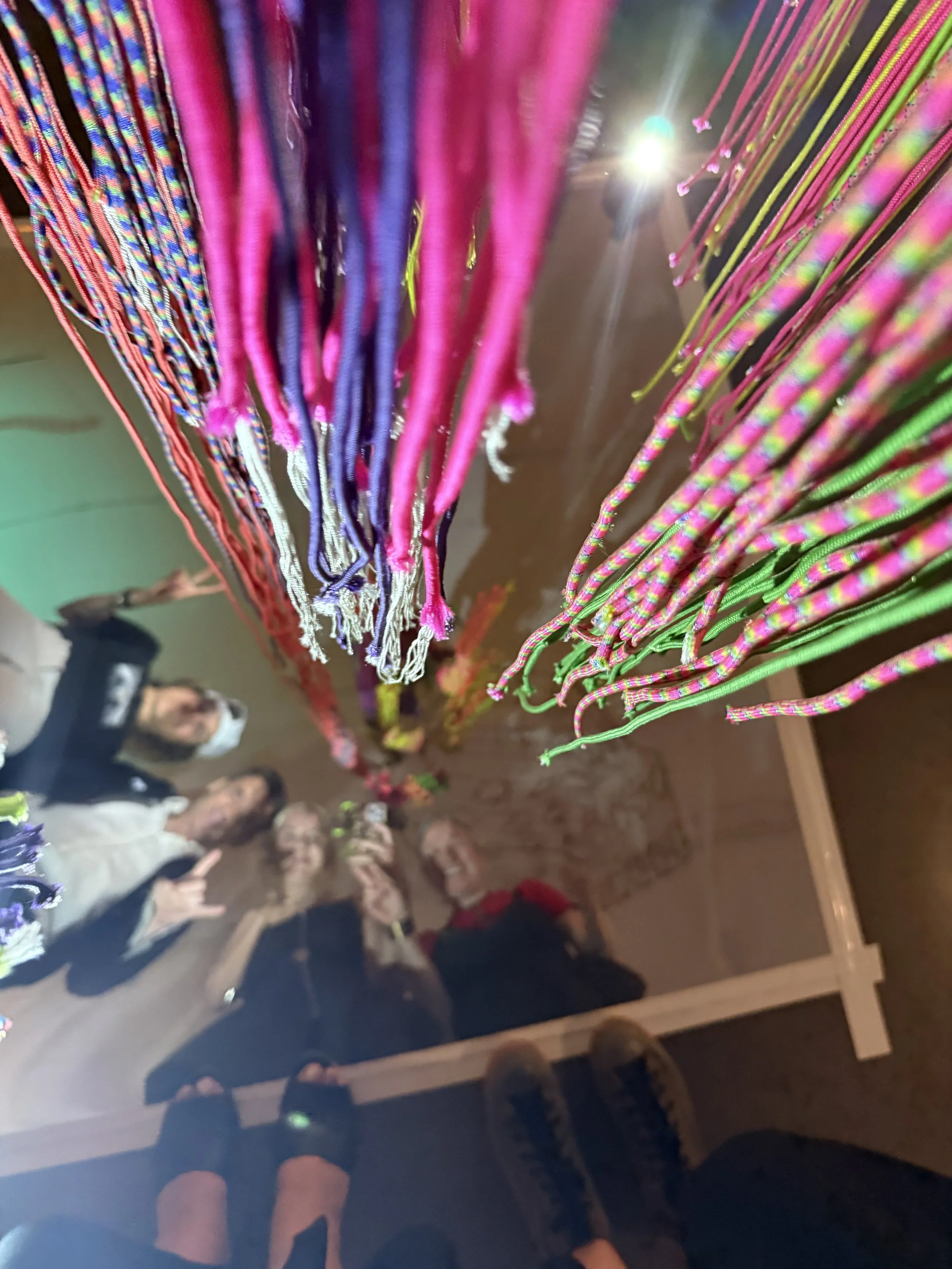
When Artists Begin Listening to Buildings
At Site Seen, artists are invited to respond not only to architecture, but to one another. Every exhibition begins as a conversation, and the building is often the first voice.
Artists preparing a Site Seen exhibition. Every installation begins with a conversation between artists, architecture, and place. Photograph by Site Seen
People often ask how artists are selected for a Site Seen exhibition.
The answer rarely begins with the artists themselves.
It begins with the building.
Every space arrives carrying its own history, proportions, light, atmosphere, and unanswered questions. Before invitations are extended, we spend time understanding the place itself.
Only then do we begin imagining which artists might enter into that conversation.
We are not looking for artwork that simply fills a room.
We are looking for artists who are willing to listen.
Every Building Speaks Differently
A former warehouse asks different questions than an abandoned retail store.
A church asks different questions than an office.
Even buildings that appear similar reveal entirely different personalities once time is spent inside them.
Some encourage stillness.
Others invite movement.
Some ask for restraint.
Others demand boldness.
The architecture quietly establishes the conditions for the exhibition before a single artwork has arrived.
No Artist Works Alone
Although every participating artist brings an established practice, no artwork exists in isolation once it enters the building.
A sculpture changes the way a painting is experienced.
A sound installation alters the atmosphere of an adjacent room.
Natural light transforms throughout the day.
Visitors create unexpected pathways through the space.
Every decision affects another.
The exhibition becomes less a collection of individual works than a network of relationships.
Curating Conversations
People often think of curating as selecting objects.
For us, it is closer to arranging conversations.
Sometimes those conversations happen between two artworks.
Sometimes they happen between an artwork and a cracked concrete floor.
Sometimes they happen between a visitor and a memory unexpectedly awakened by a familiar building.
Those conversations cannot be planned completely.
They emerge gradually as artists, architecture, and visitors begin responding to one another.
Our role is not to control those encounters.
It is to create the conditions where they become possible.
Trusting the Unexpected
Every exhibition contains moments we could never have predicted.
An artist installs a piece in a location different from where it was originally planned.
A shaft of afternoon light suddenly transforms an entire room.
Two artworks begin speaking to one another in ways that only become apparent after installation.
Rather than resisting those moments, we follow them.
Some of the strongest curatorial decisions emerge through attention rather than certainty.
A Shared Practice
By opening night, no one person owns the exhibition.
The artists have shaped it.
The building has shaped it.
Visitors continue shaping it through the ways they move, pause, and gather.
The exhibition becomes something larger than the sum of its individual parts.
It becomes a temporary community assembled around a particular place and moment in time.
Listening Together
Perhaps the most important quality we look for in artists is curiosity.
Curiosity about architecture.
Curiosity about history.
Curiosity about materials.
Curiosity about one another.
When artists begin by listening instead of imposing, buildings begin revealing possibilities that might otherwise remain unnoticed.
The resulting exhibition could not exist anywhere else.
It belongs to that building alone.
About Inside Site Seen
Inside Site Seen is an ongoing editorial series exploring the ideas, places, artists, and processes behind Site Seen's temporary exhibitions. Together, these essays form an evolving archive of conversations about contemporary art, architecture, memory, and the overlooked buildings that briefly become sites of cultural exchange.
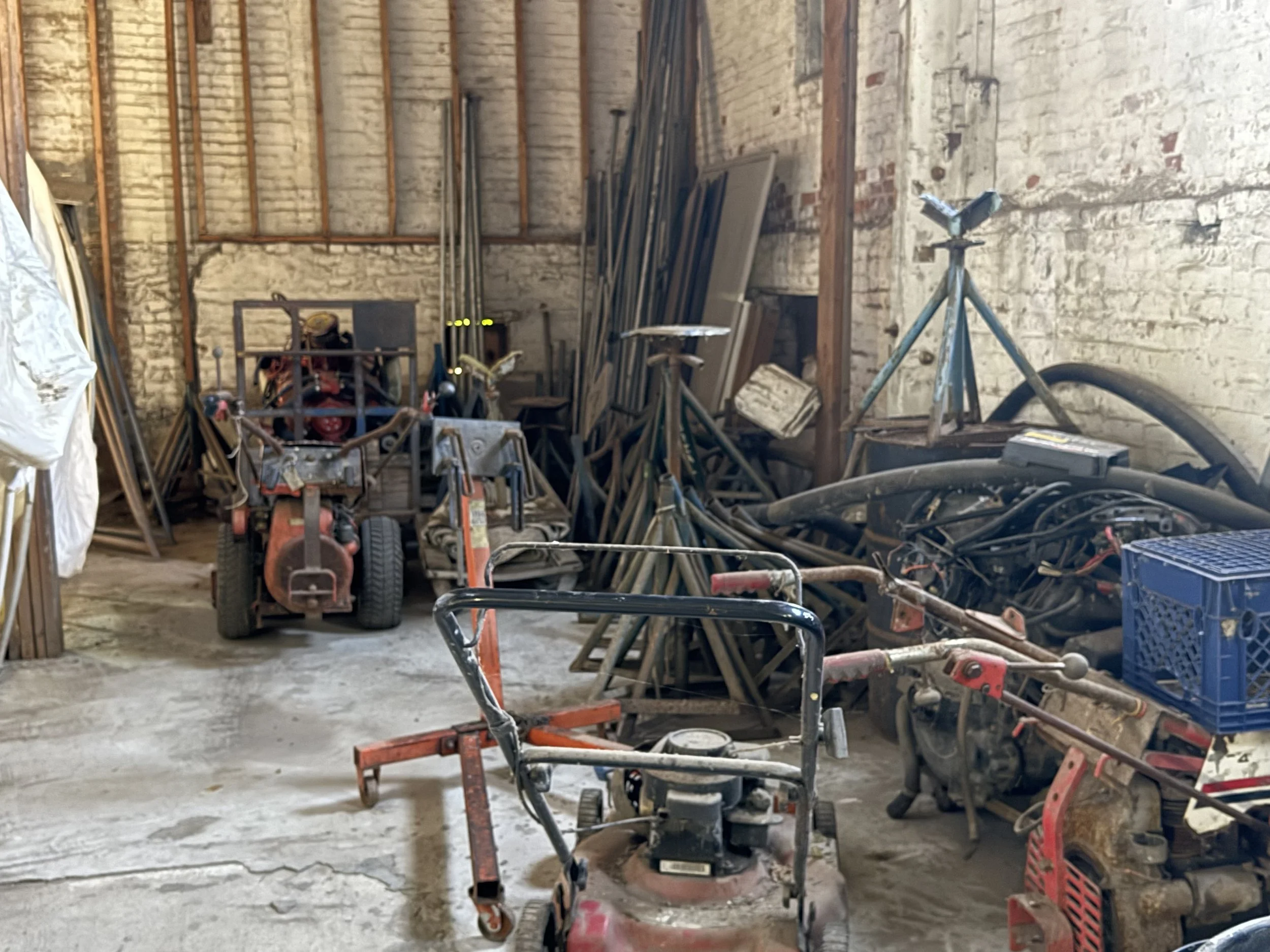
The Life of a Building Between Tenants
Vacancy is often described as emptiness. We see it differently. This essay considers what happens to buildings in the quiet interval between one life and the next, and why those moments of transition have become central to Site Seen's curatorial practice.
'
Featured image: Interior of a future Site Seen exhibition space before installation. Photography by Site Seen
Most buildings spend their lives being used.
People arrive every morning. Doors open. Deliveries are made. Conversations happen. Floors wear smooth beneath thousands of footsteps. Walls are painted, repaired, patched, and painted again. Years accumulate quietly through ordinary routines.
Then, one day, everything stops.
The lights go out.
The doors lock.
A handwritten notice appears in the window.
Eventually the signs come down.
From the outside, it seems as though the building has become empty.
But vacancy is rarely empty.
It is a pause.
Between One Story and the Next
Every Site Seen exhibition begins during this uncertain interval.
A building has finished one chapter of its life but has not yet begun another. It waits without knowing what comes next. It may become another business, another institution, another home, or disappear altogether.
These periods are often treated as interruptions, something to move through as quickly as possible.
We see them as opportunities to look more closely.
Without the activity that once defined them, buildings reveal themselves differently. Details that once passed unnoticed become visible. Layers of paint emerge. Natural light changes the atmosphere. Sounds carry farther. Time seems to move more slowly.
The architecture begins speaking in a different voice.
Evidence of Human Presence
One of the first things we notice when entering a vacant building is not what has been removed.
It is what remains.
A repaired crack.
A worn threshold.
A handwritten measurement on a wall.
The outline left behind by shelving.
A forgotten hook.
Tape residue where signs once hung.
These fragments are easy to overlook, yet together they form an archaeology of everyday life.
Site Seen does not erase these traces.
We build around them.
Sometimes the smallest details become the most meaningful.
Listening Before Curating
Every building teaches us how it wants to be approached.
Before artists are selected or artworks installed, we spend time walking through the space without making decisions.
We pay attention to light.
To acoustics.
To circulation.
To what feels unexpectedly intimate and what feels overwhelmingly open.
Rather than asking how an exhibition can occupy the building, we ask how the building might shape the exhibition.
The difference is subtle.
It changes everything.
Temporary Occupation
Our exhibitions are brief by design.
They do not attempt to preserve buildings.
They do not pretend to rescue them.
Instead, they acknowledge that change is inevitable.
For a short time, artists, visitors, and architecture exist together in a shared conversation.
Then everyone moves on.
The building continues toward its next life carrying another layer of experience.
The exhibition becomes part of its history.
Seeing Buildings Differently
Perhaps the greatest transformation does not happen inside the building.
It happens inside the visitor.
After attending a Site Seen exhibition, it becomes difficult to pass another vacant storefront without wondering what it might become.
An empty office no longer feels simply abandoned.
A warehouse begins suggesting possibilities.
Architecture becomes something living rather than fixed.
The exhibition ends, but the way we see the world has shifted.
Waiting Is Also a Form of Becoming
Contemporary culture often celebrates beginnings and endings.
Openings.
Closings.
Groundbreakings.
Ribbon cuttings.
Far less attention is given to what happens between those moments.
Yet it is often within these quieter periods that the most profound transformations begin.
Buildings teach us patience.
They remind us that waiting is not the opposite of change.
Sometimes waiting is the change.
Site Seen exists within those intervals.
Not to interrupt them.
But to listen.
About Inside Site Seen
Inside Site Seen is an ongoing editorial series exploring the ideas, places, artists, and processes behind Site Seen's temporary exhibitions. Together, these essays form an evolving archive of conversations about contemporary art, architecture, memory, and the overlooked buildings that briefly become sites of cultural exchange.
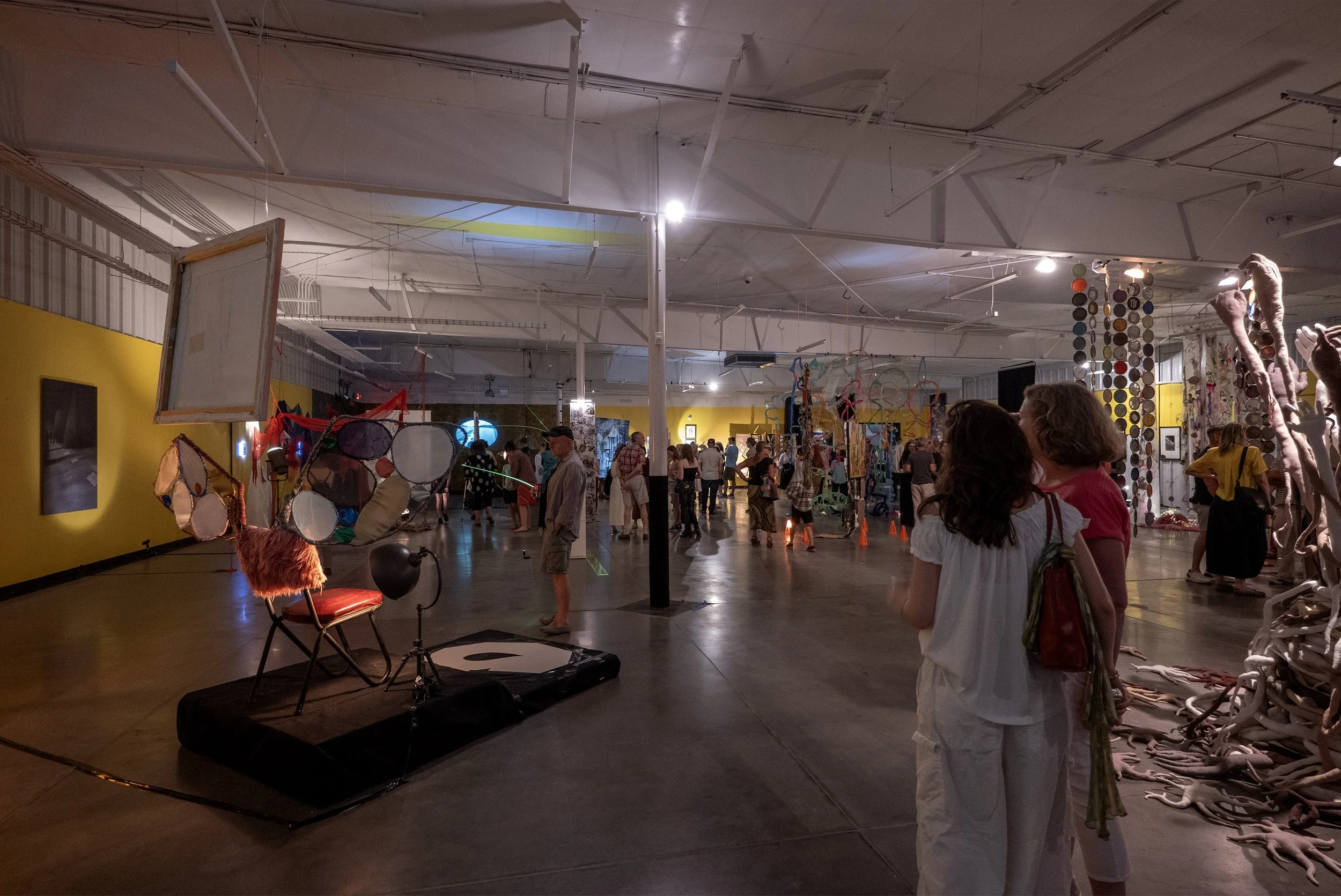
Why We Transform Buildings Instead of Building Galleries
Why does Site Seen transform overlooked buildings instead of building galleries? This opening essay introduces the ideas that shape our temporary exhibitions and the evolving relationship between contemporary art, architecture, memory, and place.
Featured image: Exhibition view, Of Frame and Fallow, Site Seen, 2026. Photography by Fred Hatt
Every building remembers.
Some remember factories. Others remember classrooms, storefronts, churches, offices, or homes. Even after they fall silent, the rhythms of daily life remain embedded within their walls. Businesses close, ownership changes, and buildings wait. Yet something intangible remains.
Site Seen was founded on the belief that these places are not empty. They continue to shape the people who pass through them long after their original purpose has faded. Rather than seeing vacancy as absence, we see possibility.
Instead of constructing new galleries or occupying permanent exhibition spaces, Site Seen activates overlooked and transitional architecture through temporary contemporary art exhibitions. For a brief moment, buildings that might otherwise stand unnoticed become places of encounter, reflection, and discovery before returning once again to silence.
Our exhibitions are intentionally temporary.
Impermanence is not a limitation.
It is the foundation of the work.
Each exhibition exists only once. Every installation responds directly to the architecture, history, and atmosphere of a particular place. The relationship between artwork and building cannot be recreated elsewhere. When the exhibition closes, the work departs, but the building continues its own journey carrying another layer of memory.
Buildings Are Collaborators
Most galleries are designed to disappear behind the artwork. White walls and controlled lighting create neutrality so that attention rests entirely on what has been placed inside them.
Site Seen begins from the opposite premise.
The buildings themselves are active participants.
A former retail store.
A vacant office.
An abandoned warehouse.
A structure between one chapter and the next.
These places arrive with histories already written into them. Scuffed floors, worn thresholds, changing light, forgotten corners, and traces of previous occupants shape the experience of every exhibition. Rather than asking artists to ignore those conditions, Site Seen invites them to respond to them.
The building becomes another voice in the conversation.
Temporary by Design
There is something fundamentally different about entering an exhibition that will soon disappear.
Visitors know the experience cannot be postponed indefinitely.
Artists understand that their work will exist in dialogue with a particular building only briefly.
Curators make decisions knowing they will never again arrange these works within this exact space.
That awareness changes the experience for everyone involved.
Temporary exhibitions encourage a heightened form of attention. They remind us that places, like people, continue to change, and that some of the most meaningful encounters happen precisely because they cannot be repeated.
When the exhibition ends, the building returns to its uncertain future. What remains are memories, conversations, and the subtle shift in how a place is understood.
Every Space Asks Different Questions
No two Site Seen exhibitions begin with the same architecture.
One building may still carry traces of commercial life. Another may reveal decades of industrial history. A third may stand vacant long enough for silence itself to become part of the experience.
Rather than imposing a predetermined exhibition model, Site Seen allows each space to shape its own conversation.
How does scale influence intimacy?
What histories remain visible?
How does contemporary art alter the emotional atmosphere of a familiar place?
What becomes possible when artists respond directly to architecture instead of simply occupying it?
Every exhibition begins by listening before it speaks.
Artists Respond to Place
The artists who participate in Site Seen bring diverse practices, materials, and perspectives, yet they share a willingness to engage with place itself.
Some create work that echoes the architecture.
Others introduce unexpected materials that transform the emotional character of a room.
Some investigate memory.
Others explore labor, landscape, migration, preservation, resilience, or community.
Together, the works create relationships that could not exist within a conventional gallery. The exhibition becomes less about individual objects than about the dialogue unfolding between artists, visitors, and the building itself.
Each exhibition is assembled specifically for its site, allowing the architecture and the artwork to inform one another in ways that neither could achieve alone.
An Archive of Temporary Things
When an exhibition closes, the artwork leaves.
The lights come down.
The doors lock.
Eventually the building continues toward whatever comes next.
Yet the experience does not disappear completely.
Photographs remain.
Conversations continue.
Artists carry the experience into future work.
Visitors remember discovering contemporary art in places they never expected to enter.
The buildings themselves have changed, if only briefly, through the act of being seen differently.
This Archive exists to preserve those moments.
Not as replacements for experiencing the exhibitions in person, but as a growing record of artists, buildings, and ideas that briefly occupied the same space before continuing on their separate paths.
Because temporary does not mean insignificant.
Sometimes what lasts the shortest leaves the deepest impression.
About Inside Site Seen
Inside Site Seen is an ongoing editorial series exploring the ideas, places, artists, and processes behind Site Seen's temporary exhibitions. Together, these essays form an evolving archive of conversations about contemporary art, architecture, memory, and the overlooked buildings that briefly become sites of cultural exchange.