


Lessons from Transforming Vacant Spaces into Contemporary Art Exhibitions
Every Site Seen exhibition has taken place inside a space waiting for its next chapter. These are the lessons we've learned about architecture, artists, communities, and the remarkable potential of places in transition.
Visitors gather inside Of Grit and Grid, Site Seen's 2026 exhibition in Williamsburg, Brooklyn. Transforming a vacant space into an exhibition also transforms the way people experience architecture, community, and contemporary art. Photograph by Site Seen
When Site Seen began transforming vacant spaces into temporary contemporary art exhibitions, we weren't trying to prove a theory.
Each Site Seen exhibition begins with an empty space. It isn't complete until people bring their own memories, conversations, and curiosity into it. Of Grit and Grid, Brooklyn, 2026. Photograph by Site Seen
We were simply following a question.
What might happen if places waiting for their next purpose became places for contemporary art instead?
We didn't expect the answers to come from the spaces themselves.
Each exhibition has unfolded differently. Different artists. Different communities. Different architecture. Different histories.
Yet over time, certain observations have returned again and again.
Not as rules.
Not as conclusions.
Simply as lessons that continue to shape the way we work.
Every Space Arrives with a History
Vacancy is often mistaken for emptiness.
In reality, a vacant space is full of evidence.
Scuffed floors. Repaired walls. Sunlight entering through windows designed for another purpose. Layers of paint. Worn thresholds. The quiet traces of thousands of ordinary moments.
None of these are decorations.
They are part of the space's identity.
We've learned that the strongest exhibitions begin by acknowledging what is already there rather than attempting to erase it.
Every place enters the conversation long before the first artwork arrives.
Architecture Changes the Work
Early on, we thought of architecture as the setting for an exhibition.
Now we think of it as one of its collaborators.
Artists respond to ceiling heights, changing daylight, unexpected acoustics, structural columns, narrow corridors, and expansive open rooms in ways that are impossible to predict in advance.
A work conceived in the studio often evolves after spending time inside the space.
Sometimes an installation becomes larger.
Sometimes quieter.
Sometimes an entirely new idea emerges because of something the building revealed.
Architecture doesn't simply contain contemporary art.
It helps shape it.
Artists Notice What Others Overlook
One of the greatest privileges of curating is watching artists walk through a space for the first time.
Where many people see deterioration, artists often notice possibility.
A patch on the wall becomes a record of care.
A worn floor suggests movement.
A forgotten corner becomes the natural home for an installation.
Again and again, artists have reminded us that creativity begins not by inventing something new, but by paying close attention to what already exists.
People Arrive with Their Own Memories
Visitors rarely enter these exhibitions as strangers.
They already know the places.
They remember shopping there.
Working there.
Driving past every day.
Meeting someone in the parking lot.
Those memories become part of the experience.
Long before anyone talks about contemporary art, conversations begin about the building itself.
The exhibition doesn't replace those histories.
It gives people another way of seeing them.
Temporary Can Leave a Lasting Impression
Every Site Seen exhibition eventually comes to an end.
The artwork is removed.
The lights change.
The next tenant arrives.
Life continues.
Yet something often lingers.
Artists discover new collaborators.
Neighbors return to spaces they hadn't entered in years.
Visitors leave with a different understanding of both the artwork and the building that held it.
We've come to appreciate that permanence isn't the only measure of impact.
Sometimes transformation happens precisely because it is temporary.
Every Community Reads a Space Differently
No two exhibitions have attracted exactly the same audience.
Every community brings its own memories, expectations, and questions.
Some visitors are drawn by the artists.
Others come because they're curious about a familiar building they've watched sit empty for months.
Many arrive without knowing quite what to expect.
That uncertainty often becomes an invitation.
People stay longer.
They ask questions.
They strike up conversations with strangers.
The building becomes a shared point of reference that makes contemporary art feel more approachable.
We Still Don't Have a Formula
Perhaps the most valuable lesson is that there isn't one.
No checklist can tell us how a particular space should become an exhibition.
Each project begins the same way.
By spending time there.
Walking slowly.
Listening carefully.
Paying attention to the architecture, the history, the neighborhood, and the people who already know the place far better than we do.
Only then do we begin imagining what the exhibition might become.
The Spaces Continue to Teach Us
Looking back, we've realized that Site Seen has never been only about transforming vacant spaces.
The spaces have been transforming us as well.
They've changed how we think about architecture.
How we understand curating.
How we experience community.
How we define public engagement.
Most importantly, they've reminded us that places waiting for their next chapter are not empty pauses between more important events.
They are meaningful chapters in their own right.
Every exhibition has been temporary.
The conversation continues.

Why Place Still Matters
At Site Seen, location is never simply a venue. Every building shapes the exhibition, and every exhibition changes the way people experience a place they thought they already knew.
Site Seen exhibition location in Connelly, NY, 2025. Photograph by Site Seen
There is a reason people remember where they first encountered a work of art.
The room.
The light.
The building.
The weather outside.
The sound of footsteps on the floor.
Memory rarely separates artwork from place.
Neither do we.
Art Changes When Its Surroundings Change
The same sculpture shown in a museum, a warehouse, or an abandoned storefront becomes three different experiences.
Not because the artwork changes.
Because everything around it does.
Architecture influences movement.
Windows influence light.
Ceilings influence scale.
Silence influences attention.
The building quietly becomes part of the exhibition.
Discovery Begins Before the Door Opens
Part of the experience begins long before visitors step inside.
Driving through unfamiliar neighborhoods.
Walking down a side street.
Wondering whether they have arrived at the right place.
Passing buildings they may never have noticed before.
There is a small moment of uncertainty.
Then curiosity takes over.
The exhibition has already begun.
A Different Way of Seeing Familiar Places
Many of our exhibitions happen inside buildings that local residents pass every day.
Former stores.
Vacant offices.
Industrial buildings.
Places that have slowly faded into the background of everyday life.
For a brief period, those same buildings become destinations.
People enter spaces they have spent years walking past without ever imagining what was inside.
When the exhibition ends, they never look at that building quite the same way again.
Slowing Down
Contemporary life encourages efficiency.
We move quickly.
We follow familiar routes.
We overlook what has become ordinary.
Site Seen asks visitors to do the opposite.
Pause.
Look more carefully.
Notice details that have always been there.
The exhibition becomes an invitation to pay attention, not only to the artwork, but to the place itself.
The Journey Is Part of the Work
We never think of location as simply an address.
It is part of the experience.
Traveling to a building.
Crossing its threshold.
Moving through unfamiliar rooms.
Discovering how artists have responded to its history.
Every step becomes part of the exhibition.
There is no separation between destination and artwork.
Together they create a single experience.
Carrying Places Forward
After an exhibition closes, visitors often tell us they returned to the building weeks or months later.
Sometimes it was vacant again.
Sometimes construction had begun.
Sometimes another business had already moved in.
What had changed most, however, was not the building.
It was the way they saw it.
The exhibition had permanently altered their relationship with a place that had always been there.
That shift in perception may be one of the most lasting works we create.
About Inside Site Seen
Inside Site Seen is an ongoing editorial series exploring the ideas, places, artists, and processes behind Site Seen's temporary exhibitions. Together, these essays form an evolving archive of conversations about contemporary art, architecture, memory, and the overlooked buildings that briefly become sites of cultural exchange.
When Artists Begin Listening to Buildings
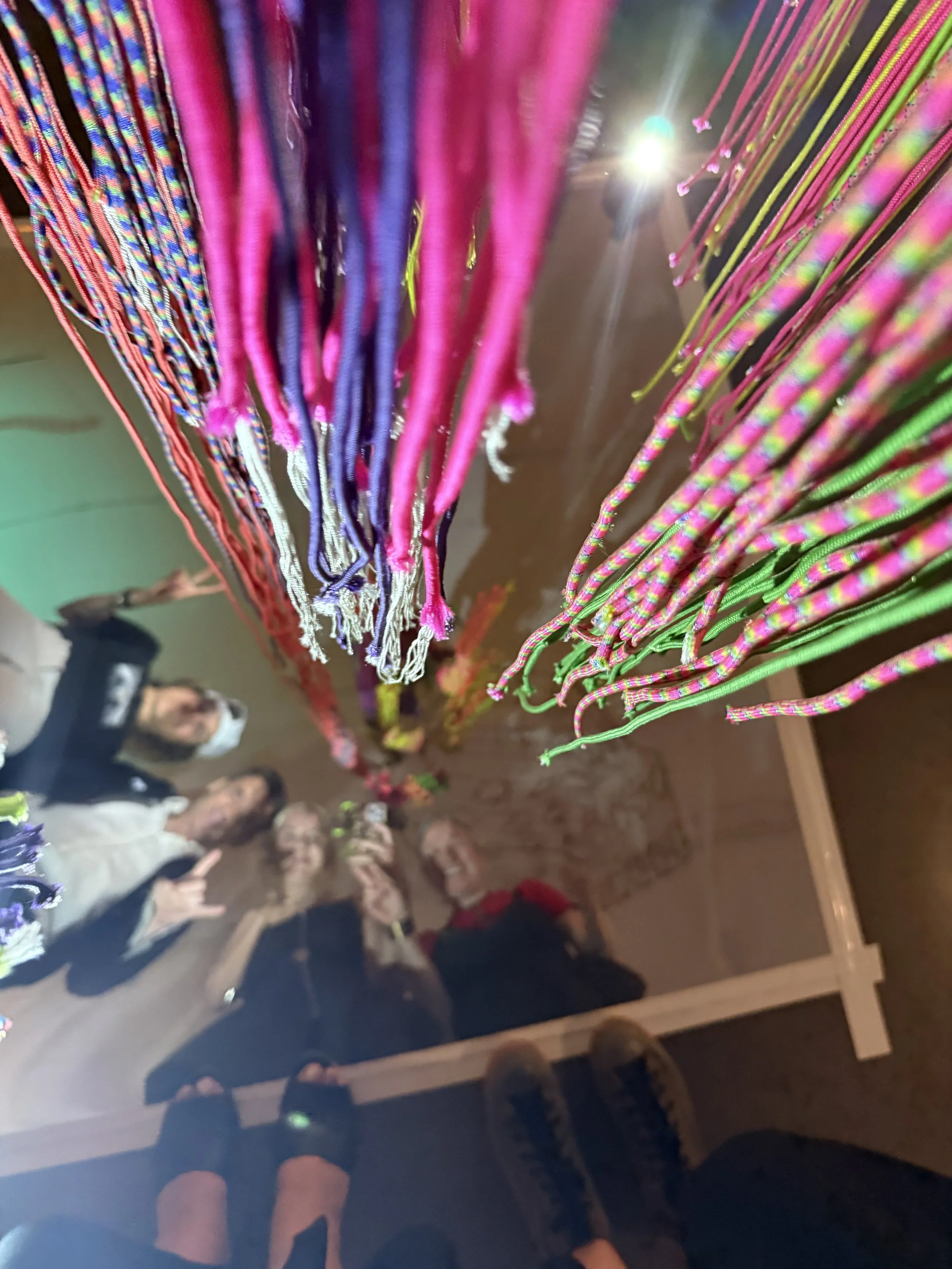
At Site Seen, artists are invited to respond not only to architecture, but to one another. Every exhibition begins as a conversation, and the building is often the first voice.
Artists preparing a Site Seen exhibition. Every installation begins with a conversation between artists, architecture, and place. Photograph by Site Seen
People often ask how artists are selected for a Site Seen exhibition.
The answer rarely begins with the artists themselves.
It begins with the building.
Every space arrives carrying its own history, proportions, light, atmosphere, and unanswered questions. Before invitations are extended, we spend time understanding the place itself.
Only then do we begin imagining which artists might enter into that conversation.
We are not looking for artwork that simply fills a room.
We are looking for artists who are willing to listen.
Every Building Speaks Differently
A former warehouse asks different questions than an abandoned retail store.
A church asks different questions than an office.
Even buildings that appear similar reveal entirely different personalities once time is spent inside them.
Some encourage stillness.
Others invite movement.
Some ask for restraint.
Others demand boldness.
The architecture quietly establishes the conditions for the exhibition before a single artwork has arrived.
No Artist Works Alone
Although every participating artist brings an established practice, no artwork exists in isolation once it enters the building.
A sculpture changes the way a painting is experienced.
A sound installation alters the atmosphere of an adjacent room.
Natural light transforms throughout the day.
Visitors create unexpected pathways through the space.
Every decision affects another.
The exhibition becomes less a collection of individual works than a network of relationships.
Curating Conversations
People often think of curating as selecting objects.
For us, it is closer to arranging conversations.
Sometimes those conversations happen between two artworks.
Sometimes they happen between an artwork and a cracked concrete floor.
Sometimes they happen between a visitor and a memory unexpectedly awakened by a familiar building.
Those conversations cannot be planned completely.
They emerge gradually as artists, architecture, and visitors begin responding to one another.
Our role is not to control those encounters.
It is to create the conditions where they become possible.
Trusting the Unexpected
Every exhibition contains moments we could never have predicted.
An artist installs a piece in a location different from where it was originally planned.
A shaft of afternoon light suddenly transforms an entire room.
Two artworks begin speaking to one another in ways that only become apparent after installation.
Rather than resisting those moments, we follow them.
Some of the strongest curatorial decisions emerge through attention rather than certainty.
A Shared Practice
By opening night, no one person owns the exhibition.
The artists have shaped it.
The building has shaped it.
Visitors continue shaping it through the ways they move, pause, and gather.
The exhibition becomes something larger than the sum of its individual parts.
It becomes a temporary community assembled around a particular place and moment in time.
Listening Together
Perhaps the most important quality we look for in artists is curiosity.
Curiosity about architecture.
Curiosity about history.
Curiosity about materials.
Curiosity about one another.
When artists begin by listening instead of imposing, buildings begin revealing possibilities that might otherwise remain unnoticed.
The resulting exhibition could not exist anywhere else.
It belongs to that building alone.
About Inside Site Seen
Inside Site Seen is an ongoing editorial series exploring the ideas, places, artists, and processes behind Site Seen's temporary exhibitions. Together, these essays form an evolving archive of conversations about contemporary art, architecture, memory, and the overlooked buildings that briefly become sites of cultural exchange.
The Life of a Building Between Tenants
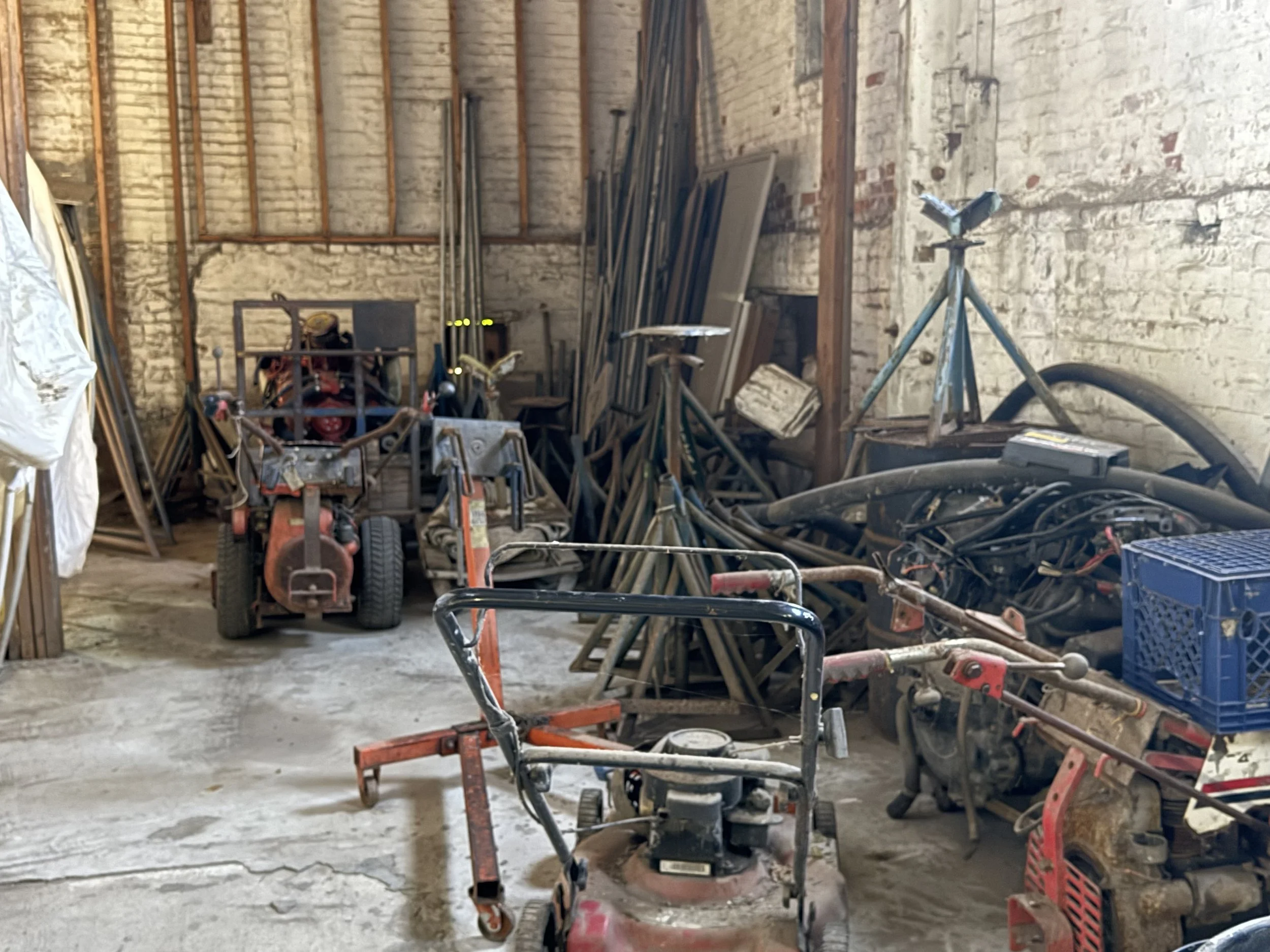
Vacancy is often described as emptiness. We see it differently. This essay considers what happens to buildings in the quiet interval between one life and the next, and why those moments of transition have become central to Site Seen's curatorial practice.
'
Featured image: Interior of a future Site Seen exhibition space before installation. Photography by Site Seen
Most buildings spend their lives being used.
People arrive every morning. Doors open. Deliveries are made. Conversations happen. Floors wear smooth beneath thousands of footsteps. Walls are painted, repaired, patched, and painted again. Years accumulate quietly through ordinary routines.
Then, one day, everything stops.
The lights go out.
The doors lock.
A handwritten notice appears in the window.
Eventually the signs come down.
From the outside, it seems as though the building has become empty.
But vacancy is rarely empty.
It is a pause.
Between One Story and the Next
Every Site Seen exhibition begins during this uncertain interval.
A building has finished one chapter of its life but has not yet begun another. It waits without knowing what comes next. It may become another business, another institution, another home, or disappear altogether.
These periods are often treated as interruptions, something to move through as quickly as possible.
We see them as opportunities to look more closely.
Without the activity that once defined them, buildings reveal themselves differently. Details that once passed unnoticed become visible. Layers of paint emerge. Natural light changes the atmosphere. Sounds carry farther. Time seems to move more slowly.
The architecture begins speaking in a different voice.
Evidence of Human Presence
One of the first things we notice when entering a vacant building is not what has been removed.
It is what remains.
A repaired crack.
A worn threshold.
A handwritten measurement on a wall.
The outline left behind by shelving.
A forgotten hook.
Tape residue where signs once hung.
These fragments are easy to overlook, yet together they form an archaeology of everyday life.
Site Seen does not erase these traces.
We build around them.
Sometimes the smallest details become the most meaningful.
Listening Before Curating
Every building teaches us how it wants to be approached.
Before artists are selected or artworks installed, we spend time walking through the space without making decisions.
We pay attention to light.
To acoustics.
To circulation.
To what feels unexpectedly intimate and what feels overwhelmingly open.
Rather than asking how an exhibition can occupy the building, we ask how the building might shape the exhibition.
The difference is subtle.
It changes everything.
Temporary Occupation
Our exhibitions are brief by design.
They do not attempt to preserve buildings.
They do not pretend to rescue them.
Instead, they acknowledge that change is inevitable.
For a short time, artists, visitors, and architecture exist together in a shared conversation.
Then everyone moves on.
The building continues toward its next life carrying another layer of experience.
The exhibition becomes part of its history.
Seeing Buildings Differently
Perhaps the greatest transformation does not happen inside the building.
It happens inside the visitor.
After attending a Site Seen exhibition, it becomes difficult to pass another vacant storefront without wondering what it might become.
An empty office no longer feels simply abandoned.
A warehouse begins suggesting possibilities.
Architecture becomes something living rather than fixed.
The exhibition ends, but the way we see the world has shifted.
Waiting Is Also a Form of Becoming
Contemporary culture often celebrates beginnings and endings.
Openings.
Closings.
Groundbreakings.
Ribbon cuttings.
Far less attention is given to what happens between those moments.
Yet it is often within these quieter periods that the most profound transformations begin.
Buildings teach us patience.
They remind us that waiting is not the opposite of change.
Sometimes waiting is the change.
Site Seen exists within those intervals.
Not to interrupt them.
But to listen.
About Inside Site Seen
Inside Site Seen is an ongoing editorial series exploring the ideas, places, artists, and processes behind Site Seen's temporary exhibitions. Together, these essays form an evolving archive of conversations about contemporary art, architecture, memory, and the overlooked buildings that briefly become sites of cultural exchange.