

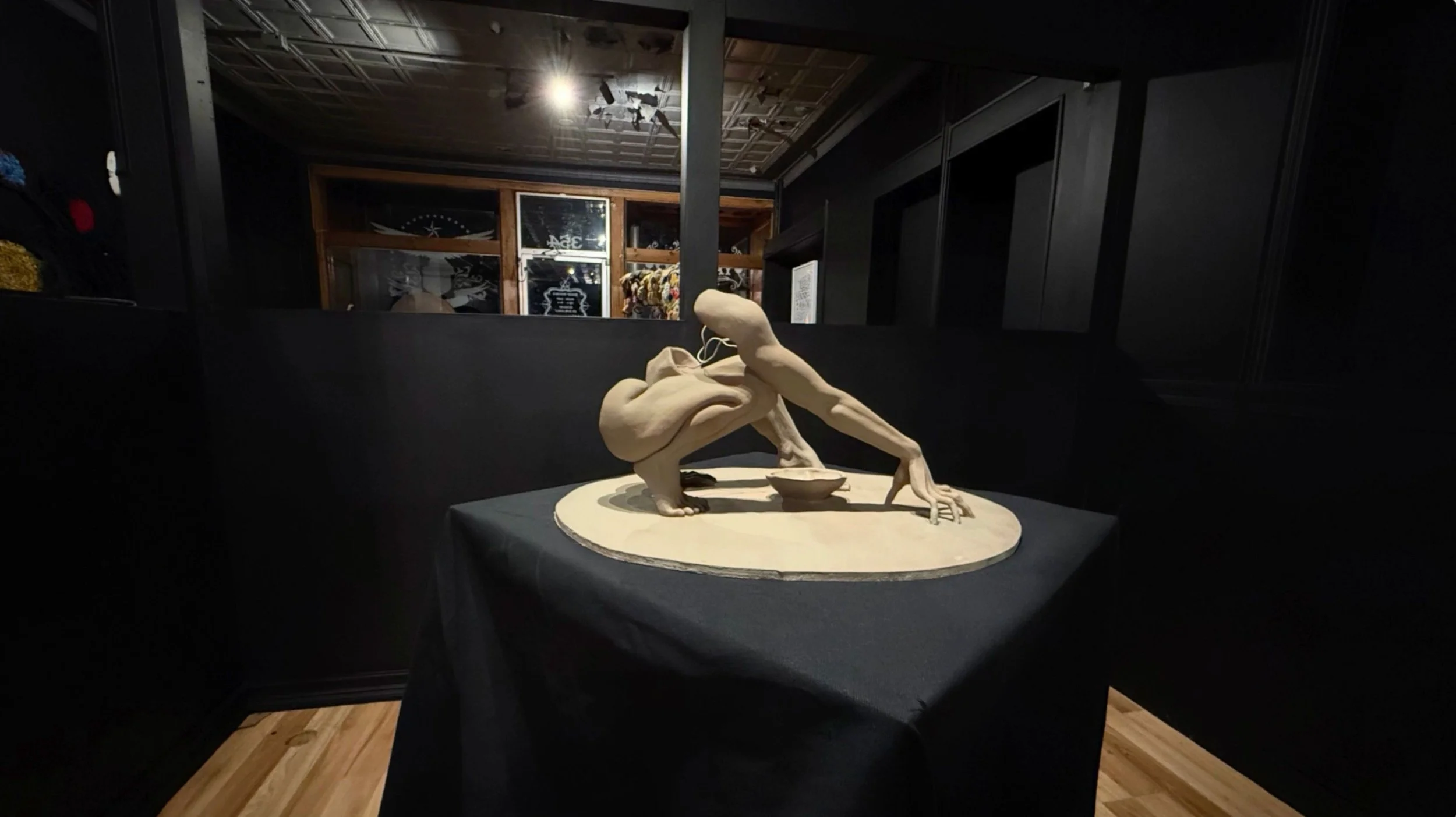
How Temporary Exhibitions Are Curated
Temporary exhibitions don't begin with artwork. They begin with a place. This guide follows the curatorial process from discovering a building to opening day, revealing how architecture, artists, and community come together to create exhibitions that exist for only a short time.
Curating shapes not only what visitors see, but how they experience it. At Of Needle and Nerve, artwork, architecture, light, and space work together to create a single exhibition experience.
A Site Seen Field Guide
When most people visit an exhibition, they see the finished result.
The lighting is adjusted. The artwork has been installed. Visitors move naturally through the space, rarely thinking about the hundreds of decisions that made the experience possible.
Curating shapes not only what visitors see, but how they experience it. At Of Needle and Nerve, artwork, architecture, light, and space work together to create a single exhibition experience.. Photograph by Site Seen
What they don't see is that a temporary exhibition often begins months before the first artwork arrives.
At Site Seen, it begins with a building.
Step 1: Finding the Right Building
Not every vacant building is suitable for an exhibition.
We're looking for more than an empty room. We look for places with character, history, and the ability to support meaningful encounters between art and architecture.
Natural light, circulation, accessibility, ceiling height, existing materials, and structural conditions all influence what is possible. Just as important is the building's own story. Former stores, offices, marinas, schools, and industrial spaces each carry different histories that shape the exhibition in unique ways.
The building is never simply a venue.
It becomes part of the exhibition.
Step 2: Listening Before Planning
Before selecting artists or artworks, we spend time observing the space.
How does light move through the building during the day?
Where do visitors naturally pause?
What traces have previous occupants left behind?
Which architectural features deserve attention rather than concealment?
Understanding a building often means asking more questions than answering them. Those observations become the foundation for every curatorial decision that follows.
Step 3: Bringing Artists Into the Conversation
Artists aren't asked to ignore the building.
They're encouraged to respond to it.
Some create new work inspired by the architecture. Others adapt existing work to the site. Many discover possibilities they hadn't considered until they physically experience the space.
Rather than treating architecture as a backdrop, artists become collaborators with the building itself.
Step 4: Designing the Visitor Experience
Curating is also about designing movement.
Visitors don't experience every exhibition in the same way. They enter through specific thresholds, move at different speeds, pause unexpectedly, and encounter artwork from changing perspectives.
A curator considers those experiences carefully.
Where should the exhibition begin?
How should one room lead to the next?
Where should visitors pause?
How can architecture help guide the experience without dictating it?
These decisions quietly shape how people remember an exhibition long after they leave.
Step 5: Installation
Installation is where planning meets reality.
Even the most carefully considered exhibition changes once artwork enters the space.
A sculpture may need more room than expected. A projection may respond differently to natural light. An installation may discover a stronger relationship with another part of the building.
Temporary exhibitions remain flexible because every space continues to reveal new possibilities throughout installation.
Step 6: Opening the Doors
Opening day marks the beginning of the exhibition's public life.
Visitors bring perspectives the curators and artists could never anticipate. Conversations emerge between strangers. People notice details that others overlook. The building itself often becomes part of those conversations, prompting memories from former customers, employees, neighbors, or visitors familiar with the space's previous life.
Every audience completes the exhibition in its own way.
Step 7: Leaving the Building Ready for Its Next Chapter
Unlike permanent galleries, temporary exhibitions eventually come to an end.
Artwork is carefully removed. Walls are restored when necessary. Materials are packed away. The building returns to the owner, ready for whatever comes next.
Yet something has changed.
For a brief period, the building became a place where artists, architecture, and community came together. Those experiences continue to shape how people remember the space, even after the exhibition has disappeared.
Curating for What Comes Next
Temporary exhibitions are defined by their impermanence, but their impact often extends far beyond their duration.
They invite people to see familiar places differently. They create opportunities for artists to experiment. They reconnect communities with buildings that might otherwise go unnoticed.
The exhibition may last only a few weeks.
The conversation it begins can continue much longer.
About Inside Site Seen
Inside Site Seen is an ongoing editorial series exploring the ideas, places, artists, and processes behind Site Seen's temporary exhibitions. Together, these essays form an evolving archive of conversations about contemporary art, architecture, memory, and the overlooked buildings that briefly become sites of cultural exchange.
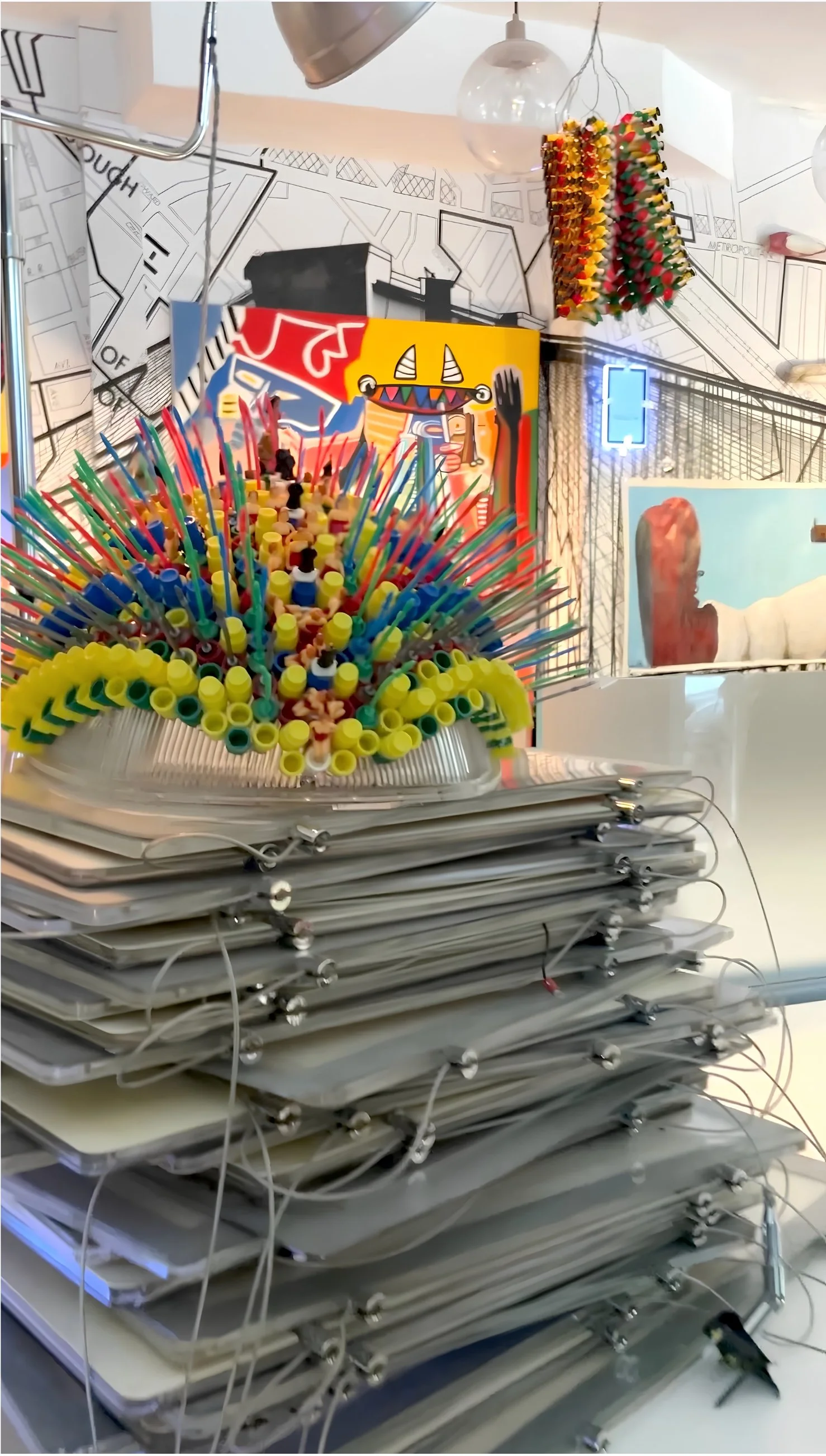
What Is Exhibition Design? How Space Shapes the Experience of Art
Exhibition design is much more than deciding where artwork hangs. This guide explores how space, architecture, lighting, circulation, and interpretation work together to shape every visitor's experience.
Installation view from Of Grit and Grid, Site Seen's 2026 exhibition in Brooklyn, New York. Exhibition design shapes how artworks relate to one another, the surrounding architecture, and the visitor's journey through the space. Photograph by Site Seen
A Site Seen Field Guide
Most people think an exhibition is made by the artwork.
In reality, every exhibition is also shaped by the space around it.
The distance between artworks.
The height of a ceiling.
The direction visitors move.
Natural light entering through a window.
A narrow corridor.
A quiet room.
An unexpected view.
These decisions form what is known as exhibition design.
Good exhibition design doesn't compete with the artwork.
It helps people experience it more fully.
Installation view from Of Grit and Grid, Site Seen's 2026 exhibition in Brooklyn, New York. Thoughtful exhibition design transforms individual artworks into a shared visual conversation. Photograph by Site Seen
What Is Exhibition Design?
Exhibition design is the planning and organization of physical space to support an exhibition's ideas, artworks, and visitors.
It combines architecture, interior design, graphic design, lighting, interpretation, accessibility, and visitor circulation into a single experience.
Whether in a museum, gallery, public space, or temporary exhibition, exhibition design influences how people move, what they notice, and how they remember what they've seen.
More Than Hanging Artwork
Designing an exhibition involves countless decisions:
Where visitors begin.
What they encounter first.
How artworks relate to one another.
How much space each work needs.
Lighting and sightlines.
Seating and moments of rest.
Labels and interpretation.
Accessibility.
Sound.
Flow through the building.
Each decision changes the experience.
Architecture Is Part of the Design
Some exhibitions are installed inside purpose-built galleries.
Others take place in historic buildings, storefronts, warehouses, schools, churches, or industrial spaces.
In these settings, architecture becomes one of the exhibition's primary design elements.
Columns interrupt views.
Brick reflects light differently than drywall.
Old timber changes acoustics.
Windows connect visitors to the surrounding neighborhood.
Rather than hiding these qualities, exhibition designers often work with them.
Exhibition Design at Site Seen
Every Site Seen exhibition begins by studying the building itself.
Instead of forcing a predetermined layout into the space, we allow architecture to influence how visitors move, where artworks are placed, and how individual installations relate to one another.
No two exhibitions follow the same plan because no two buildings tell the same story.
The result is an experience that could only happen in that particular place.
Why Exhibition Design Matters
People rarely remember an exhibition because of a floor plan.
They remember how it felt.
They remember discovering a sculpture around a corner.
Standing beneath a soaring roof.
Walking through changing light.
Hearing footsteps echo across an empty building.
Feeling that a particular artwork belonged exactly where they encountered it.
That experience doesn't happen by accident.
It's the result of thoughtful exhibition design.
Related Reading
What Is Curating?
When Architecture Becomes a Curator
What Is Site-Specific Art?
What Is Adaptive Reuse?
How an Empty Building Becomes an Exhibition

Why Place Still Matters
At Site Seen, location is never simply a venue. Every building shapes the exhibition, and every exhibition changes the way people experience a place they thought they already knew.
Site Seen exhibition location in Connelly, NY, 2025. Photograph by Site Seen
There is a reason people remember where they first encountered a work of art.
The room.
The light.
The building.
The weather outside.
The sound of footsteps on the floor.
Memory rarely separates artwork from place.
Neither do we.
Art Changes When Its Surroundings Change
The same sculpture shown in a museum, a warehouse, or an abandoned storefront becomes three different experiences.
Not because the artwork changes.
Because everything around it does.
Architecture influences movement.
Windows influence light.
Ceilings influence scale.
Silence influences attention.
The building quietly becomes part of the exhibition.
Discovery Begins Before the Door Opens
Part of the experience begins long before visitors step inside.
Driving through unfamiliar neighborhoods.
Walking down a side street.
Wondering whether they have arrived at the right place.
Passing buildings they may never have noticed before.
There is a small moment of uncertainty.
Then curiosity takes over.
The exhibition has already begun.
A Different Way of Seeing Familiar Places
Many of our exhibitions happen inside buildings that local residents pass every day.
Former stores.
Vacant offices.
Industrial buildings.
Places that have slowly faded into the background of everyday life.
For a brief period, those same buildings become destinations.
People enter spaces they have spent years walking past without ever imagining what was inside.
When the exhibition ends, they never look at that building quite the same way again.
Slowing Down
Contemporary life encourages efficiency.
We move quickly.
We follow familiar routes.
We overlook what has become ordinary.
Site Seen asks visitors to do the opposite.
Pause.
Look more carefully.
Notice details that have always been there.
The exhibition becomes an invitation to pay attention, not only to the artwork, but to the place itself.
The Journey Is Part of the Work
We never think of location as simply an address.
It is part of the experience.
Traveling to a building.
Crossing its threshold.
Moving through unfamiliar rooms.
Discovering how artists have responded to its history.
Every step becomes part of the exhibition.
There is no separation between destination and artwork.
Together they create a single experience.
Carrying Places Forward
After an exhibition closes, visitors often tell us they returned to the building weeks or months later.
Sometimes it was vacant again.
Sometimes construction had begun.
Sometimes another business had already moved in.
What had changed most, however, was not the building.
It was the way they saw it.
The exhibition had permanently altered their relationship with a place that had always been there.
That shift in perception may be one of the most lasting works we create.
About Inside Site Seen
Inside Site Seen is an ongoing editorial series exploring the ideas, places, artists, and processes behind Site Seen's temporary exhibitions. Together, these essays form an evolving archive of conversations about contemporary art, architecture, memory, and the overlooked buildings that briefly become sites of cultural exchange.
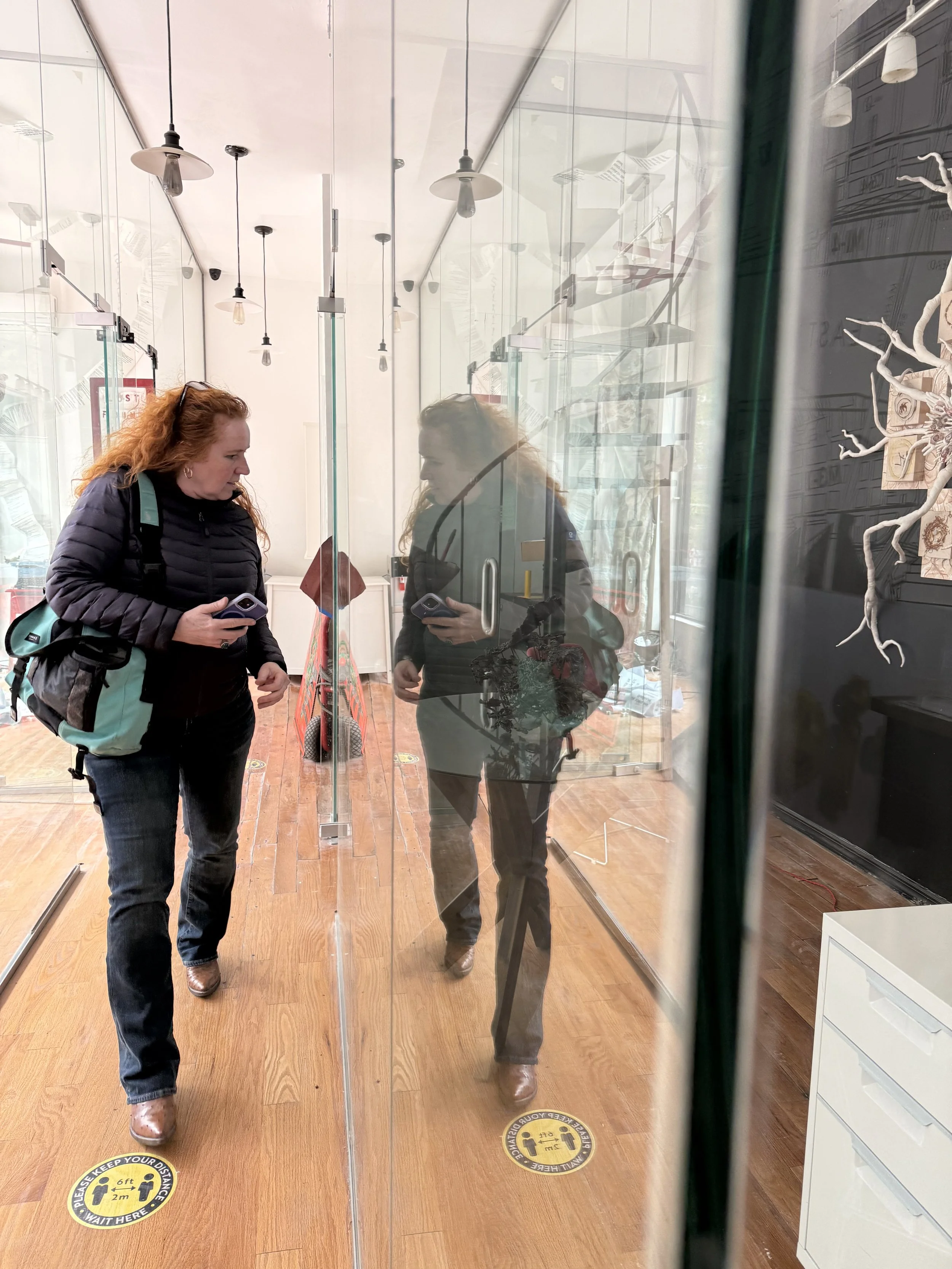
Curating Without White Walls
At Site Seen, curating begins by paying attention rather than imposing certainty. This essay explores why every exhibition emerges from a conversation between artists, architecture, and the histories already embedded within a place.
Curating a Site Seen exhibition begins long before opening night. Photograph by Site Seen
People often imagine that curating begins with an idea.
A theme.
A checklist of artists.
A floor plan.
For us, it begins with observation.
We look before we decide.
We listen before we speak.
The exhibition reveals itself gradually.
Curating Is an Act of Attention
Every building arrives with its own character.
Its own proportions.
Its own rhythms.
Its own history.
Rather than asking how we can transform a building into a gallery, we ask something much simpler.
What is already here?
The answer is rarely immediate.
It emerges slowly through repeated visits, conversations, and time spent inside the space.
There Is No Formula
No two Site Seen exhibitions are curated the same way.
The process changes because every building changes.
A former retail store asks different questions than an industrial warehouse.
A neighborhood shapes the experience differently than a rural landscape.
The artists who eventually participate also reshape the conversation.
Nothing is predetermined.
Everything remains open long enough for the exhibition to discover its own direction.
Relationships Matter More Than Categories
We are less interested in organizing artwork according to medium or style than in creating meaningful relationships.
A sculpture may change the way a nearby photograph is understood.
A sound piece may alter the experience of an entire room.
An installation may draw attention to architectural details that visitors had overlooked only moments earlier.
The exhibition becomes a network of conversations rather than a collection of individual works.
Architecture Refuses Neutrality
Traditional galleries are often designed to disappear.
Their walls become invisible so that attention rests entirely on the artwork.
We embrace the opposite condition.
Exposed brick.
Worn concrete.
Old windows.
Uneven floors.
Changing daylight.
These are not distractions.
They are active participants in the exhibition.
The building contributes as much to the experience as any single artwork.
Making Room for Surprise
No exhibition unfolds exactly as expected.
An artwork may find a different location during installation.
Two artists who have never met begin unexpectedly speaking through their work.
A forgotten room becomes one of the most memorable parts of the exhibition.
Rather than resisting those moments, we make room for them.
Curating requires structure.
It also requires flexibility.
Knowing When to Stop
One of the least visible parts of curating is deciding what not to do.
Not every wall needs artwork.
Not every room needs to be filled.
Sometimes absence creates the strongest encounter.
Silence has a place.
Space has a purpose.
Restraint allows visitors to notice what might otherwise be overlooked.
A Temporary Conversation
Every Site Seen exhibition exists for only a short time.
That impermanence changes the way curatorial decisions are made.
Nothing is intended to become permanent.
Every choice belongs to a specific building, a particular group of artists, and a singular moment that will never happen again.
The exhibition is not preserved.
Only the memory of it remains.
Perhaps that is why every decision feels so important.
About Inside Site Seen
Inside Site Seen is an ongoing editorial series exploring the ideas, places, artists, and processes behind Site Seen's temporary exhibitions. Together, these essays form an evolving archive of conversations about contemporary art, architecture, memory, and the overlooked buildings that briefly become sites of cultural exchange.
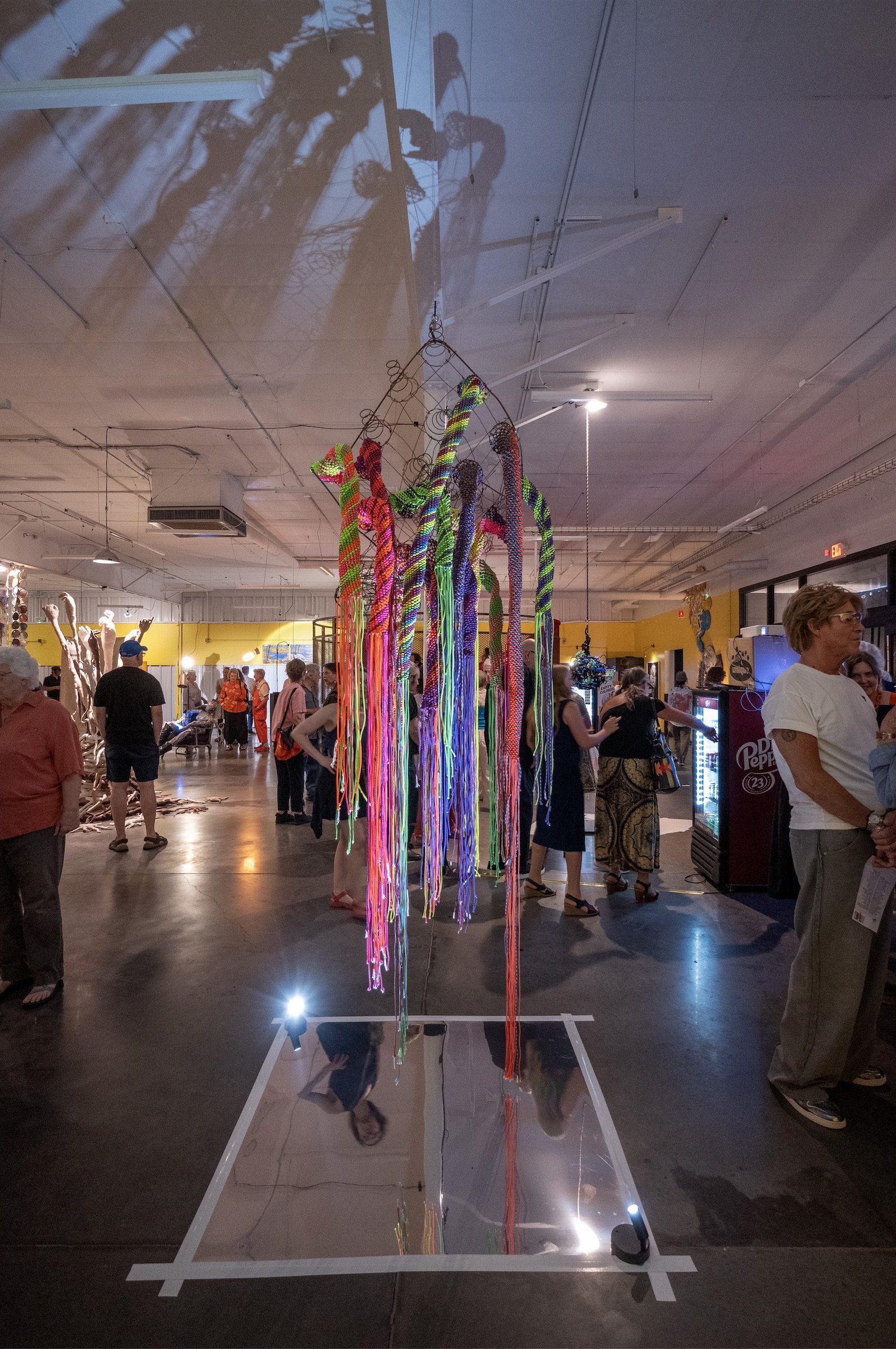
How We Transformed an Abandoned Dollar General into a Contemporary Art Exhibition
What happens when a vacant retail store becomes a temporary home for contemporary art? This behind-the-scenes account follows the transformation of a former Dollar General into Of Frame and Fallow, a Site Seen exhibition featuring the work of more than fifty artists.
Featured image: Exhibition view, Of Frame and Fallow, Site Seen, 2026 . Photography by Fred Hatt
When we first unlocked the doors, it didn't look like an art exhibition waiting to happen.
It looked exactly like what it had been.
A Dollar General.
The fluorescent lights still hung overhead. Bright yellow walls stretched around the perimeter of the building. Retail fixtures remained. The familiar geometry of discount commerce lingered in every aisle, even after the shelves themselves had disappeared.
Most people would have walked through the building and seen an empty store.
We saw a conversation waiting to happen.
That difference in perspective is where every Site Seen exhibition begins.
Looking Beyond Vacancy
Vacancy is often mistaken for absence.
A building sits empty for a few months, sometimes years, and gradually disappears from public attention. Yet buildings rarely become empty in the emotional sense. They continue to accumulate memory. Layers of occupation remain visible in worn floors, repaired walls, faded paint, forgotten fixtures, and the countless decisions made by people who passed through long before artists arrived.
The former Dollar General already possessed its own history.
Rather than concealing that history, we wanted the exhibition to exist because of it.
The building was never intended to become a neutral gallery.
It remained unmistakably itself.
Curating for a Building, Not Just a Theme
Every Site Seen exhibition begins with a site before it begins with artists.
Long before invitations were sent, we walked the building repeatedly. We watched how afternoon light entered through the storefront windows. We measured distances between columns. We noted sightlines, ceiling heights, hidden corners, and the subtle ways visitors might move through the space.
Only then did the curatorial framework begin to emerge.
Of Frame and Fallow invited artists to consider what remains after a place has been emptied, abandoned, or transformed. Memory, architecture, labor, resilience, ecology, ritual, and human presence became recurring threads, not because they had been assigned, but because the building itself suggested them.
The exhibition was shaped as much by the architecture as by the artworks it contained.
Fifty-One Artists, One Temporary Home
Bringing together more than fifty artists inside a single building is less like hanging an exhibition and more like composing an orchestra.
Every artwork influences those around it.
Scale matters.
Distance matters.
Light matters.
Some works required quiet.
Others demanded space.
Certain conversations between artworks emerged only after they occupied the same room.
Installing the exhibition became an act of continual adjustment. Sculptures shifted. Installations expanded. New relationships appeared unexpectedly as artists responded not only to the building, but to one another.
The exhibition gradually assembled itself through hundreds of small decisions.
A Building Changes Again
On opening night, visitors entered a place many already knew.
Some had shopped there.
Others had driven past it for years without noticing it.
Now they crossed the same threshold into something entirely different.
People wandered slowly.
They looked upward.
They paused.
Conversations happened between strangers.
Children moved through installations with curiosity rather than hesitation.
For a few hours, the building acquired a new identity.
Not permanently.
Just long enough to imagine another future.
Then It Was Gone
Temporary exhibitions carry their own kind of urgency.
Artists know the work will disappear.
Visitors understand the experience cannot simply be postponed until next month.
When Of Frame and Fallow closed, the installations came down. The lights were packed away. The building returned once again to waiting.
Yet something had changed.
The exhibition now exists in photographs, conversations, memories, and the work that artists carried forward into their studios.
The building continued its own journey.
So did everyone who passed through it.
Why We Keep Returning to Buildings Like This
People sometimes ask why Site Seen doesn't establish a permanent gallery.
The answer was visible throughout Of Frame and Fallow.
This exhibition could not have existed anywhere else.
Its meaning emerged through the dialogue between architecture, artwork, and the people who briefly shared the same space.
That conversation belongs to this building alone.
When it ended, it became part of the building's history.
And that, perhaps, is the most meaningful transformation of all.
About Of Frame and Fallow
Of Frame and Fallow transformed a former Dollar General in Esopus, New York, into a temporary contemporary art exhibition featuring fifty-one artists working across sculpture, installation, painting, photography, fiber, video, and mixed media. Presented by Site Seen in June 2026, the exhibition invited artists and visitors alike to reconsider vacancy not as an ending, but as a site of memory, possibility, and renewal.
About Inside Site Seen
Inside Site Seen is an ongoing editorial series exploring the ideas, places, artists, and processes behind Site Seen's temporary exhibitions. Together, these essays form an evolving archive of conversations about contemporary art, architecture, memory, and the overlooked buildings that briefly become sites of cultural exchange.
How an Empty Building Becomes an Exhibition
Creating a Site Seen exhibition begins long before the artwork arrives. This essay follows the process of transforming an overlooked building into a temporary destination for contemporary art.
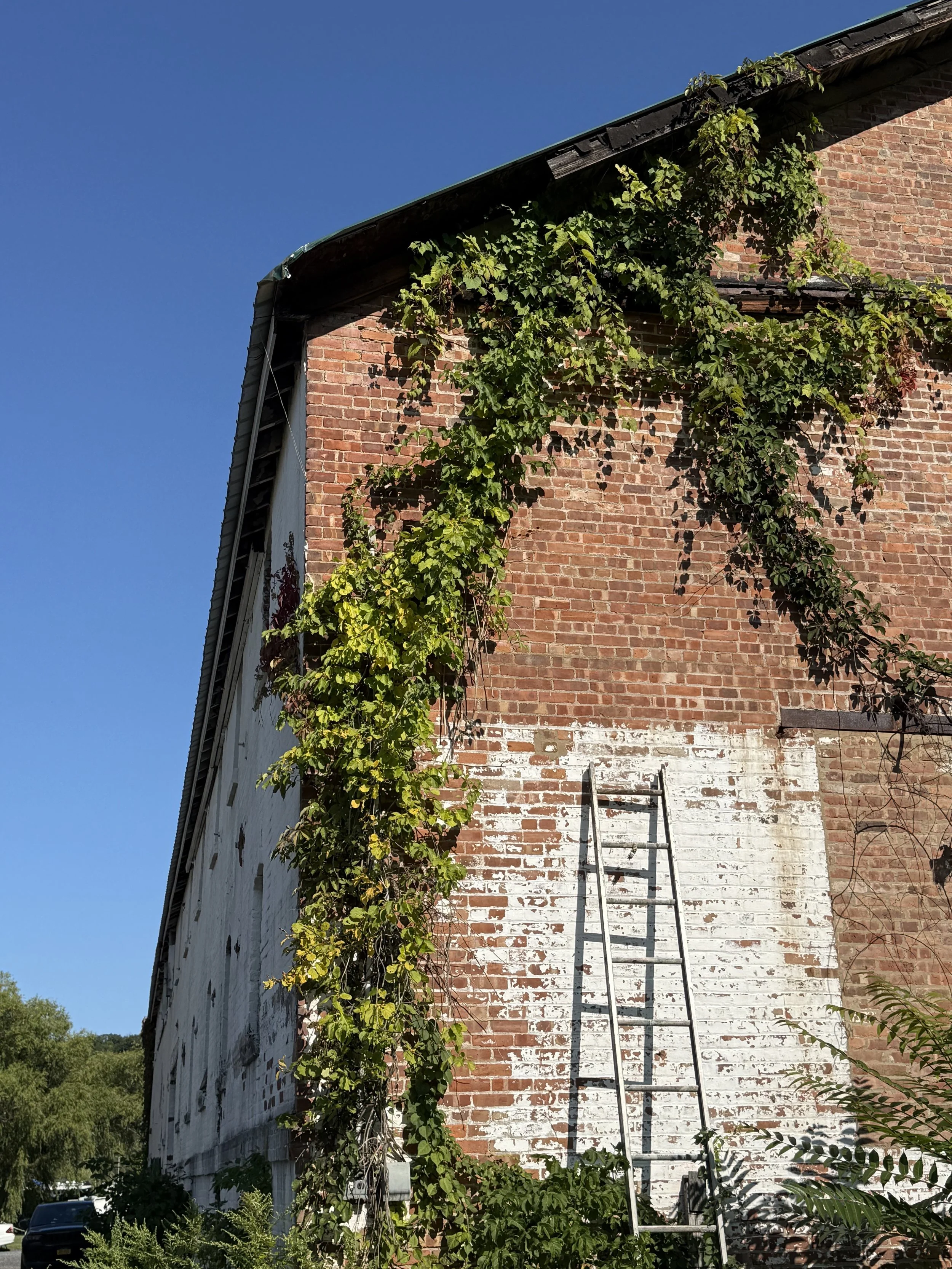
Featured image: Exterior of a future Site Seen exhibition space before installation. Photography by Site Seen
People often imagine that a Site Seen exhibition begins when artists start installing their work.
In reality, it begins much earlier.
It begins with a conversation.
Sometimes a property owner reaches out. Sometimes we discover a building while driving through a town. Sometimes we simply notice a "For Lease" or "For Sale" sign that has been hanging in a window for months.
Every exhibition starts with a single question:
Could this building become a place for contemporary art?
The First Visit
Before we think about artists, we spend time simply walking through the space. We return more than once. We pay attention before we make decisions.
How does natural light move throughout the day?
Which areas feel intimate?
Which feel monumental?
What sounds linger when no one is speaking?
What has been left behind?
We don't arrive with a predetermined idea of what the show would be. We wait for the building to tell us what it wants to become.
Long before we begin curating, the architecture begins asking its own questions. Those questions eventually shape the exhibition.
Listening Before Curating
We never arrive with a predetermined floor plan. We never arrive with a predetermined exhibition. Instead, we let the building lead.
A narrow corridor may become the perfect place for quiet work.
A large open room might invite an ambitious installation.
Unexpected corners often become the most memorable spaces in an exhibition.
Only after spending time with the building do we begin inviting artists into the conversation.
Rather than asking artists to fit inside a curatorial framework, we allow the framework to emerge through the dialogue between architecture, artists, and place.
Choosing the Artists
Every Site Seen exhibition brings together artists with distinct practices, materials, and perspectives.
Some immediately recognize possibilities within a particular building. Others reveal relationships we had never imagined.
The goal is never simply to fill a space, but rather to create relationships.
Relationships between artists, between artworks. between visitors. And, most revealingly, between the exhibition and the building itself.
Every decision is made with the understanding that no exhibition could exist in quite the same way anywhere else.
Installation Week
Installation is equal parts planning and improvisation. No matter how carefully we prepare, every building presents surprises. A wall behaves differently than expected. An electrical outlet is hidden or out of service. Natural light changes the experience of a sculpture. Plumbing is not operational.
An installation grows larger once it occupies the room. Curators adapt. Artists adapt.
The building continues the conversation, and those unexpected moments often produce the strongest decisions.
By the final day, the exhibition feels less like something that has been assembled than something that has gradually come into focus.
Opening Night
By the time visitors arrive, the building has changed. Not physically, but somehow… emotionally.
People begin moving through spaces that only days earlier stood empty. Conversations replace silence. Light replaces vacancy. The building once again becomes a place where people gather.
For one evening, or one weekend, it returns to public life.
Visitors who may have passed the building countless times without noticing it begin to experience it differently. And that very shift in perception is one of the most meaningful transformations of all.
Afterward
When the exhibition closes, everything disappears.
The artwork leaves.
The labels come down.
The lights go out.
The building returns to waiting.
But it is no longer exactly the same.
Hundreds of people have passed through.
New memories have been added to old ones.
For a brief moment, the building became part of a larger cultural conversation.
Long after the doors have closed, the building continues carrying that conversation forward.
Because every Site Seen exhibition leaves something behind, even after everything has been taken away.
About Inside Site Seen
Inside Site Seen is an ongoing editorial series exploring the ideas, places, artists, and processes behind Site Seen's temporary exhibitions. Together, these essays form an evolving archive of conversations about contemporary art, architecture, memory, and the overlooked buildings that briefly become sites of cultural exchange.