

Why Temporary Matters
Every Site Seen exhibition exists only once. Rather than seeing impermanence as a limitation, we believe temporary experiences often leave the deepest and longest-lasting impressions.
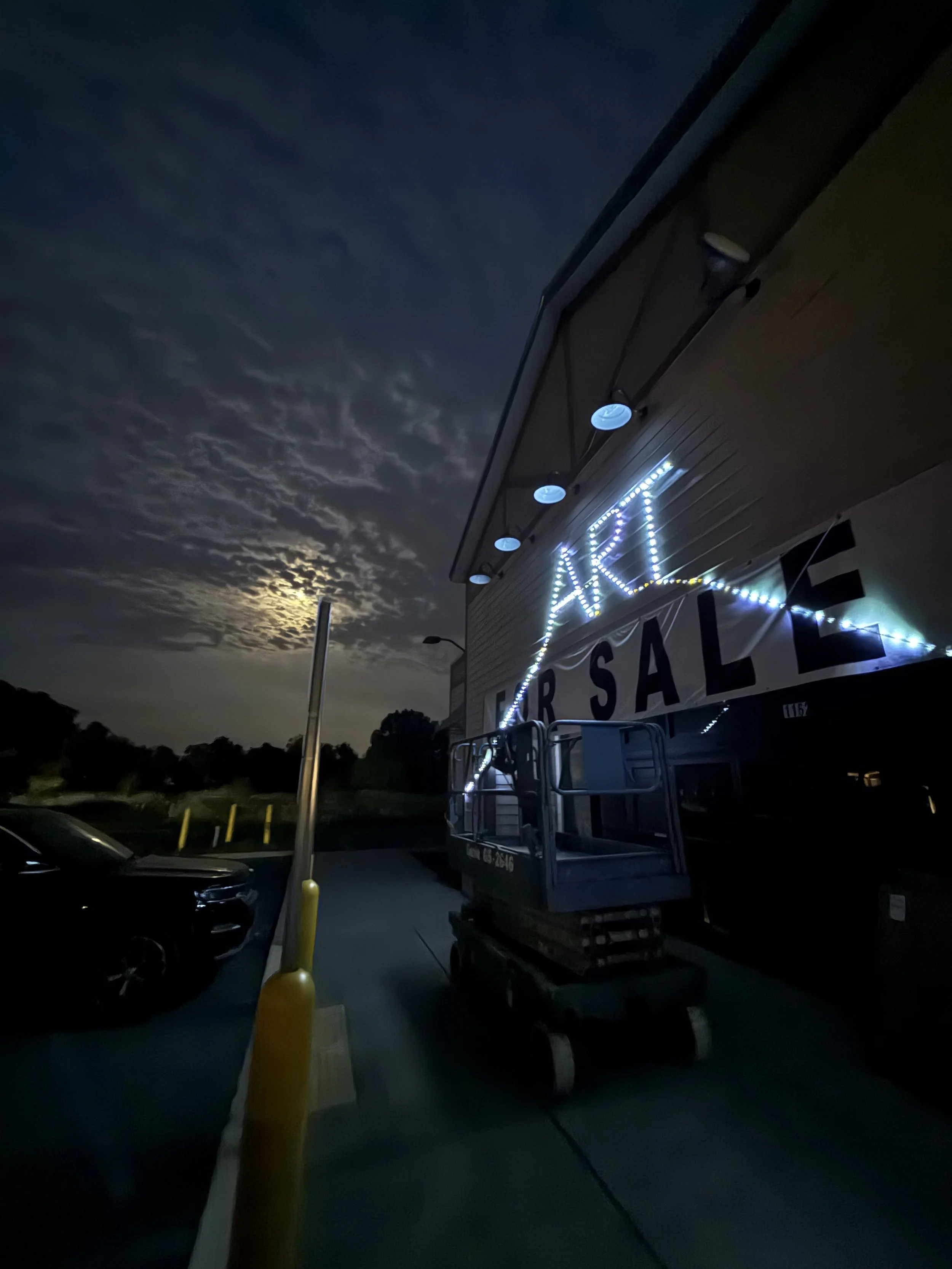
Added light-sign announces a Site Seen exhibition in former Dollar General store in Esopus, NY, 2026. Photograph by Site Seen
People occasionally ask whether Site Seen hopes to find a permanent home one day.
The answer surprises them.
No.
The temporary nature of our exhibitions is not a step toward becoming something permanent.
It is the work itself.
Every Exhibition Has Only One Life
Contemporary art often exists within institutions designed to preserve it indefinitely.
Permanent collections.
Permanent galleries.
Permanent walls.
Site Seen follows a different path.
Every exhibition exists only once.
It belongs to one building, one group of artists, one installation, and one moment in time.
Once it ends, it cannot be recreated.
That is not a loss.
It is its greatest strength.
Attention Changes When Time Is Limited
There is something different about entering a space you know will soon disappear.
Visitors slow down.
They linger.
They notice details they might otherwise overlook.
There is no promise that the exhibition will still be there next month.
That awareness changes the experience.
The work feels immediate because it is.
Buildings Are Always Changing
The buildings we occupy are themselves temporary.
A vacant storefront may become a business.
A warehouse may become apartments.
An office may eventually be demolished.
We never think of our exhibitions as interrupting a building's future.
Instead, they become one chapter within its ongoing story.
The building continues.
So do we.
Just not together.
Impermanence Creates Freedom
Because the exhibition is temporary, artists are free to take risks.
Curators can make decisions that would be difficult inside a permanent institution.
The architecture can remain visible rather than being concealed behind polished gallery walls.
Nothing needs to become permanent in order to matter.
In many ways, the opposite is true.
Remembering Differently
When an exhibition disappears, it continues existing through memory.
People remember particular conversations.
A shaft of afternoon light across a sculpture.
The sound of footsteps inside an empty building.
The feeling of discovering contemporary art in a place where they never expected to encounter it.
Those memories become part of the building itself.
They also become part of the people who experienced them.
Neither can be archived completely.
An Archive of Temporary Moments
This is one reason the Archive exists.
Not to recreate the exhibitions.
That would be impossible.
Instead, it preserves the ideas, questions, photographs, and conversations that surrounded them.
Each essay becomes another trace of something that no longer physically exists.
Together they form an evolving record of exhibitions that lived briefly, then continued through memory.
The Value of Disappearing
We live in a culture that often measures success by permanence.
Long-term leases.
Permanent collections.
Lasting institutions.
Site Seen measures success differently.
Did people gather?
Did artists create work that could not have existed anywhere else?
Did visitors begin seeing a familiar building differently than they had before?
If the answer is yes, the exhibition has already fulfilled its purpose.
It never needed to last forever.
About Inside Site Seen
Inside Site Seen is an ongoing editorial series exploring the ideas, places, artists, and processes behind Site Seen's temporary exhibitions. Together, these essays form an evolving archive of conversations about contemporary art, architecture, memory, and the overlooked buildings that briefly become sites of cultural exchange.
How an Empty Building Becomes an Exhibition
Creating a Site Seen exhibition begins long before the artwork arrives. This essay follows the process of transforming an overlooked building into a temporary destination for contemporary art.
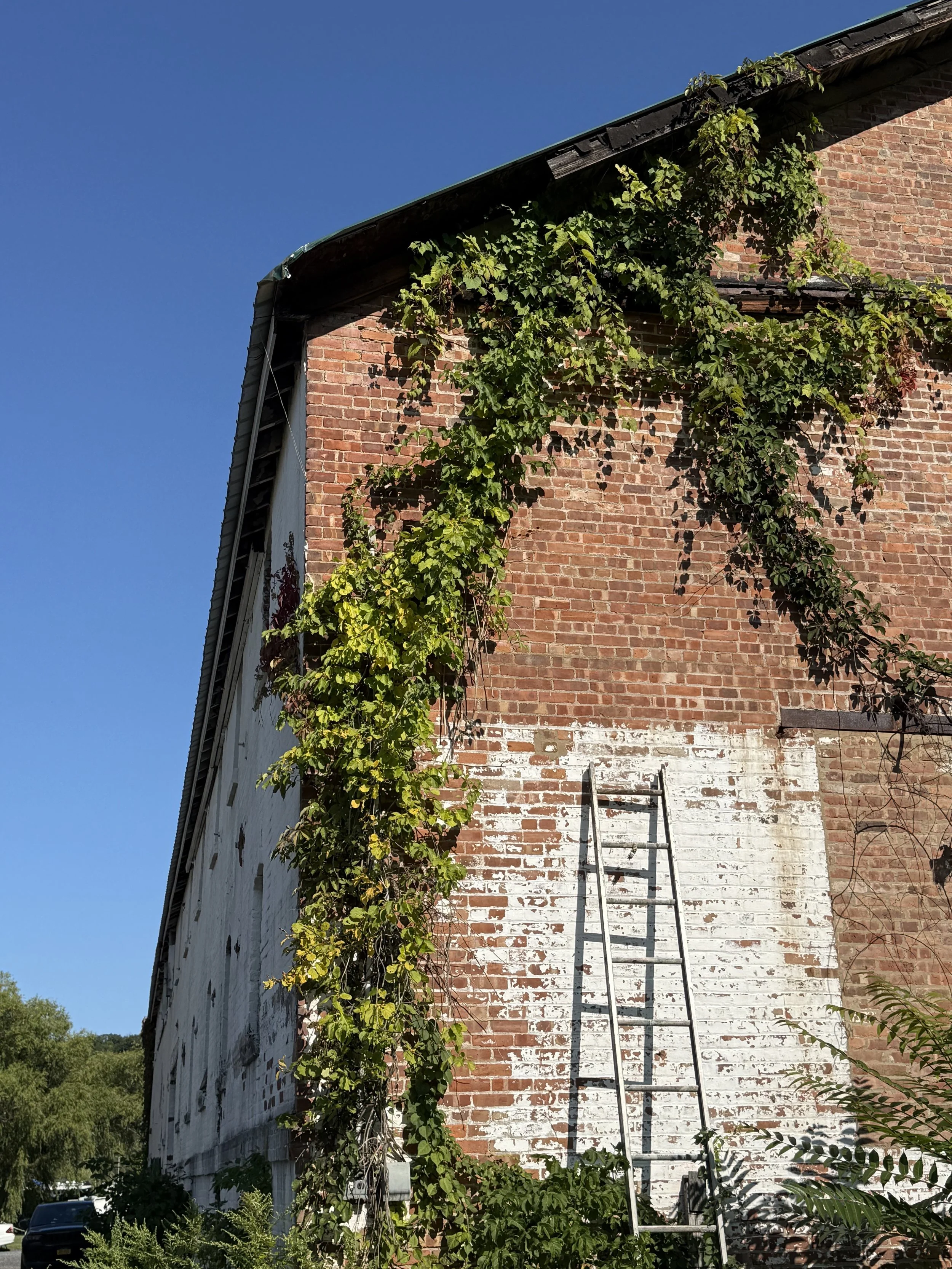
Featured image: Exterior of a future Site Seen exhibition space before installation. Photography by Site Seen
People often imagine that a Site Seen exhibition begins when artists start installing their work.
In reality, it begins much earlier.
It begins with a conversation.
Sometimes a property owner reaches out. Sometimes we discover a building while driving through a town. Sometimes we simply notice a "For Lease" or "For Sale" sign that has been hanging in a window for months.
Every exhibition starts with a single question:
Could this building become a place for contemporary art?
The First Visit
Before we think about artists, we spend time simply walking through the space. We return more than once. We pay attention before we make decisions.
How does natural light move throughout the day?
Which areas feel intimate?
Which feel monumental?
What sounds linger when no one is speaking?
What has been left behind?
We don't arrive with a predetermined idea of what the show would be. We wait for the building to tell us what it wants to become.
Long before we begin curating, the architecture begins asking its own questions. Those questions eventually shape the exhibition.
Listening Before Curating
We never arrive with a predetermined floor plan. We never arrive with a predetermined exhibition. Instead, we let the building lead.
A narrow corridor may become the perfect place for quiet work.
A large open room might invite an ambitious installation.
Unexpected corners often become the most memorable spaces in an exhibition.
Only after spending time with the building do we begin inviting artists into the conversation.
Rather than asking artists to fit inside a curatorial framework, we allow the framework to emerge through the dialogue between architecture, artists, and place.
Choosing the Artists
Every Site Seen exhibition brings together artists with distinct practices, materials, and perspectives.
Some immediately recognize possibilities within a particular building. Others reveal relationships we had never imagined.
The goal is never simply to fill a space, but rather to create relationships.
Relationships between artists, between artworks. between visitors. And, most revealingly, between the exhibition and the building itself.
Every decision is made with the understanding that no exhibition could exist in quite the same way anywhere else.
Installation Week
Installation is equal parts planning and improvisation. No matter how carefully we prepare, every building presents surprises. A wall behaves differently than expected. An electrical outlet is hidden or out of service. Natural light changes the experience of a sculpture. Plumbing is not operational.
An installation grows larger once it occupies the room. Curators adapt. Artists adapt.
The building continues the conversation, and those unexpected moments often produce the strongest decisions.
By the final day, the exhibition feels less like something that has been assembled than something that has gradually come into focus.
Opening Night
By the time visitors arrive, the building has changed. Not physically, but somehow… emotionally.
People begin moving through spaces that only days earlier stood empty. Conversations replace silence. Light replaces vacancy. The building once again becomes a place where people gather.
For one evening, or one weekend, it returns to public life.
Visitors who may have passed the building countless times without noticing it begin to experience it differently. And that very shift in perception is one of the most meaningful transformations of all.
Afterward
When the exhibition closes, everything disappears.
The artwork leaves.
The labels come down.
The lights go out.
The building returns to waiting.
But it is no longer exactly the same.
Hundreds of people have passed through.
New memories have been added to old ones.
For a brief moment, the building became part of a larger cultural conversation.
Long after the doors have closed, the building continues carrying that conversation forward.
Because every Site Seen exhibition leaves something behind, even after everything has been taken away.
About Inside Site Seen
Inside Site Seen is an ongoing editorial series exploring the ideas, places, artists, and processes behind Site Seen's temporary exhibitions. Together, these essays form an evolving archive of conversations about contemporary art, architecture, memory, and the overlooked buildings that briefly become sites of cultural exchange.