

How Temporary Exhibitions Are Curated
Temporary exhibitions don't begin with artwork. They begin with a place. This guide follows the curatorial process from discovering a building to opening day, revealing how architecture, artists, and community come together to create exhibitions that exist for only a short time.
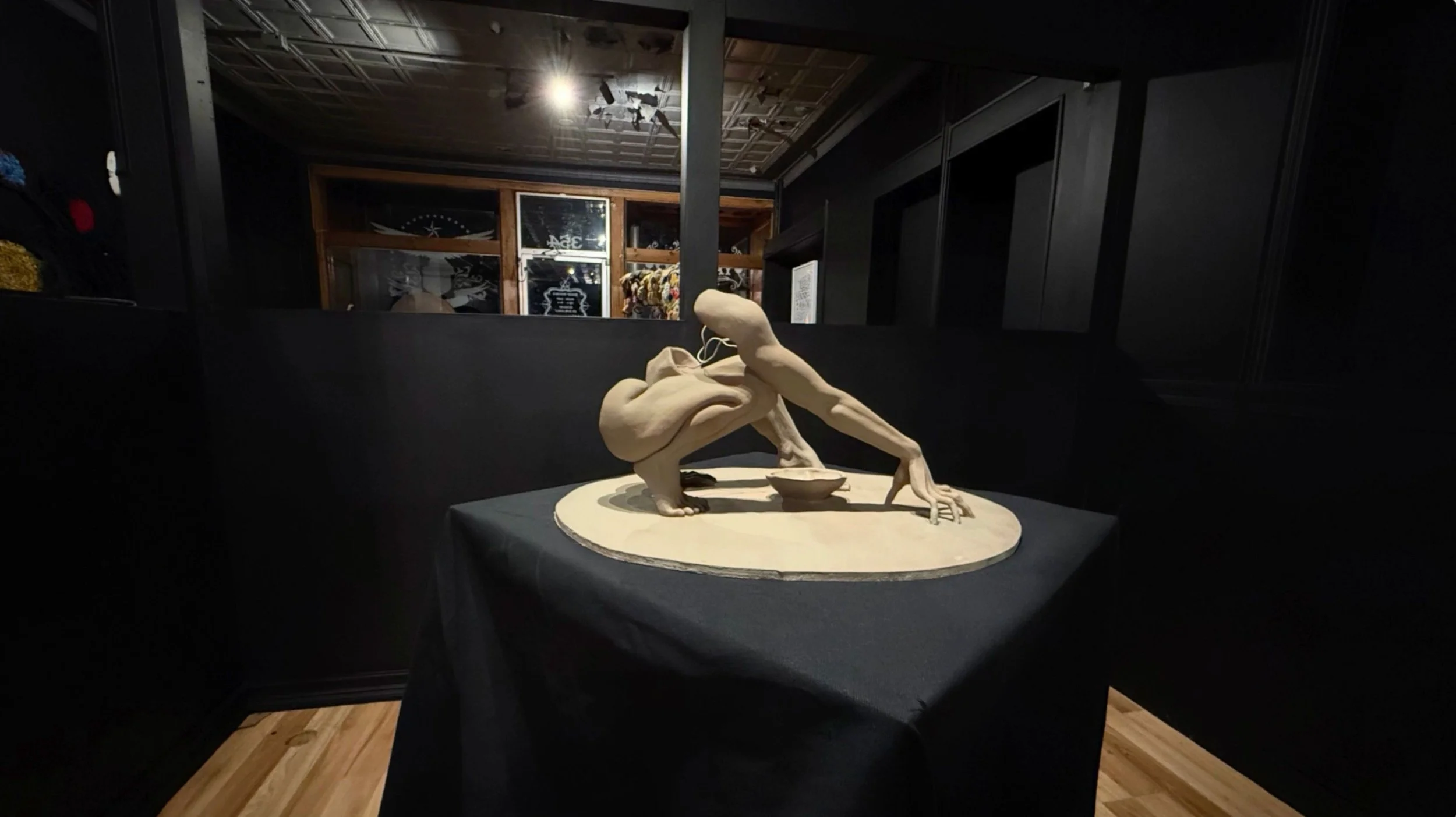
Curating shapes not only what visitors see, but how they experience it. At Of Needle and Nerve, artwork, architecture, light, and space work together to create a single exhibition experience.
A Site Seen Field Guide
When most people visit an exhibition, they see the finished result.
The lighting is adjusted. The artwork has been installed. Visitors move naturally through the space, rarely thinking about the hundreds of decisions that made the experience possible.
Curating shapes not only what visitors see, but how they experience it. At Of Needle and Nerve, artwork, architecture, light, and space work together to create a single exhibition experience.. Photograph by Site Seen
What they don't see is that a temporary exhibition often begins months before the first artwork arrives.
At Site Seen, it begins with a building.
Step 1: Finding the Right Building
Not every vacant building is suitable for an exhibition.
We're looking for more than an empty room. We look for places with character, history, and the ability to support meaningful encounters between art and architecture.
Natural light, circulation, accessibility, ceiling height, existing materials, and structural conditions all influence what is possible. Just as important is the building's own story. Former stores, offices, marinas, schools, and industrial spaces each carry different histories that shape the exhibition in unique ways.
The building is never simply a venue.
It becomes part of the exhibition.
Step 2: Listening Before Planning
Before selecting artists or artworks, we spend time observing the space.
How does light move through the building during the day?
Where do visitors naturally pause?
What traces have previous occupants left behind?
Which architectural features deserve attention rather than concealment?
Understanding a building often means asking more questions than answering them. Those observations become the foundation for every curatorial decision that follows.
Step 3: Bringing Artists Into the Conversation
Artists aren't asked to ignore the building.
They're encouraged to respond to it.
Some create new work inspired by the architecture. Others adapt existing work to the site. Many discover possibilities they hadn't considered until they physically experience the space.
Rather than treating architecture as a backdrop, artists become collaborators with the building itself.
Step 4: Designing the Visitor Experience
Curating is also about designing movement.
Visitors don't experience every exhibition in the same way. They enter through specific thresholds, move at different speeds, pause unexpectedly, and encounter artwork from changing perspectives.
A curator considers those experiences carefully.
Where should the exhibition begin?
How should one room lead to the next?
Where should visitors pause?
How can architecture help guide the experience without dictating it?
These decisions quietly shape how people remember an exhibition long after they leave.
Step 5: Installation
Installation is where planning meets reality.
Even the most carefully considered exhibition changes once artwork enters the space.
A sculpture may need more room than expected. A projection may respond differently to natural light. An installation may discover a stronger relationship with another part of the building.
Temporary exhibitions remain flexible because every space continues to reveal new possibilities throughout installation.
Step 6: Opening the Doors
Opening day marks the beginning of the exhibition's public life.
Visitors bring perspectives the curators and artists could never anticipate. Conversations emerge between strangers. People notice details that others overlook. The building itself often becomes part of those conversations, prompting memories from former customers, employees, neighbors, or visitors familiar with the space's previous life.
Every audience completes the exhibition in its own way.
Step 7: Leaving the Building Ready for Its Next Chapter
Unlike permanent galleries, temporary exhibitions eventually come to an end.
Artwork is carefully removed. Walls are restored when necessary. Materials are packed away. The building returns to the owner, ready for whatever comes next.
Yet something has changed.
For a brief period, the building became a place where artists, architecture, and community came together. Those experiences continue to shape how people remember the space, even after the exhibition has disappeared.
Curating for What Comes Next
Temporary exhibitions are defined by their impermanence, but their impact often extends far beyond their duration.
They invite people to see familiar places differently. They create opportunities for artists to experiment. They reconnect communities with buildings that might otherwise go unnoticed.
The exhibition may last only a few weeks.
The conversation it begins can continue much longer.
About Inside Site Seen
Inside Site Seen is an ongoing editorial series exploring the ideas, places, artists, and processes behind Site Seen's temporary exhibitions. Together, these essays form an evolving archive of conversations about contemporary art, architecture, memory, and the overlooked buildings that briefly become sites of cultural exchange.