


Why Place Still Matters
At Site Seen, location is never simply a venue. Every building shapes the exhibition, and every exhibition changes the way people experience a place they thought they already knew.
Site Seen exhibition location in Connelly, NY, 2025. Photograph by Site Seen
There is a reason people remember where they first encountered a work of art.
The room.
The light.
The building.
The weather outside.
The sound of footsteps on the floor.
Memory rarely separates artwork from place.
Neither do we.
Art Changes When Its Surroundings Change
The same sculpture shown in a museum, a warehouse, or an abandoned storefront becomes three different experiences.
Not because the artwork changes.
Because everything around it does.
Architecture influences movement.
Windows influence light.
Ceilings influence scale.
Silence influences attention.
The building quietly becomes part of the exhibition.
Discovery Begins Before the Door Opens
Part of the experience begins long before visitors step inside.
Driving through unfamiliar neighborhoods.
Walking down a side street.
Wondering whether they have arrived at the right place.
Passing buildings they may never have noticed before.
There is a small moment of uncertainty.
Then curiosity takes over.
The exhibition has already begun.
A Different Way of Seeing Familiar Places
Many of our exhibitions happen inside buildings that local residents pass every day.
Former stores.
Vacant offices.
Industrial buildings.
Places that have slowly faded into the background of everyday life.
For a brief period, those same buildings become destinations.
People enter spaces they have spent years walking past without ever imagining what was inside.
When the exhibition ends, they never look at that building quite the same way again.
Slowing Down
Contemporary life encourages efficiency.
We move quickly.
We follow familiar routes.
We overlook what has become ordinary.
Site Seen asks visitors to do the opposite.
Pause.
Look more carefully.
Notice details that have always been there.
The exhibition becomes an invitation to pay attention, not only to the artwork, but to the place itself.
The Journey Is Part of the Work
We never think of location as simply an address.
It is part of the experience.
Traveling to a building.
Crossing its threshold.
Moving through unfamiliar rooms.
Discovering how artists have responded to its history.
Every step becomes part of the exhibition.
There is no separation between destination and artwork.
Together they create a single experience.
Carrying Places Forward
After an exhibition closes, visitors often tell us they returned to the building weeks or months later.
Sometimes it was vacant again.
Sometimes construction had begun.
Sometimes another business had already moved in.
What had changed most, however, was not the building.
It was the way they saw it.
The exhibition had permanently altered their relationship with a place that had always been there.
That shift in perception may be one of the most lasting works we create.
About Inside Site Seen
Inside Site Seen is an ongoing editorial series exploring the ideas, places, artists, and processes behind Site Seen's temporary exhibitions. Together, these essays form an evolving archive of conversations about contemporary art, architecture, memory, and the overlooked buildings that briefly become sites of cultural exchange.
When Artists Begin Listening to Buildings
At Site Seen, artists are invited to respond not only to architecture, but to one another. Every exhibition begins as a conversation, and the building is often the first voice.
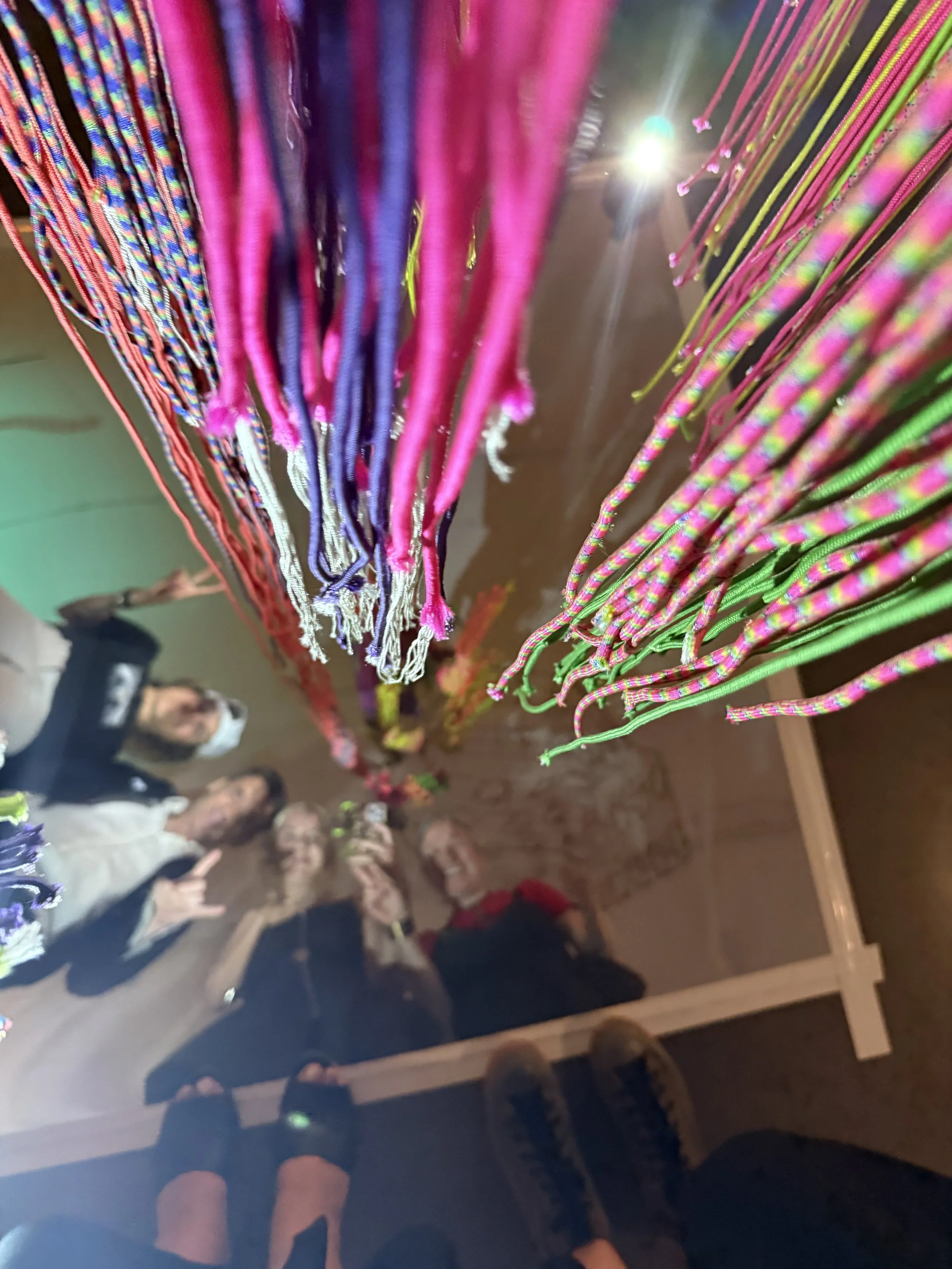
Artists preparing a Site Seen exhibition. Every installation begins with a conversation between artists, architecture, and place. Photograph by Site Seen
People often ask how artists are selected for a Site Seen exhibition.
The answer rarely begins with the artists themselves.
It begins with the building.
Every space arrives carrying its own history, proportions, light, atmosphere, and unanswered questions. Before invitations are extended, we spend time understanding the place itself.
Only then do we begin imagining which artists might enter into that conversation.
We are not looking for artwork that simply fills a room.
We are looking for artists who are willing to listen.
Every Building Speaks Differently
A former warehouse asks different questions than an abandoned retail store.
A church asks different questions than an office.
Even buildings that appear similar reveal entirely different personalities once time is spent inside them.
Some encourage stillness.
Others invite movement.
Some ask for restraint.
Others demand boldness.
The architecture quietly establishes the conditions for the exhibition before a single artwork has arrived.
No Artist Works Alone
Although every participating artist brings an established practice, no artwork exists in isolation once it enters the building.
A sculpture changes the way a painting is experienced.
A sound installation alters the atmosphere of an adjacent room.
Natural light transforms throughout the day.
Visitors create unexpected pathways through the space.
Every decision affects another.
The exhibition becomes less a collection of individual works than a network of relationships.
Curating Conversations
People often think of curating as selecting objects.
For us, it is closer to arranging conversations.
Sometimes those conversations happen between two artworks.
Sometimes they happen between an artwork and a cracked concrete floor.
Sometimes they happen between a visitor and a memory unexpectedly awakened by a familiar building.
Those conversations cannot be planned completely.
They emerge gradually as artists, architecture, and visitors begin responding to one another.
Our role is not to control those encounters.
It is to create the conditions where they become possible.
Trusting the Unexpected
Every exhibition contains moments we could never have predicted.
An artist installs a piece in a location different from where it was originally planned.
A shaft of afternoon light suddenly transforms an entire room.
Two artworks begin speaking to one another in ways that only become apparent after installation.
Rather than resisting those moments, we follow them.
Some of the strongest curatorial decisions emerge through attention rather than certainty.
A Shared Practice
By opening night, no one person owns the exhibition.
The artists have shaped it.
The building has shaped it.
Visitors continue shaping it through the ways they move, pause, and gather.
The exhibition becomes something larger than the sum of its individual parts.
It becomes a temporary community assembled around a particular place and moment in time.
Listening Together
Perhaps the most important quality we look for in artists is curiosity.
Curiosity about architecture.
Curiosity about history.
Curiosity about materials.
Curiosity about one another.
When artists begin by listening instead of imposing, buildings begin revealing possibilities that might otherwise remain unnoticed.
The resulting exhibition could not exist anywhere else.
It belongs to that building alone.
About Inside Site Seen
Inside Site Seen is an ongoing editorial series exploring the ideas, places, artists, and processes behind Site Seen's temporary exhibitions. Together, these essays form an evolving archive of conversations about contemporary art, architecture, memory, and the overlooked buildings that briefly become sites of cultural exchange.