

What 166 Artists Taught Us About Architecture
Architecture is often described as the backdrop for contemporary art.
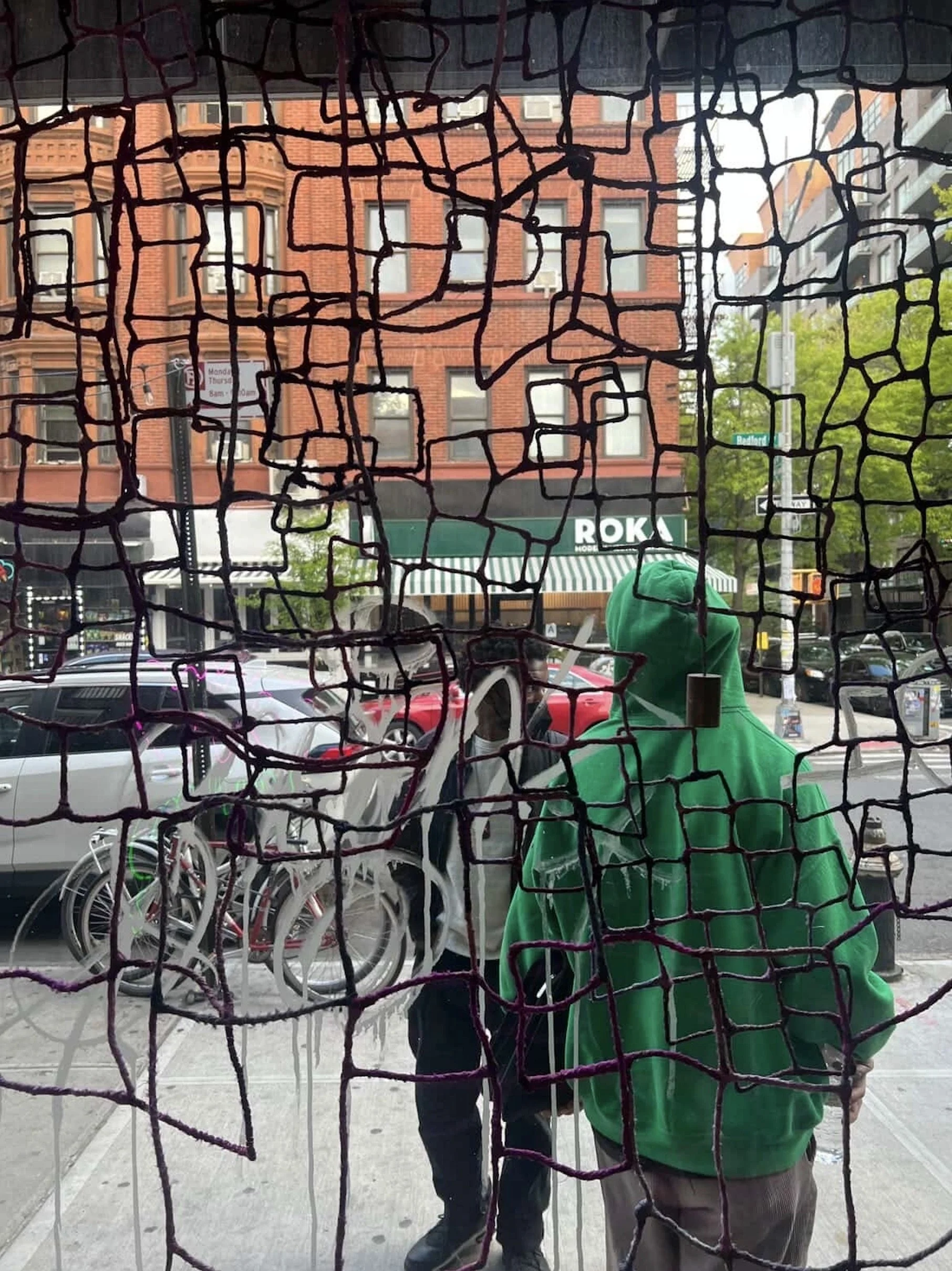
Artwork overlooking the street at Of Grit and Grid, Site Seen's 2026 exhibition in Williamsburg, Brooklyn. Every artist encountered the same space differently, revealing new ways of seeing both the artwork and the city beyond. Photograph by Site Seen
After working with 166 artists across Site Seen's exhibitions, we've come to believe the opposite.
Again and again, we've watched artists respond to buildings as though they were collaborators rather than containers. Long before an artwork is installed, architecture begins asking questions. The artists simply answer them.
This wasn't something we expected.
Each exhibition brought together artists with different backgrounds, materials, and practices. Sculptors, painters, photographers, installation artists, textile artists, ceramicists, sound artists, and multidisciplinary makers all entered the same spaces with entirely different intentions.
Yet certain patterns emerged with surprising consistency.
Artists Don't See Empty Spaces
A vacant building rarely appears empty to an artist.
Instead, they notice evidence.
The texture of a wall.
A repaired crack.
The way afternoon light falls across a concrete floor.
The rhythm of exposed beams.
The echo inside a large room.
Details many people overlook become the beginning of an artwork.
Artists often teach us that observation comes before invention.
Scale Changes Ambition
Many artists arrived expecting to install existing work.
Instead, they began imagining something larger.
Higher ceilings invited taller sculptures.
Long corridors suggested sequential installations.
Industrial spaces encouraged experimentation with sound, light, and movement.
Architecture expanded the scope of what seemed possible.
The building didn't simply hold the artwork.
It enlarged the artist's imagination.
Constraints Often Produce Better Ideas
Working outside a traditional gallery introduces countless limitations.
Uneven floors.
Existing walls.
Unexpected columns.
Changing daylight.
Limited power.
Instead of restricting creativity, these conditions often sharpen it.
Some of the strongest works we've exhibited were shaped directly by the challenges of the space itself.
The architecture didn't stand in the way.
It became part of the solution.
Materials Begin Speaking to One Another
Artists working with reclaimed wood suddenly found themselves surrounded by weathered timber.
Metal sculpture echoed exposed structural steel.
Paper installations responded to changing light.
Found materials seemed to carry on conversations with the building that housed them.
Architecture created unexpected relationships between artworks that had never been intended to exist together.
Artists Slow Down
Site visits rarely happen quickly.
Artists wander.
They stop.
They return to the same corner several times.
They stand quietly beneath a roof.
They wait for changing light.
They notice sounds.
Watching this process has taught us something important.
Creative work often begins by resisting the urge to immediately solve a problem.
It begins with paying attention.
Buildings Become Collaborators
Perhaps the biggest lesson has been recognizing that artists rarely treat architecture as passive.
Instead, they ask questions.
What does this building remember?
How should visitors move through it?
What belongs here?
What should remain untouched?
The exhibition gradually develops through an ongoing conversation between artist and place.
Every Artist Reads Architecture Differently
No two artists respond in exactly the same way.
One sees history.
Another sees geometry.
Someone else notices acoustics.
Another becomes fascinated by the neighborhood outside the windows.
This diversity of responses reminds us that architecture is never fixed.
Its meaning changes with every person who enters it.
What the Artists Continue to Teach Us
If there is one lesson that has emerged across Site Seen's exhibitions, it is this:
Architecture isn't simply where contemporary art happens.
It participates.
Artists have shown us that every building already contains ideas waiting to be discovered.
Curating, then, becomes less about placing artworks inside a space than about creating the conditions for those conversations to unfold.
The buildings continue to teach.
The artists continue to listen.
We're simply fortunate enough to witness the conversation.