

Why We Don't Cover the Scars
At Site Seen, we rarely erase the marks left behind by previous occupants. Chipped paint, repaired walls, worn concrete, and forgotten signage are not imperfections to hide. They are part of the story the building continues to tell.
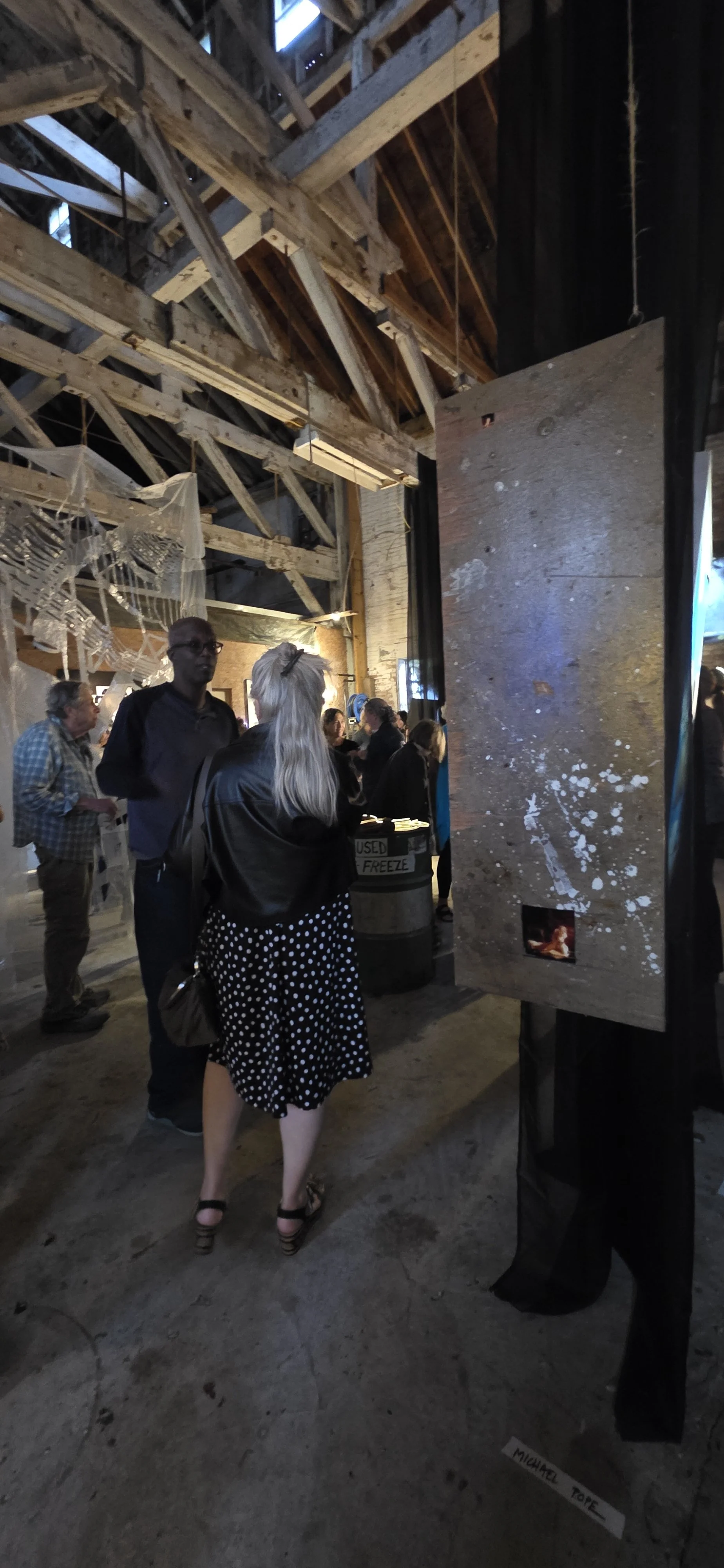
At Of Hull and Hush, the former marina remained visible in every beam, wall, and floor. Rather than masking the building's history, the exhibition invited visitors to experience contemporary art alongside the traces of the place itself. Photograph by Site Seen
Walk through almost any contemporary gallery and you'll notice what isn't there.
Visitors explore Of Hull and Hush inside a former marina in Connelly, NY, where the building's exposed timber structure, weathered surfaces, and industrial character remained an integral part of the exhibition rather than a backdrop to be concealed. Photograph by Site Seen
Walls are smooth and freshly painted. Floors are immaculate. Every surface has been carefully controlled so that nothing competes with the artwork.
Our exhibitions begin from a different premise.
When we enter a building, we're not looking for flaws to conceal. We're looking for evidence.
A patch of mismatched paint tells us where a wall was repaired years ago. Hundreds of tiny screw holes suggest shelves that once held products now long forgotten. Scuffed concrete marks the paths people walked every day. Faded lettering on a window hints at businesses that have come and gone.
These are not distractions.
They are the building's memory.
Temporary spaces possess something purpose-built galleries rarely can: layers of accumulated history. Every tenant leaves behind small traces, whether intentionally or not. Over time, those traces form a quiet record of occupation, adaptation, and change.
It can be tempting to erase those marks in pursuit of a clean slate. Fresh paint promises neutrality. New drywall offers perfection. Yet in doing so, we often remove the very qualities that make a place unique.
At Site Seen, we choose a different approach.
Rather than covering the building's history, we allow artists to work alongside it. A sculpture might sit beneath faded retail signage. A projection may illuminate a cracked plaster wall. An installation may occupy the footprint of a former checkout counter or office. The architecture remains present, not as background decoration but as an active participant in the exhibition.
This doesn't mean preserving every imperfection without thought. It means asking what each surface contributes before deciding whether it should change.
Sometimes a damaged wall reveals decades of renovation beneath its layers of paint. Sometimes an old electrical panel quietly anchors an entire room. Sometimes a worn floor carries the rhythm of thousands of footsteps that came long before the exhibition arrived.
These elements remind visitors that the building has lived many lives.
The artworks enter into conversation with those lives rather than replacing them.
This philosophy extends beyond aesthetics. Reusing existing spaces and working with what is already present reduces waste, minimizes unnecessary construction, and encourages a more thoughtful relationship with the built environment. Instead of treating every exhibition as something that must begin from zero, we recognize the value already embedded in the architecture.
There is also a different kind of beauty in incompleteness.
A repaired wall carries the story of someone who chose to mend rather than replace. Weathered paint records years of sunlight. An abandoned sign reminds us that every building exists within a much longer timeline than any single exhibition.
These are not scars to hide.
They are evidence that a place has been inhabited, altered, cared for, and continuously transformed.
When visitors step into one of our exhibitions, they are encountering more than contemporary art. They are entering a conversation between artists, architecture, and the many people who occupied the space before either arrived.
For us, those conversations begin by leaving the scars exactly where we found them.
Continue Exploring
What Is Site-Specific Art?
What Is Adaptive Reuse?
Why Context Changes the Meaning of Art
Why Do Artists Transform Vacant Buildings?
What Makes Installation Art Different from Sculpture?

Lessons from Transforming Vacant Spaces into Contemporary Art Exhibitions
Every Site Seen exhibition has taken place inside a space waiting for its next chapter. These are the lessons we've learned about architecture, artists, communities, and the remarkable potential of places in transition.
Visitors gather inside Of Grit and Grid, Site Seen's 2026 exhibition in Williamsburg, Brooklyn. Transforming a vacant space into an exhibition also transforms the way people experience architecture, community, and contemporary art. Photograph by Site Seen
When Site Seen began transforming vacant spaces into temporary contemporary art exhibitions, we weren't trying to prove a theory.
Each Site Seen exhibition begins with an empty space. It isn't complete until people bring their own memories, conversations, and curiosity into it. Of Grit and Grid, Brooklyn, 2026. Photograph by Site Seen
We were simply following a question.
What might happen if places waiting for their next purpose became places for contemporary art instead?
We didn't expect the answers to come from the spaces themselves.
Each exhibition has unfolded differently. Different artists. Different communities. Different architecture. Different histories.
Yet over time, certain observations have returned again and again.
Not as rules.
Not as conclusions.
Simply as lessons that continue to shape the way we work.
Every Space Arrives with a History
Vacancy is often mistaken for emptiness.
In reality, a vacant space is full of evidence.
Scuffed floors. Repaired walls. Sunlight entering through windows designed for another purpose. Layers of paint. Worn thresholds. The quiet traces of thousands of ordinary moments.
None of these are decorations.
They are part of the space's identity.
We've learned that the strongest exhibitions begin by acknowledging what is already there rather than attempting to erase it.
Every place enters the conversation long before the first artwork arrives.
Architecture Changes the Work
Early on, we thought of architecture as the setting for an exhibition.
Now we think of it as one of its collaborators.
Artists respond to ceiling heights, changing daylight, unexpected acoustics, structural columns, narrow corridors, and expansive open rooms in ways that are impossible to predict in advance.
A work conceived in the studio often evolves after spending time inside the space.
Sometimes an installation becomes larger.
Sometimes quieter.
Sometimes an entirely new idea emerges because of something the building revealed.
Architecture doesn't simply contain contemporary art.
It helps shape it.
Artists Notice What Others Overlook
One of the greatest privileges of curating is watching artists walk through a space for the first time.
Where many people see deterioration, artists often notice possibility.
A patch on the wall becomes a record of care.
A worn floor suggests movement.
A forgotten corner becomes the natural home for an installation.
Again and again, artists have reminded us that creativity begins not by inventing something new, but by paying close attention to what already exists.
People Arrive with Their Own Memories
Visitors rarely enter these exhibitions as strangers.
They already know the places.
They remember shopping there.
Working there.
Driving past every day.
Meeting someone in the parking lot.
Those memories become part of the experience.
Long before anyone talks about contemporary art, conversations begin about the building itself.
The exhibition doesn't replace those histories.
It gives people another way of seeing them.
Temporary Can Leave a Lasting Impression
Every Site Seen exhibition eventually comes to an end.
The artwork is removed.
The lights change.
The next tenant arrives.
Life continues.
Yet something often lingers.
Artists discover new collaborators.
Neighbors return to spaces they hadn't entered in years.
Visitors leave with a different understanding of both the artwork and the building that held it.
We've come to appreciate that permanence isn't the only measure of impact.
Sometimes transformation happens precisely because it is temporary.
Every Community Reads a Space Differently
No two exhibitions have attracted exactly the same audience.
Every community brings its own memories, expectations, and questions.
Some visitors are drawn by the artists.
Others come because they're curious about a familiar building they've watched sit empty for months.
Many arrive without knowing quite what to expect.
That uncertainty often becomes an invitation.
People stay longer.
They ask questions.
They strike up conversations with strangers.
The building becomes a shared point of reference that makes contemporary art feel more approachable.
We Still Don't Have a Formula
Perhaps the most valuable lesson is that there isn't one.
No checklist can tell us how a particular space should become an exhibition.
Each project begins the same way.
By spending time there.
Walking slowly.
Listening carefully.
Paying attention to the architecture, the history, the neighborhood, and the people who already know the place far better than we do.
Only then do we begin imagining what the exhibition might become.
The Spaces Continue to Teach Us
Looking back, we've realized that Site Seen has never been only about transforming vacant spaces.
The spaces have been transforming us as well.
They've changed how we think about architecture.
How we understand curating.
How we experience community.
How we define public engagement.
Most importantly, they've reminded us that places waiting for their next chapter are not empty pauses between more important events.
They are meaningful chapters in their own right.
Every exhibition has been temporary.
The conversation continues.
What Is Exhibition Design? How Space Shapes the Experience of Art
Exhibition design is much more than deciding where artwork hangs. This guide explores how space, architecture, lighting, circulation, and interpretation work together to shape every visitor's experience.
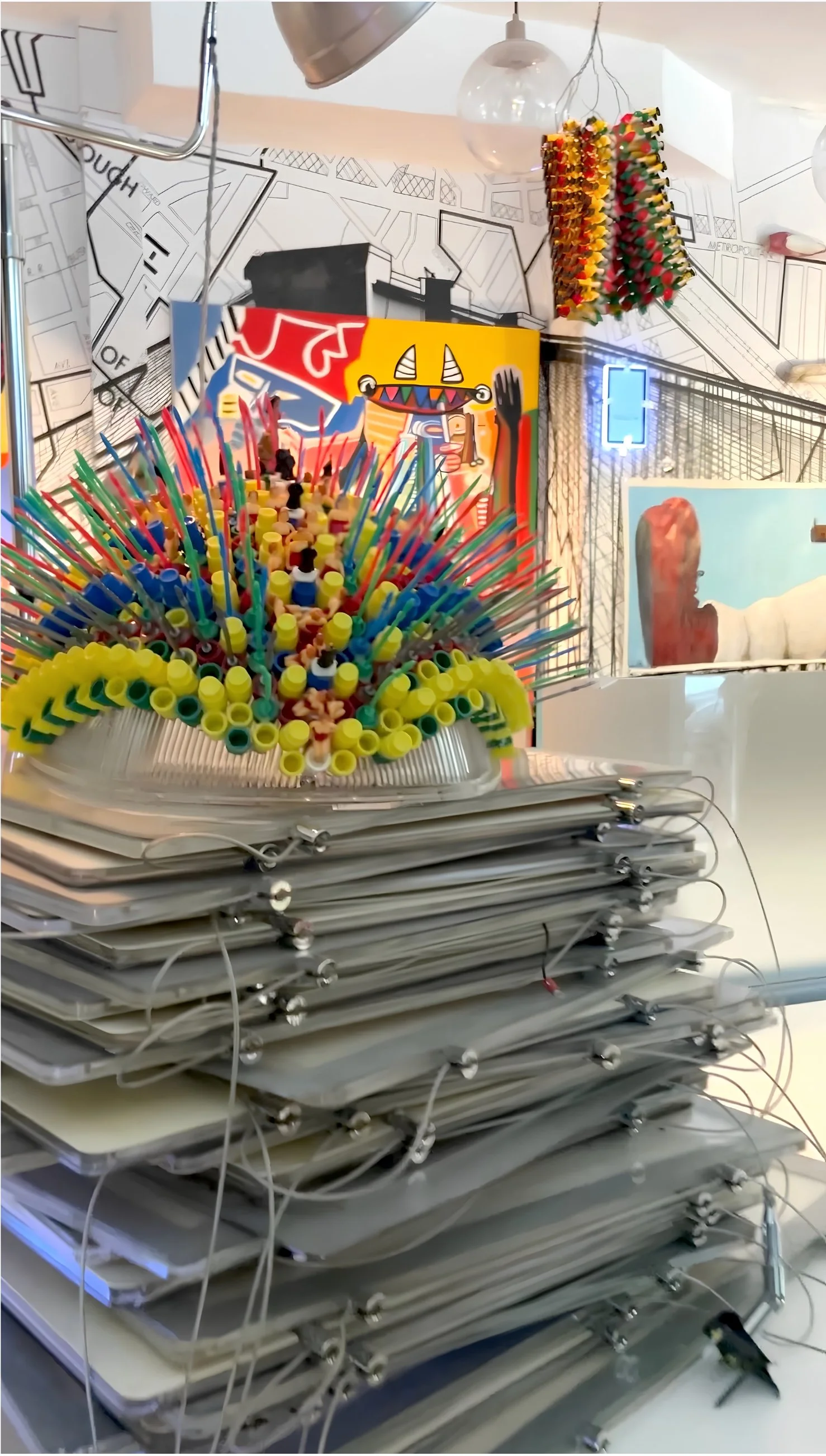
Installation view from Of Grit and Grid, Site Seen's 2026 exhibition in Brooklyn, New York. Exhibition design shapes how artworks relate to one another, the surrounding architecture, and the visitor's journey through the space. Photograph by Site Seen
A Site Seen Field Guide
Most people think an exhibition is made by the artwork.
In reality, every exhibition is also shaped by the space around it.
The distance between artworks.
The height of a ceiling.
The direction visitors move.
Natural light entering through a window.
A narrow corridor.
A quiet room.
An unexpected view.
These decisions form what is known as exhibition design.
Good exhibition design doesn't compete with the artwork.
It helps people experience it more fully.
Installation view from Of Grit and Grid, Site Seen's 2026 exhibition in Brooklyn, New York. Thoughtful exhibition design transforms individual artworks into a shared visual conversation. Photograph by Site Seen
What Is Exhibition Design?
Exhibition design is the planning and organization of physical space to support an exhibition's ideas, artworks, and visitors.
It combines architecture, interior design, graphic design, lighting, interpretation, accessibility, and visitor circulation into a single experience.
Whether in a museum, gallery, public space, or temporary exhibition, exhibition design influences how people move, what they notice, and how they remember what they've seen.
More Than Hanging Artwork
Designing an exhibition involves countless decisions:
Where visitors begin.
What they encounter first.
How artworks relate to one another.
How much space each work needs.
Lighting and sightlines.
Seating and moments of rest.
Labels and interpretation.
Accessibility.
Sound.
Flow through the building.
Each decision changes the experience.
Architecture Is Part of the Design
Some exhibitions are installed inside purpose-built galleries.
Others take place in historic buildings, storefronts, warehouses, schools, churches, or industrial spaces.
In these settings, architecture becomes one of the exhibition's primary design elements.
Columns interrupt views.
Brick reflects light differently than drywall.
Old timber changes acoustics.
Windows connect visitors to the surrounding neighborhood.
Rather than hiding these qualities, exhibition designers often work with them.
Exhibition Design at Site Seen
Every Site Seen exhibition begins by studying the building itself.
Instead of forcing a predetermined layout into the space, we allow architecture to influence how visitors move, where artworks are placed, and how individual installations relate to one another.
No two exhibitions follow the same plan because no two buildings tell the same story.
The result is an experience that could only happen in that particular place.
Why Exhibition Design Matters
People rarely remember an exhibition because of a floor plan.
They remember how it felt.
They remember discovering a sculpture around a corner.
Standing beneath a soaring roof.
Walking through changing light.
Hearing footsteps echo across an empty building.
Feeling that a particular artwork belonged exactly where they encountered it.
That experience doesn't happen by accident.
It's the result of thoughtful exhibition design.
Related Reading
What Is Curating?
When Architecture Becomes a Curator
What Is Site-Specific Art?
What Is Adaptive Reuse?
How an Empty Building Becomes an Exhibition
What Is Curating?
Curating is far more than selecting artwork. This guide explores what curators do, how exhibitions are developed, and why contemporary curatorial practice increasingly extends beyond museums and galleries into public, historic, and transitional spaces.
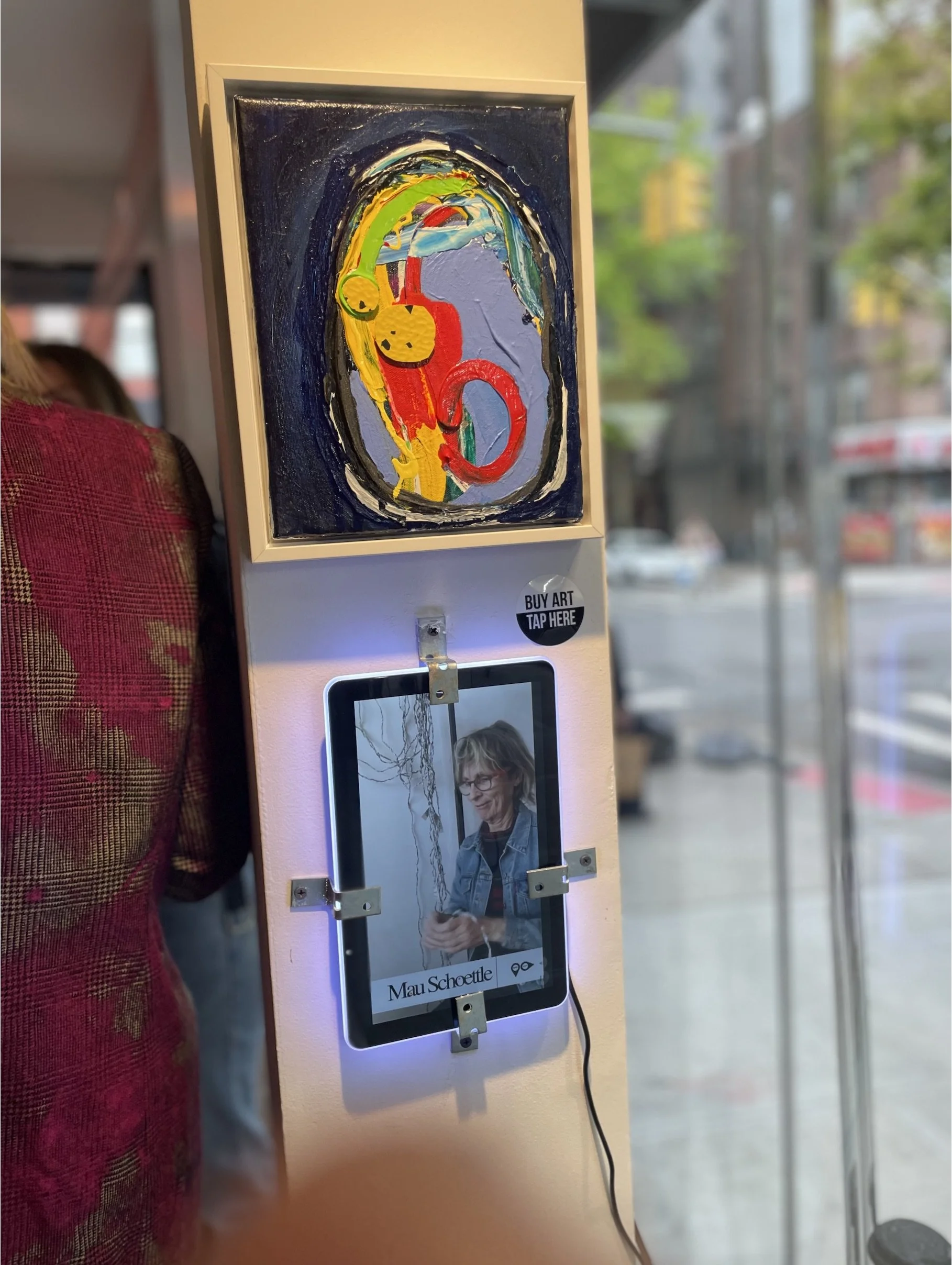
Artwork presented with a digital artist profile of artist Mau Schoettle at Of Grit and Grid, Site Seen's 2026 exhibition in Brooklyn, New York. Curatorial decisions shape not only what visitors see, but how they experience it. Photograph by Site Seen
A Site Seen Field Guide
Digital artist interpretation accompanying installation art by Mau Schoettle (not shown in photo) at Of Grit and Grid, Site Seen's 2026 exhibition in Brooklyn, New York. Contemporary curating creates new ways for visitors to engage with artists and their work. Photograph by Site Seen
A Guide to Contemporary Curatorial Practice
When most people hear the word curator, they imagine someone selecting paintings for a museum or deciding where sculptures should be placed in a gallery.
Selection is certainly part of the role.
But contemporary curating is much broader than choosing artwork.
Curating is the practice of developing ideas, organizing relationships between artworks, artists, architecture, and audiences, and shaping the overall experience of an exhibition. A curator doesn't simply decide what people see. They help determine how and why they experience it.
Where Does the Word "Curator" Come From?
The word curator comes from the Latin curare, meaning "to care."
Historically, curators were responsible for caring for museum collections by preserving, researching, documenting, and displaying objects.
Today, the profession has expanded dramatically.
Curators work in museums, galleries, artist-run spaces, universities, biennials, sculpture parks, public art organizations, historic sites, and increasingly, in places never intended to become exhibition spaces.
What Does a Curator Actually Do?
Every exhibition involves hundreds of decisions.
A curator may:
Develop the exhibition's central concept.
Research artists and historical context.
Visit artists' studios.
Select participating artists and artworks.
Determine how works relate to one another.
Design the visitor's experience through the space.
Write exhibition texts and catalog essays.
Collaborate with architects, designers, installers, and fabricators.
Organize public programs, talks, and educational events.
Consider accessibility, interpretation, and community engagement.
Good curating is rarely about individual artworks alone.
It is about creating meaningful relationships between people, ideas, and place.
Contemporary Curating Goes Beyond the Museum
Today's curators often work far outside traditional gallery settings.
Contemporary exhibitions can take place in parks, historic buildings, former factories, storefronts, schools, churches, industrial sites, train stations, and other unexpected locations.
These spaces aren't simply alternative venues.
They often become part of the exhibition itself.
Architecture, history, natural light, acoustics, neighborhood context, and previous uses all influence how visitors experience the artwork.
What Is Site-Specific Curating?
Site-specific curating begins with a place rather than a floor plan.
Instead of asking, "Where can this exhibition fit?", the curator asks:
What is unique about this building?
What stories does this place already contain?
How can artists respond to its architecture and history?
What kinds of experiences are only possible here?
The exhibition develops in conversation with the site.
Rather than disappearing into the background, architecture becomes an active collaborator in the curatorial process.
Curating in Transitional Spaces
An increasing number of curators are working inside buildings that are temporarily vacant or awaiting their next chapter.
Former grocery stores.
Warehouses.
Factories.
Office buildings.
Marinas.
Retail spaces.
These environments offer opportunities that conventional galleries often cannot.
Large-scale installations become possible.
Visitors experience familiar places in unfamiliar ways.
Communities reconnect with buildings that have quietly disappeared from everyday attention.
The exhibition becomes part of the building's continuing story.
How Site Seen Approaches Curating
At Site Seen, every exhibition begins with a building.
Before artists are invited, we spend time observing the architecture, history, proportions, and atmosphere of a place. Those qualities shape every curatorial decision that follows, from artist selection to installation design.
Rather than treating architecture as a neutral backdrop, we approach each building as an active collaborator.
Every exhibition is developed specifically for its site.
No two are ever the same.
Why Curating Matters
Curating shapes the way we encounter contemporary art.
Thoughtful curatorial practice creates connections between artworks, artists, architecture, communities, and ideas that might never emerge on their own.
At its best, curating doesn't simply organize an exhibition.
It changes the way we see.
Related Reading
When Architecture Becomes a Curator
How an Empty Building Becomes an Exhibition
Why Place Still Matters
What Is Site-Specific Art?
What Is Adaptive Reuse?