

Why Context Changes the Meaning of Art
A Site Seen Field Guide
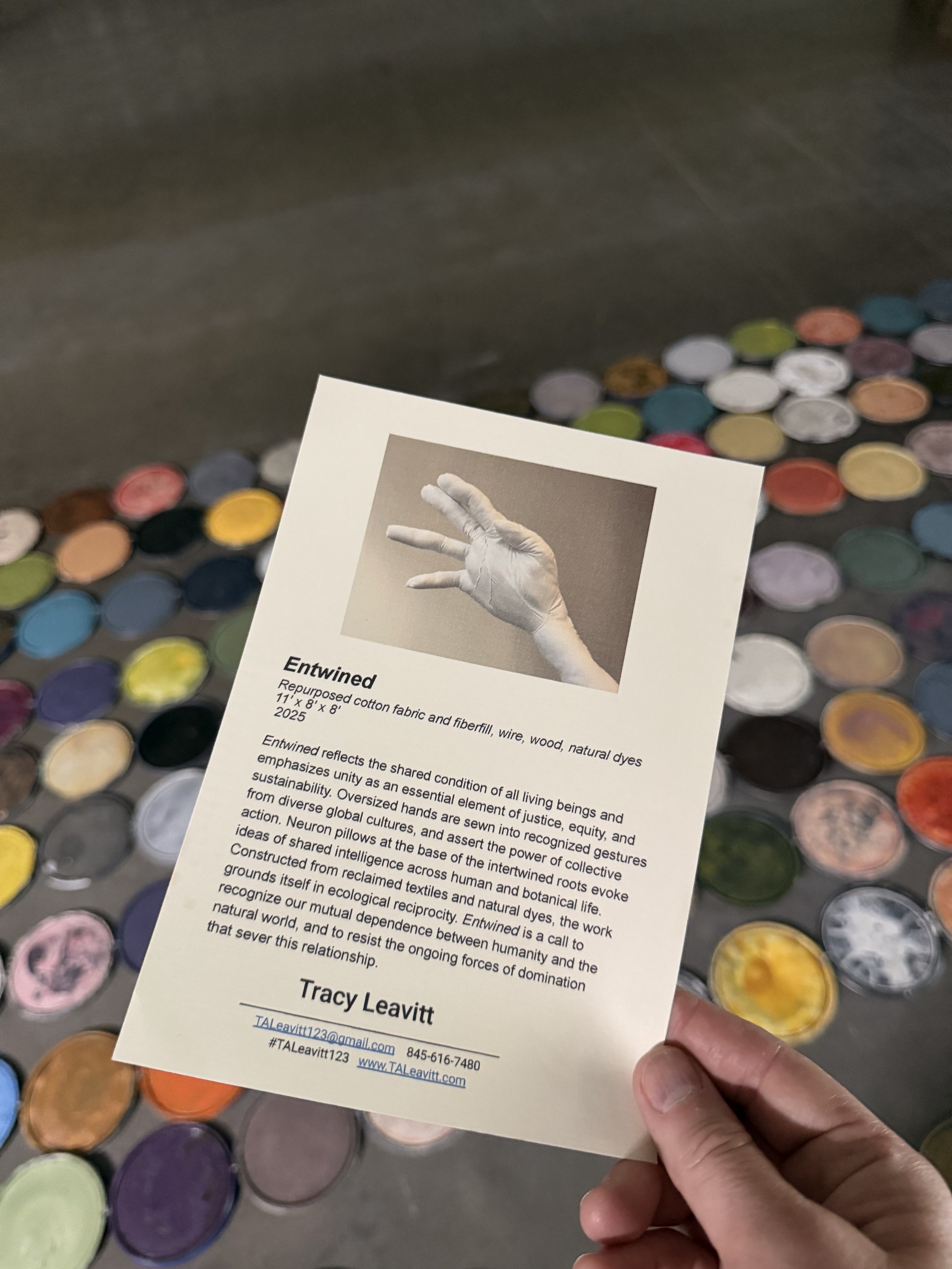
Printed card of a site-specific installation juxtaposed atop another artwork visible in the background during Site Seen's Of Frame and Fallow, a temporary contemporary art exhibition presented inside a former Dollar General in Esopus, New York, 2026. Photograph by Site Seen
When people hear that an exhibition is taking place inside a vacant building, they often ask the same question.
Why there?
Why not a gallery?
It is an understandable question.
Galleries are designed for exhibiting art. They provide lighting, climate control, clean walls, and an environment carefully shaped around the experience of looking.
Vacant buildings offer almost none of those things.
Instead, they offer something else.
History.
A Building Between Lives
An empty building is often described as abandoned.
We rarely think that word tells the whole story.
Many vacant buildings are not forgotten.
They are waiting.
Waiting for a new tenant.
A renovation.
A different purpose.
A new owner.
These moments between one life and the next are remarkably brief.
The physical evidence of the building's previous identity remains visible, while its future has not yet begun.
For artists, that interval is full of possibility.
Vacancy Is Not Emptiness
Walk through an empty retail store.
You will probably notice patched walls, worn floors, faded paint, old fixtures, utility markings, handwritten notes from contractors, forgotten hardware, and countless other traces left behind by ordinary use.
None of these details were intended to become meaningful.
Yet together they create a record of human presence.
The building remembers.
Artists respond to that memory.
Not by preserving it exactly as it is, but by entering into conversation with it.
Why Not Simply Use a Gallery?
Traditional galleries are extraordinary places for contemporary art.
They allow artworks from many different contexts to exist together within a carefully controlled environment.
Vacant buildings ask different questions.
Rather than removing art from everyday life, they place it back into spaces many people already know.
A former grocery store.
A neighborhood office.
An industrial warehouse.
Visitors arrive carrying memories of those places.
The exhibition builds upon those memories rather than replacing them.
Architecture Becomes Part of the Artwork
In a vacant building, architecture is impossible to ignore.
Columns interrupt sightlines.
Windows determine how daylight moves.
Ceilings influence sound.
Doorways shape circulation.
Instead of treating these conditions as limitations, artists often embrace them.
The building becomes another collaborator.
Every installation could exist only there.
Temporary by Design
One of the most remarkable qualities of exhibitions in transitional buildings is their impermanence.
The artwork is temporary.
The exhibition is temporary.
Even the building's current state is temporary.
Rather than resisting change, these projects acknowledge it.
Visitors encounter a place during a fleeting moment that will never exist again in exactly the same way.
That sense of urgency changes how people look.
A Different Relationship Between Art and Community
When contemporary art appears inside familiar buildings, it reaches people who might never visit a museum or gallery.
Someone arrives out of curiosity.
Someone remembers shopping there years ago.
Someone wants one last chance to see the building before it changes forever.
Art becomes the reason people enter.
Architecture becomes the reason they linger.
The conversation extends beyond individual artworks to include memory, neighborhood, and the evolving identity of a place.
The Site Seen Approach
At Site Seen, we do not choose buildings because they appear abandoned or dramatic.
We choose them because they are in transition.
That distinction matters.
We are not interested in romanticizing decay or presenting vacancy as spectacle.
These are not forgotten places.
They are places preparing to become something else.
Our exhibitions simply invite the public to experience that moment before it disappears.
Artists respond to the architecture.
Visitors rediscover familiar places.
Property owners see their buildings through different eyes.
For a brief time, the building becomes a place of shared cultural experience before continuing its own journey.
Looking Again
A vacant building is easy to overlook.
An exhibition asks us to pause.
To notice the marks left by previous occupants.
To recognize the beauty of adaptation.
To imagine possibilities that extend beyond commerce or construction.
Sometimes the greatest transformation is not what happens to the building.
It is what happens to our understanding of it.
Because once we begin seeing these places differently, it becomes difficult to pass them without wondering what stories they still have left to tell.
Continue Exploring
What Is Site-Specific Art?
What Is Adaptive Reuse?
Why Do Artists Transform Vacant Buildings?
What Makes Installation Art Different from Sculpture?
Temporary Art Exhibitions vs. Traditional Galleries