

Why Pop-Up Exhibitions Matter More Than Ever
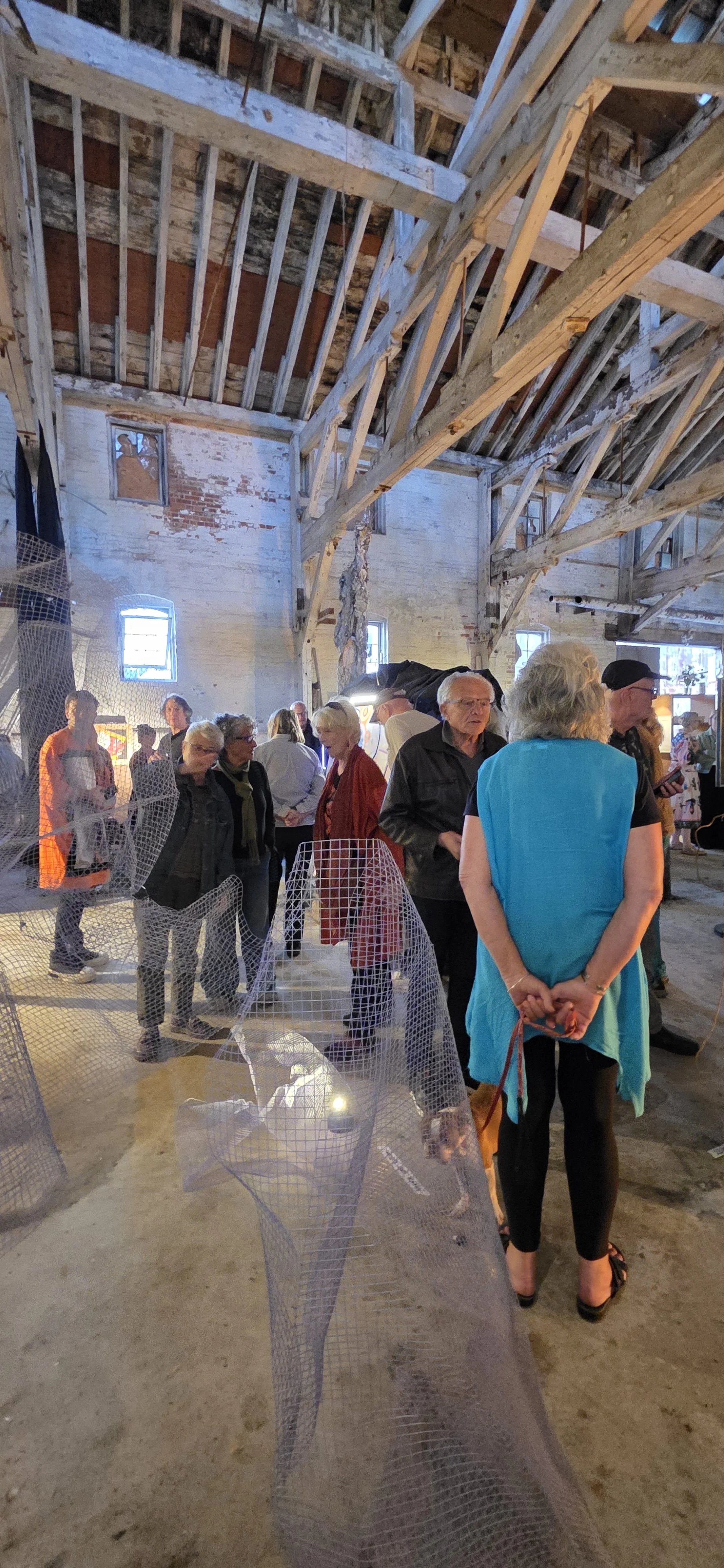
Visitors gather inside Of Hull and Hush, where a former marina became a temporary exhibition space for contemporary art. Pop-up exhibitions transform buildings in transition into places of discovery, dialogue, and shared experience. Photograph by Site Seen
For much of the twentieth century, contemporary art was expected to live inside galleries and museums. They provided stability, professional infrastructure, and dedicated spaces for artists and audiences alike.
Today, the landscape looks different.
Commercial rents continue to rise. Independent galleries face increasing financial pressure. Storefronts, offices, schools, warehouses, and industrial buildings often sit vacant between tenants, sometimes for months or even years. At the same time, artists continue searching for places to experiment, and audiences continue looking for meaningful cultural experiences beyond traditional institutions.
These realities have created an unexpected opportunity.
Pop-up exhibitions are not simply temporary alternatives to galleries. They have become an important way of connecting contemporary art with places that already exist within our communities.
At Site Seen, we think of these buildings not as abandoned, but as being between lives.
A former retail store still remembers its customers. An empty office still reflects years of conversations and work. A marina carries the rhythms of seasons spent on the water. Even after their original purpose has paused, these spaces remain full of character.
Temporary exhibitions allow that character to become part of the experience.
Rather than constructing neutral environments, artists respond to existing architecture, materials, and histories. Visitors encounter art within spaces they may have passed every day without noticing. Familiar buildings become unfamiliar again.
That shift matters.
When contemporary art appears outside traditional cultural venues, it reaches people who might never have planned a gallery visit. Someone arriving out of curiosity may discover an artist for the first time. A neighbor who remembers shopping in the building decades earlier returns to see it transformed. Conversations emerge between architecture, memory, and the artwork itself.
Temporary exhibitions also give artists something increasingly difficult to find: freedom to experiment.
Vacant buildings often provide scales, layouts, and architectural features that conventional galleries cannot. Artists can create immersive installations, large sculptures, projections, sound works, and site-responsive pieces that would be impossible elsewhere. The building becomes another material to work with rather than merely a container for finished objects.
There is an environmental dimension as well.
Adaptive reuse asks us to reconsider what already exists before building something new. Even when only temporary, activating an existing building demonstrates that spaces retain value while awaiting their next chapter. Instead of sitting dark and forgotten, they become places of gathering, creativity, and public engagement.
Importantly, temporary does not mean insignificant.
Some of the most memorable exhibitions exist only briefly. Their limited duration creates a sense of urgency and shared experience. Visitors know that if they wait too long, both the exhibition and the building itself may have changed completely.
That impermanence becomes part of the work.
After the exhibition closes, the building continues its journey. A new tenant may move in. Renovations may begin. The architecture may evolve once again. What remains are the memories of everyone who experienced the space during that brief moment when art temporarily occupied its next chapter.
In a time when our cities are changing rapidly, pop-up exhibitions remind us that vacant buildings are not empty spaces waiting to be filled. They are places already rich with history, possibility, and connection.
Sometimes all they need is to be seen differently.